
Pair Bronze Candlesticks
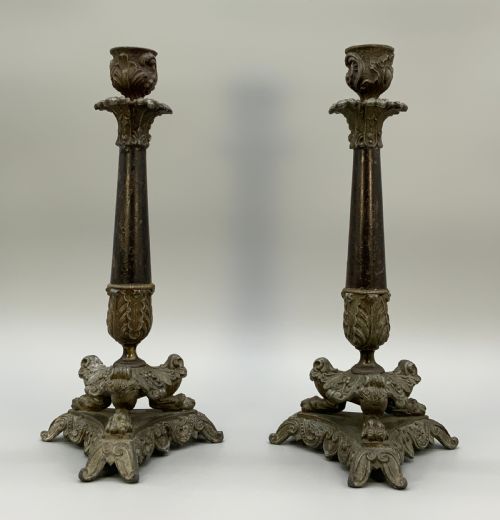
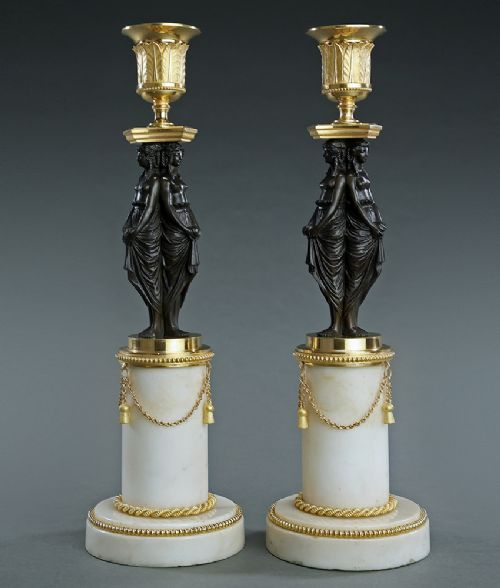
These pair bronze candlesticks bring rich nineteenth-century weight and patinated metal to a mantelpiece or side table.
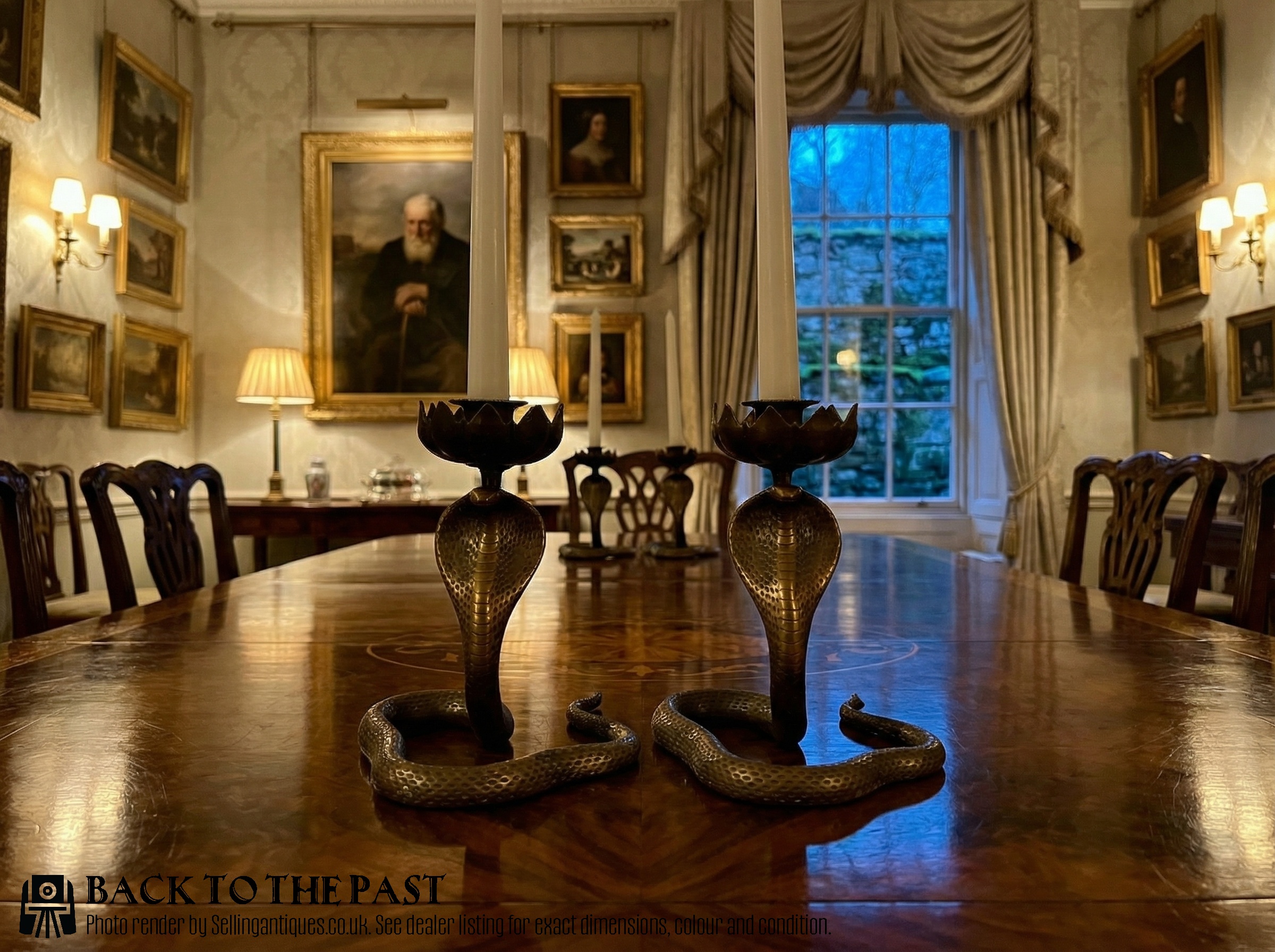
What pair bronze candlesticks are
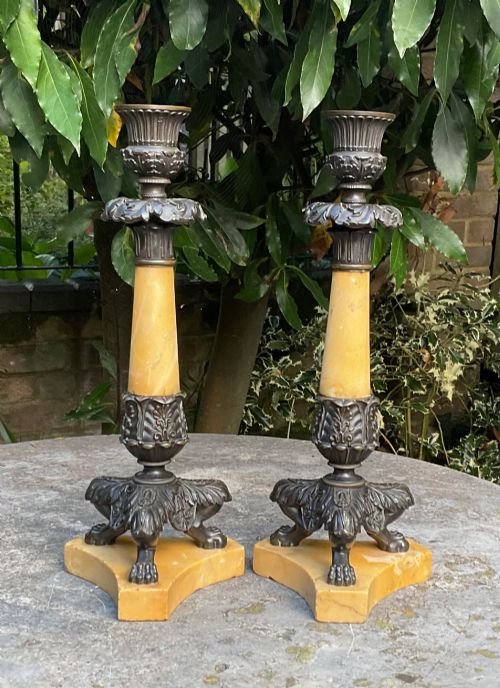
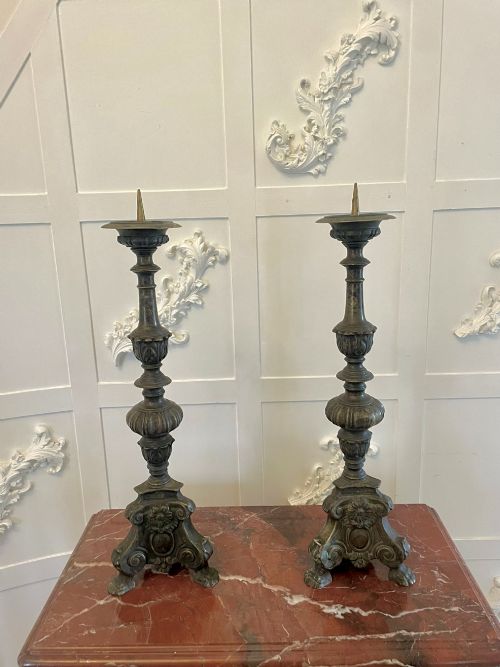
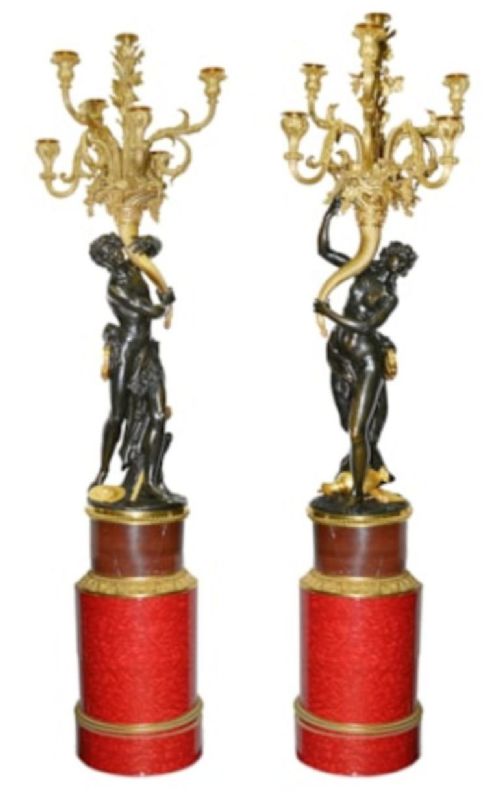
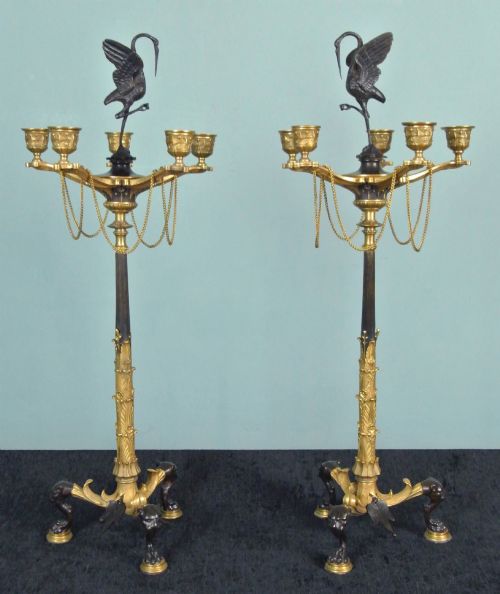
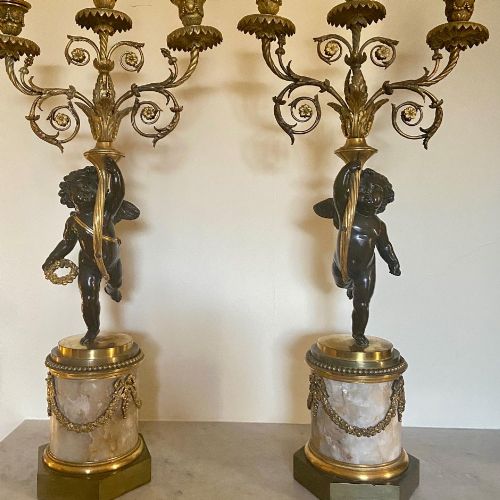
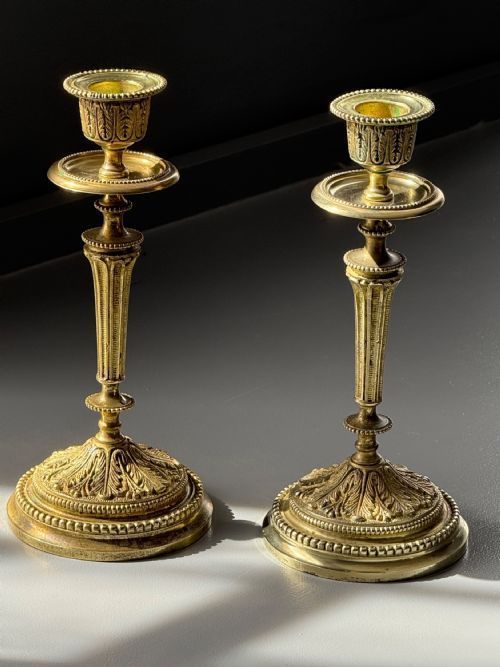
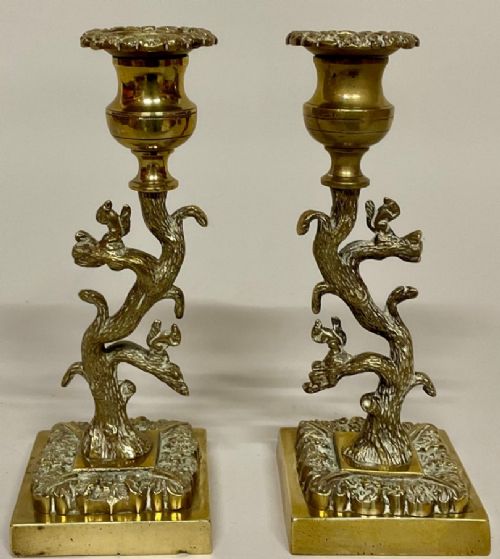
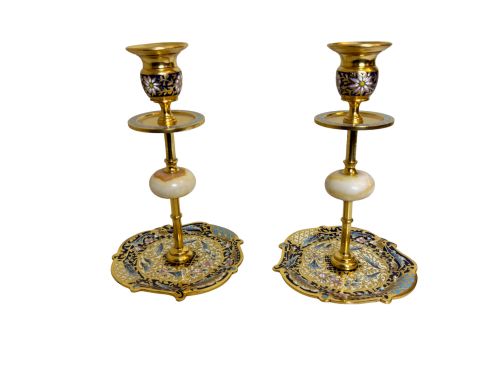
A search for pair bronze candlesticks leads straight to nineteenth-century lighting, often combining patinated or gilt metal with brass, marble, or crystal drops. The pieces appearing here span Victorian, Regency, and French Empire styles, ranging from simple barley twist forms to elaborate figurative designs.
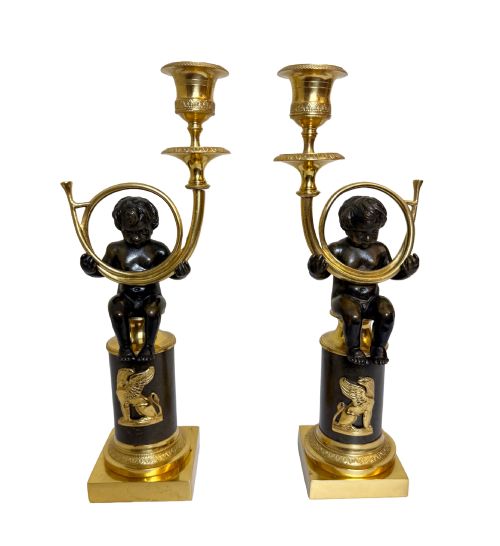
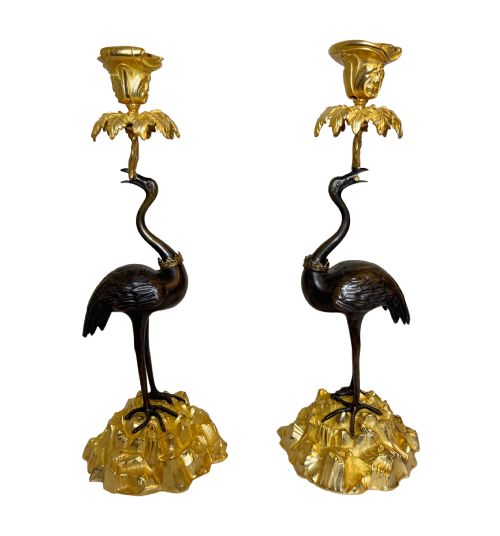
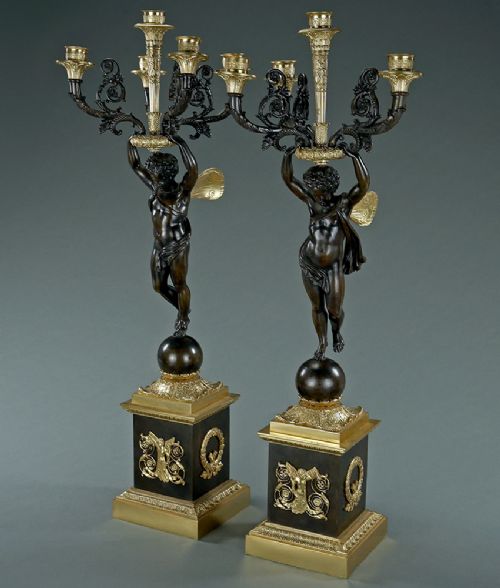
Buyers frequently encounter French workshop creations alongside English examples from the eighteen-sixties and eighteen-seventies. Animal and figural motifs feature strongly, depicting storks, cranes, cobras, cherubs, and Chinese figures holding sockets for candles.
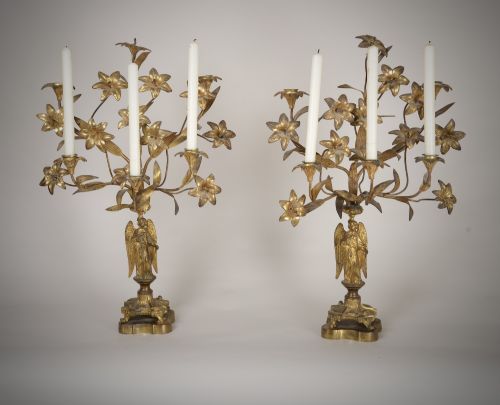
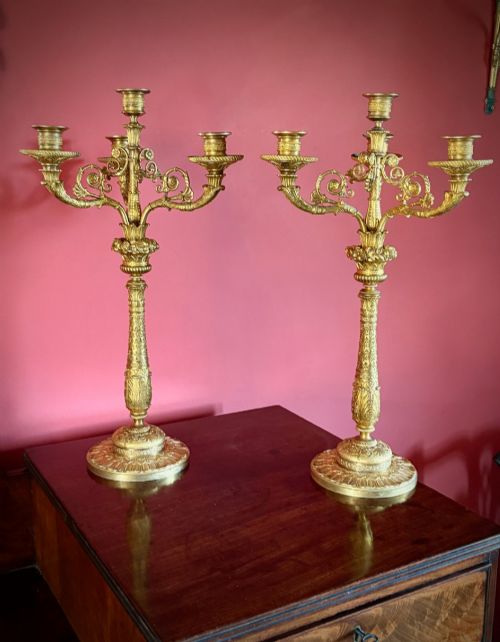
Larger examples take the form of multi-light candelabra, while smaller pairs serve as desk or mantel ornaments. Both solid bronze and surface-gilt variations appear across the inventory.
How they were made
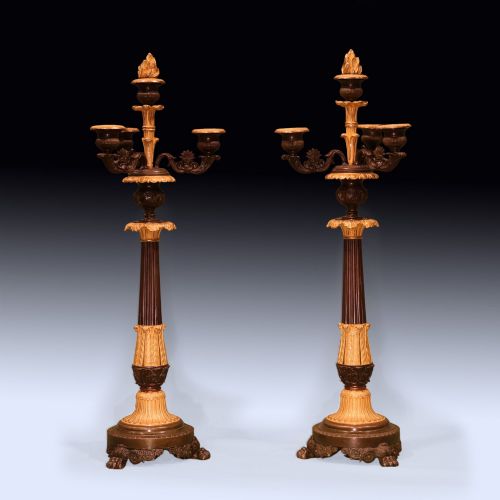
Foundry workers cast these objects using bronze, bell bronze, or solid brass, often combining dark patination with bright ormolu highlights. Seamed construction appears on mid-nineteenth-century examples alongside heavier cast figures.
Gilt bronze elements required precise mercury gilding or fire-gilding techniques to achieve a lasting golden surface. Additional decorative detail comes from applied marble bases, agate sets, and hand-chased surface tooling.
Retail Price Guide 2026
Typical UK retail prices for pair bronze candlesticks, calculated from the Sellingantiques database of over a million retail prices indexed since 2003. This retail price guide relies exclusively on Sellingantiques data; no external sources or auction records are used, so the figures do not describe the wider market.
The site listings feature nineteenth-century materials including patinated bronze, ormolu, marble, and crystal.
What varies in quality
The harmony of the pairing matters greatly, as does the survival of original gilding and matched drip pans. Integrated components such as crystal drops or marble plinths elevate the finish of superior examples.
Thomas Abbott
The Pair Bronze Candlesticks Glossary
- Ormolu
- Gilded bronze, usually created by applying a mixture of gold and mercury to a bronze base. The process produced a bright, durable golden surface popular in French decorative arts.
- Patination
- The surface sheen and colour acquired by bronze over time or through chemical treatment. A dark patinated finish contrasts effectively with polished highlights.
- Candelabra
- A branched candlestick holding multiple lights on arms stemming from a central shaft. These larger fixtures often service dining tables and grand reception rooms.
- Pricket candlestick
- A candle holder featuring a sharp metal spike at the centre to secure the base of the candle. This older format appears in decorative Japanese bronze pieces.
- Bell bronze
- An alloy containing higher proportions of tin, traditionally used for casting bells. This metal yields a resonant tone and a particularly dense structure.
Frequently Asked Questions
How do I clean bronze candlesticks?
Dust gently with a soft dry cloth to protect the historic surface layer and patination.
Avoid commercial metal polishes, as abrasive compounds remove thin layers of fire-gilding or original dark finish.
Were these used for dining tables?
Symmetrical pairs served primarily on mantelpieces, sideboards, and pier tables to reflect candlelight from mirrors.
Larger multi-light candelabra provided functional illumination for evening dining before gas lighting became widespread.
How to spot French Empire style?
French Empire pieces display classical architectural motifs, military trophies, and severe proportions derived from ancient Rome.
They frequently combine dark patinated bronze with bright fire-gilt mounts and classical figures.
What is the difference between bronze and brass?
Bronze is an alloy primarily of copper and tin, offering greater weight, durability, and a darker natural colour.
Brass consists of copper and zinc, producing a brighter golden tone that responds readily to polishing.