
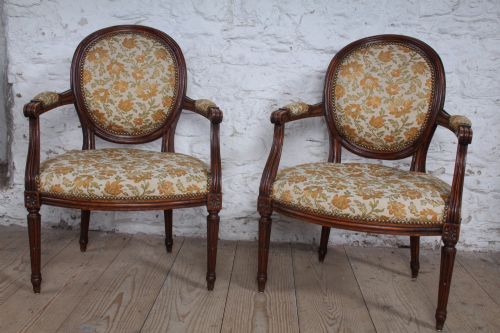
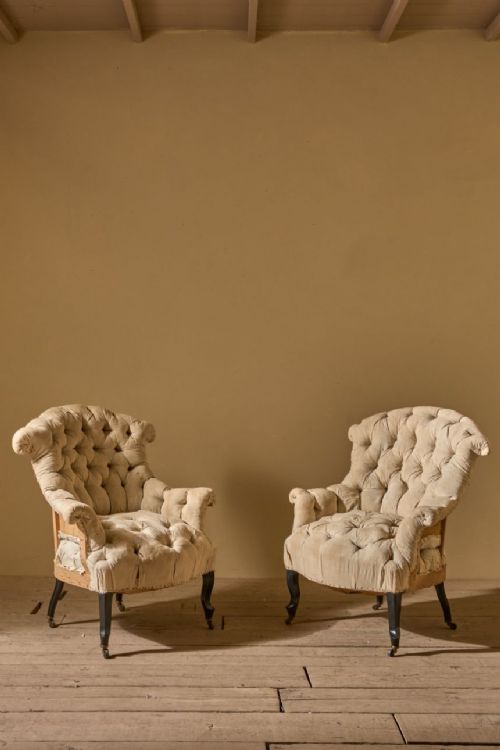
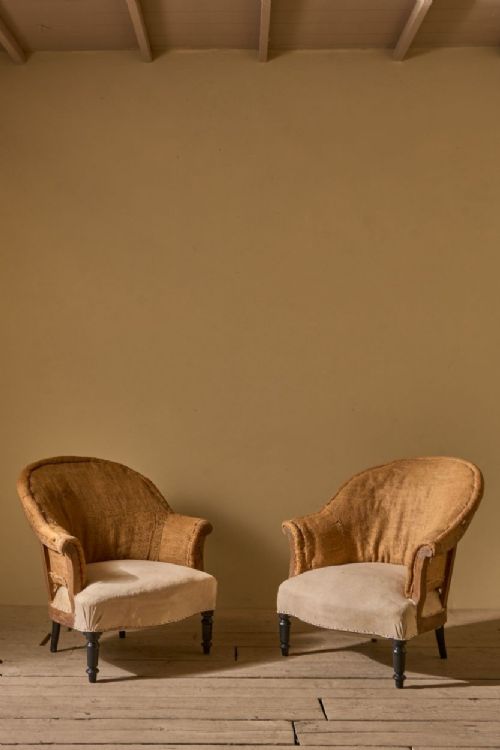

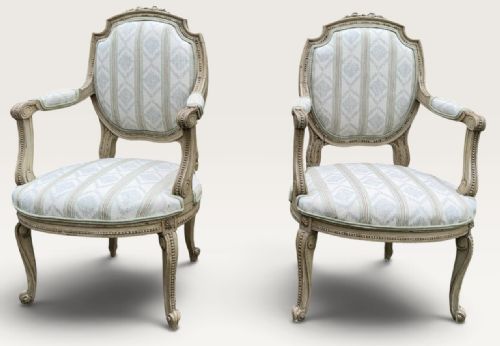
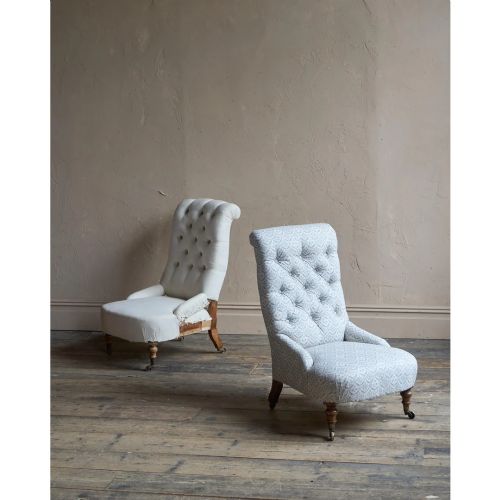
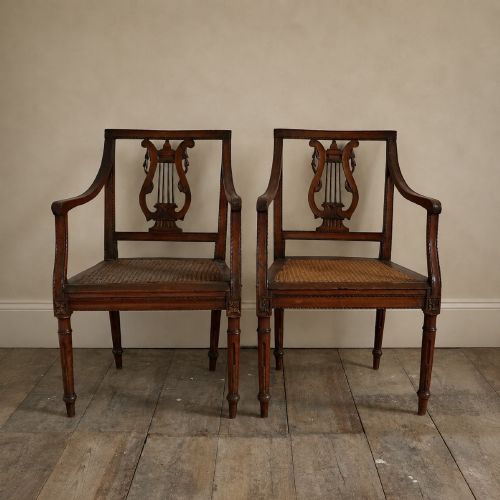
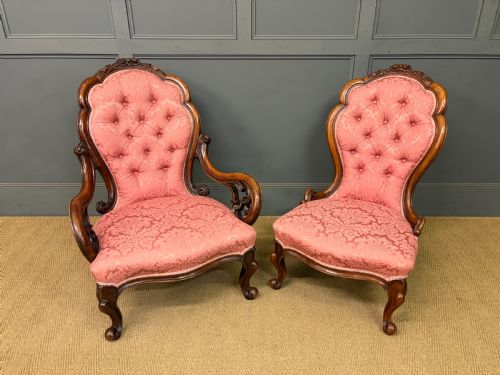
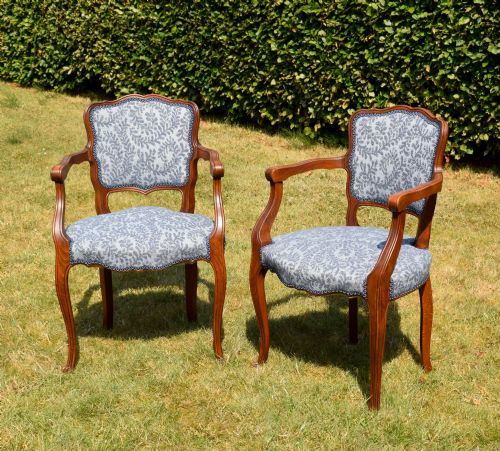
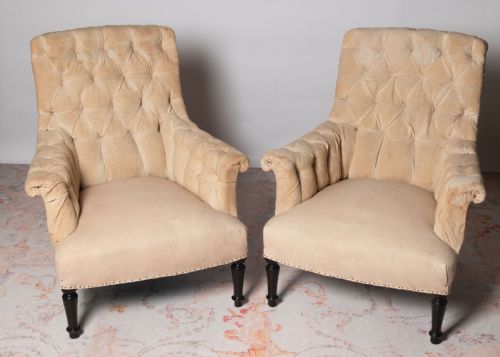
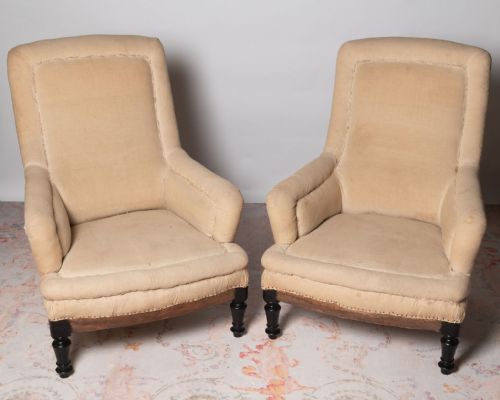
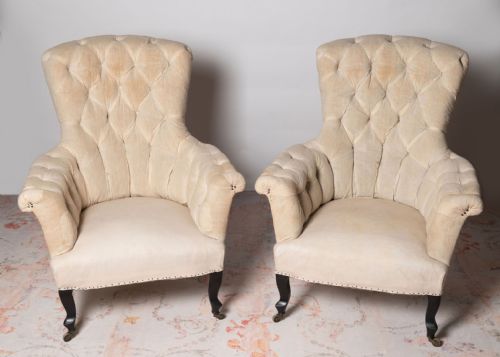
Pair Bedroom Armchairs
These pair bedroom armchairs bring dual comfort and period character to a dressing room or parlour.
Pair Bedroom Armchairs
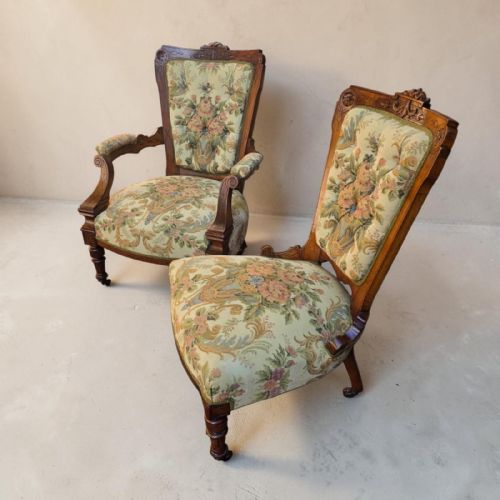
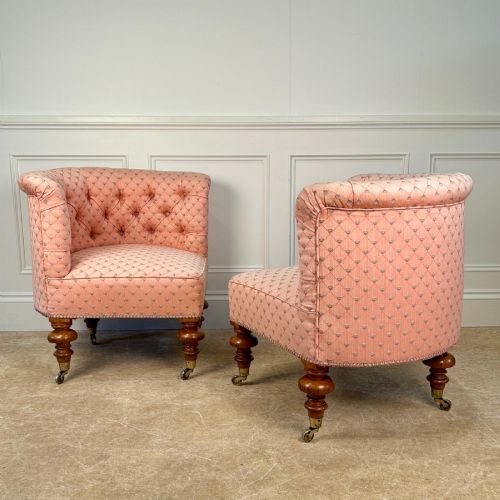
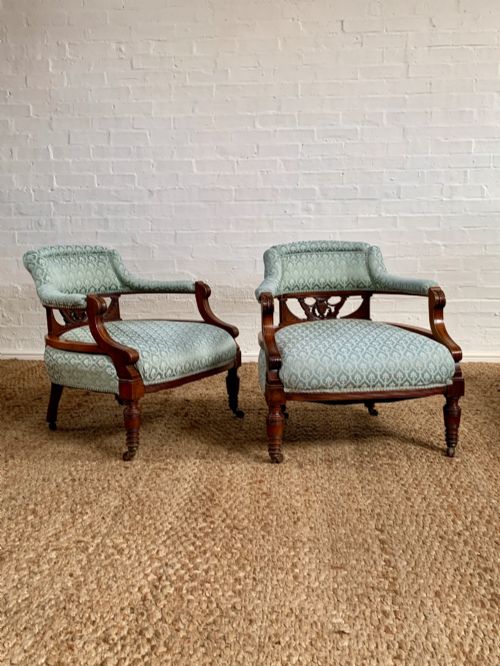
When searching for pair bedroom armchairs, buyers encounter seating designed for private chambers, dressing rooms and intimate salons across the nineteenth and early twentieth centuries. These matching sets encompass various forms tailored for relaxation, including compact slipper chairs, low nursing chairs, tub chairs and refined salon seating.
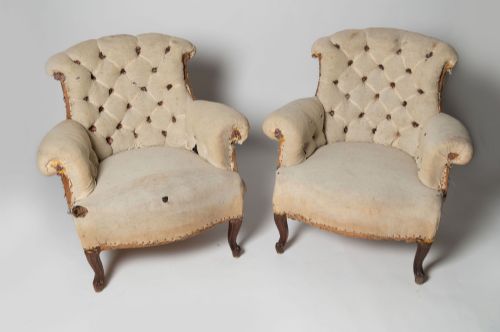
The selections span distinct historical iterations, from Victorian walnut and rosewood creations to French Napoleon III buttoned designs and Edwardian mahogany tub chairs. Buyers frequently find matching pairs featuring original upholstery frames, calico foundations or exposed carved wood frameworks ready for custom fabric.
How they were made
Carpenters and cabinet makers constructed the structural frames of these seats using dense timbers such as mahogany, walnut, oak and beech, often shaped with hand-carved details or applied giltwood. Woodwork frequently incorporates decorative techniques like string inlay, painted finishes or satinwood veneers.
Upholsterers built the seating comfort using traditional stuffing methods enclosed in hessian, calico, velvet and specialist fabrics, supported internally by brass elements and robust wooden joinery.
Listings feature woods including mahogany, walnut, beech, satinwood and rosewood, paired with textiles like velvet, calico and hessian.
What varies in quality
Quality rests in the crispness of the timber carving and the integrity of the underlying frame construction, where tightly joined cabinet work outlasts looser assemblies. The refinement of proportion, such as the sweep of a cabriole leg or the symmetry of a scroll back, separates standard workshop output from finer parlour pieces.
The survival of original surface treatments, whether carved giltwood, polished walnut or early paint, distinguishes pieces that retain their authentic decorative character from those altered over time.
Howard and Sons·Holland and Sons·Harrods London
The Pair Bedroom Armchairs Glossary
- Bergere
- An enclosed upholstered armchair with wooden framing exposed around the sides and back. These French seats often feature cane work or padded armrests.
- Nursing chair
- A low-seated chair historically designed for comfort during infant feeding or grooming. They typically feature compact proportions and supportive padded backs.
- Tub chair
- A comfortable seating form featuring a rounded, enclosed back that curves continuously into the arms. Edwardian and nineteenth-century examples often utilise mahogany or walnut structures.
- Slipper chair
- An upholstered chair with a notably low seat designed for dressing rooms and private chambers. They frequently appear in pairs with scroll backs or fabric upholstery.
- Cabriole leg
- A furniture leg that curves outward in a convex arc before tapering inward in a concave sweep toward the foot. This form draws inspiration from animal limbs and appears on Victorian walnut frames.
Pair Bedroom Armchairs: Frequently Asked Questions
Where were pair bedroom armchairs placed?
These matching seats were traditionally arranged in private bedchambers, dressing rooms or boudoirs for resting and dressing.
They also served in intimate drawing rooms and parlours where symmetrical furniture arrangements were preferred.
How do I identify a Victorian pair?
Victorian examples typically feature dark timbers such as walnut or rosewood with substantial carved ornamentation and cabriole legs.
Upholstery styles from this period often include buttoned backs, velvet coverings or robust sprung foundations.
Are French pairs different from English ones?
French seating from periods like Napoleon III or Louis XV revival often displays giltwood finishes, painted surfaces or ornate carved scrollwork.
English counterparts from the Victorian and Edwardian eras tend to focus on disciplined mahogany or walnut frames with subtle inlay.
How do I care for antique upholstery?
Protect the fabric from direct sunlight to prevent fading and gentle vacuuming with a soft brush attachment helps remove dust.
Exposed wooden frames benefit from occasional treatment with appropriate furniture wax to preserve the polish.