




Pair Serving Platters
These pair antique serving platters bring genuine dining history to the table, offering matched display surfaces shaped by centuries of craft.
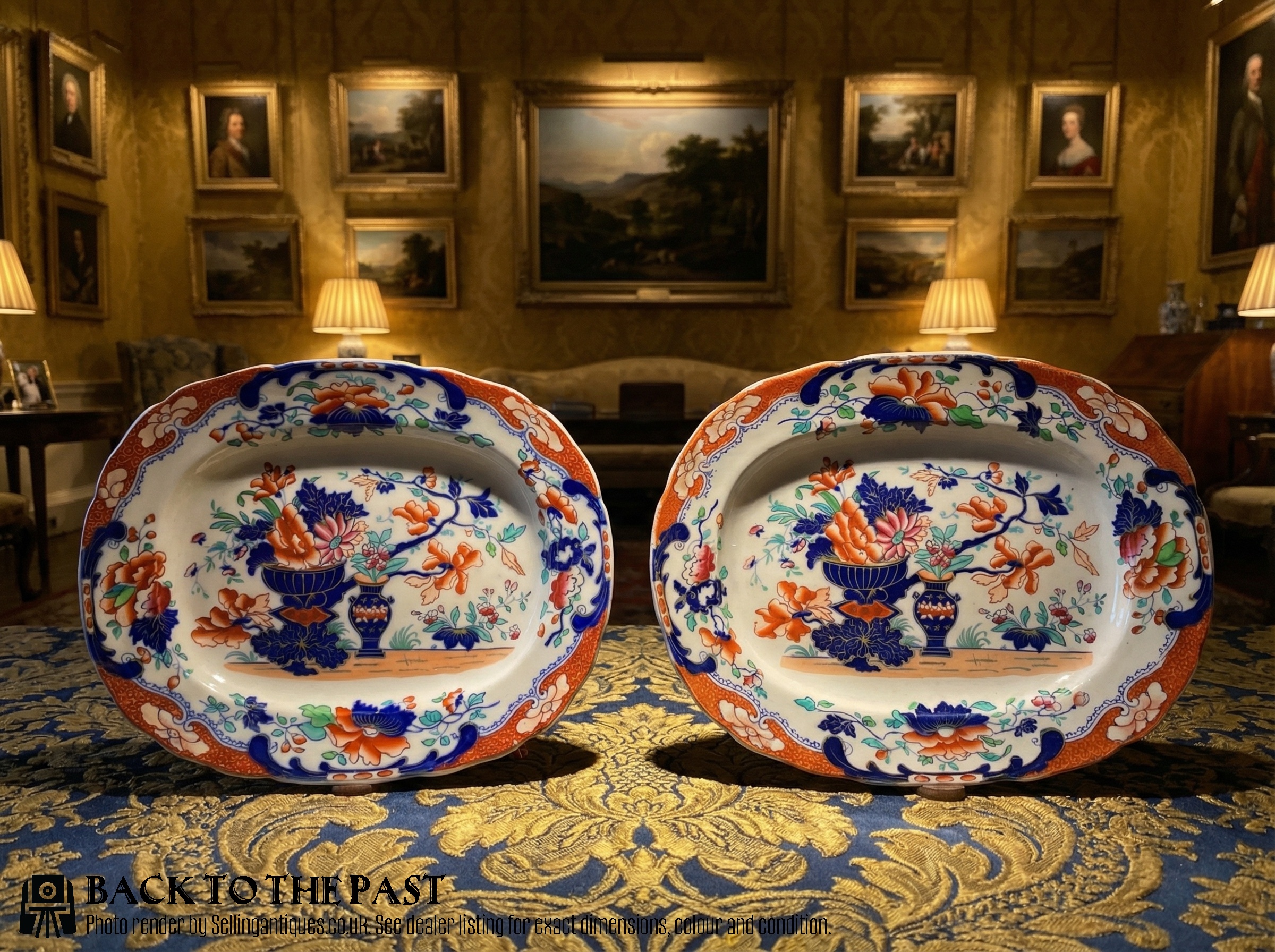
Pair Serving Platters
Pair antique serving platters comprise matched pairs of large dishes, chargers, and entree vessels designed for presentation at the dining table. These pieces span periods from the eighteenth century through the Georgian, Victorian, and Edwardian eras, alongside Japanese Meiji examples.
The selections on this page appear in ceramic materials like porcelain, ironstone, earthenware, and pottery, as well as silver plate, pewter, and glass. Forms range from oval meat platters and round chargers to specialised serving dishes and tureens.
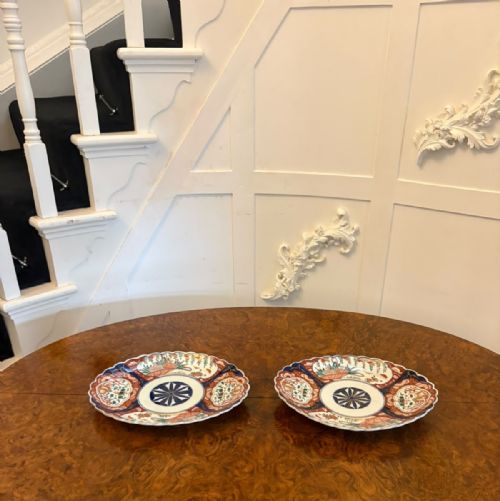
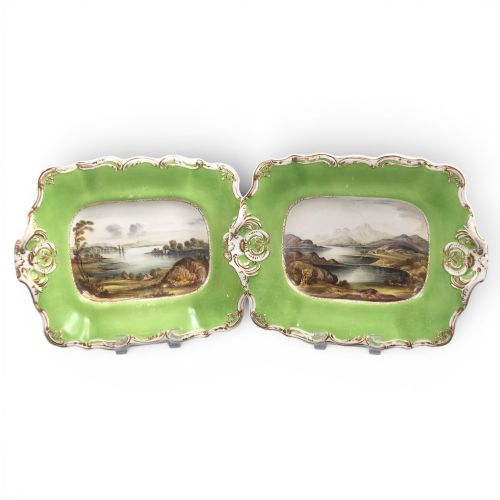
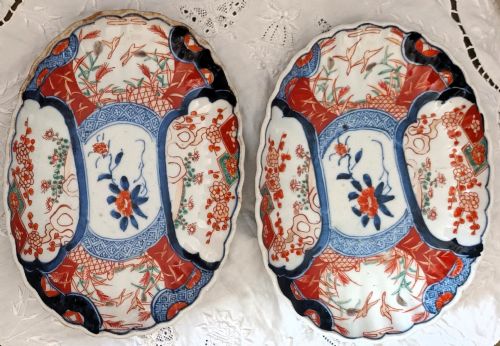
Origin points stretch across English, Scottish, and Chinese workshops, with notable Japanese Imari wares rounding out the grouping. Buyers encounter both transferware patterns and hand-painted decorations among these dual service items.
How They Were Made
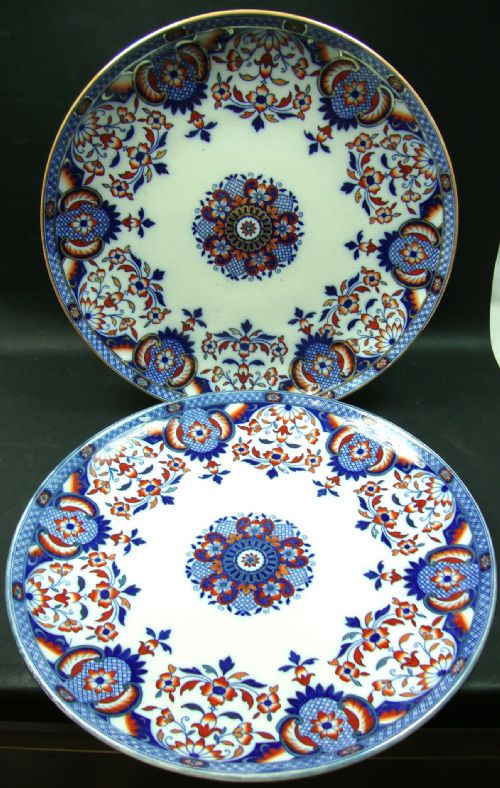
Ceramic platters take shape through firing processes in kilns, utilising earthenware, ironstone, or felspar porcelain bodies. Artisans then apply glazes, gold leaf, enamel paints, or blue and white transfer printing to finish the surface decoration.
Silver plated pieces rely on metal bases coated with a thin layer of silver, often formed into heavy chargers or entree dishes with defined rims. Pewter and glass items utilise casting and moulding techniques characteristic of their respective periods.
Dining tables of the past required matching pairs so symmetrical service could impress guests from both ends of the room.
What Varies in Quality
Quality rests in the crispness of the moulded or turned form and the depth of the glaze or silver plating. Pieces with intact hand-painted details or well-preserved transfer prints command attention from serious collectors.
Weight and balance distinguish standard utility items from presentation pieces meant for grand dining tables. Maker involvement, evidenced by clear stamps or historic attribution, elevates the standing of individual pairs.
Copeland and Garrett·Spode·Hamilton and Inches·Mintons·Cresswick·Elkington and Co
The Pair Serving Platters Glossary
- Charger
- A large decorative plate or platter used traditionally beneath other courses or as a centrepiece serving vessel.
- Imari
- A style of Japanese porcelain featuring distinctive underglaze blue and iron red decoration with added gold highlights.
- Felspar porcelain
- A specific ceramic body formulation developed by Spode that incorporates feldspar for increased durability and whiteness.
- Transferware
- Pottery decorated by applying a printed design from an engraved copper plate onto the ceramic surface through tissue paper.
- Entree dish
- A covered serving vessel designed for holding secondary courses at formal meals during the Georgian and Victorian periods.
- Silver plate
- A base metal substrate coated with a thin layer of silver to provide the appearance and lustre of solid silver.
Pair Serving Platters: Frequently Asked Questions
How were pair antique serving platters used originally?
These dishes held roasted meats, fish, or vegetable courses at the centre of large dining tables during formal dinners. Servants brought them laden from the kitchen for guests to serve themselves.
Over time, many of these matched pairs transitioned into display pieces for sideboards and walls, valued for their decorative glaze work.
Can I use antique platters for serving food today?
Ceramic and silver plated platters from the Georgian and Victorian periods can serve dry foods or room-temperature dishes. Modern dishwashers and harsh detergents should be avoided to protect historic glazes and metal plating.
Silver plated items benefit from occasional gentle polishing with appropriate creams to maintain their finish without stripping the historical surface.
How do I tell a Georgian platter from a Victorian one?
Georgian pieces often display refined neoclassicism, simpler transfer patterns, or early pearlware and felspar bodies. Victorian examples tend towards heavier proportions, elaborate Rococo Revival borders, and denser surface decoration.
Maker marks and registration stamps on the underside provide the most reliable dating evidence for these periods.
What does Imari mean on antique porcelain?
Imari refers to Japanese wares exported through the port of Imari, characterised by a strict palette of cobalt blue, iron red, and gold. European factories later copied these vibrant colour schemes on their own ceramic bodies.
Genuine Meiji period examples show distinct craquelure or potting traits unique to late nineteenth-century Japanese kilns.