



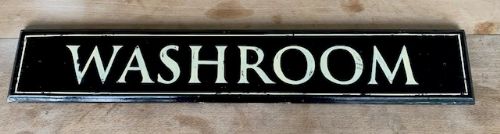
Painted Wooden Sign
When you handle a painted wooden sign, you touch the honest trade and public life of past centuries.
Painted Wooden Sign
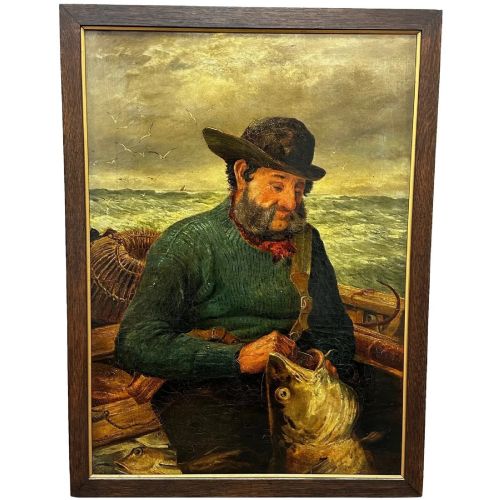
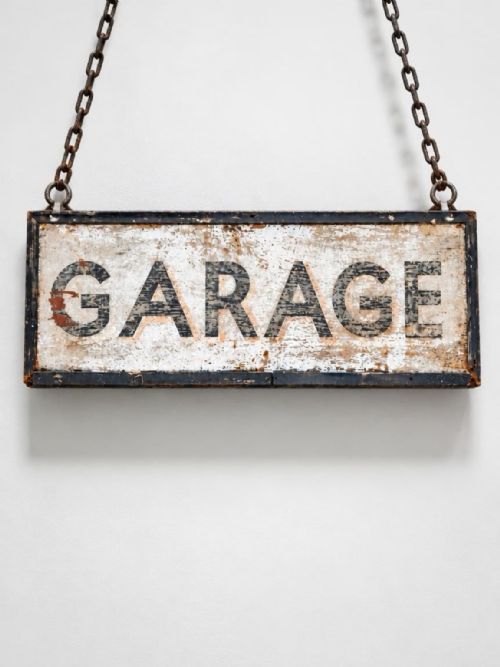
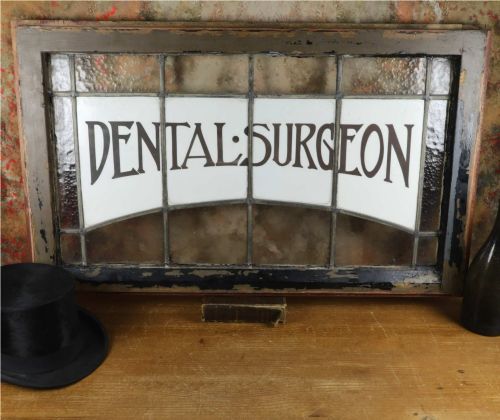
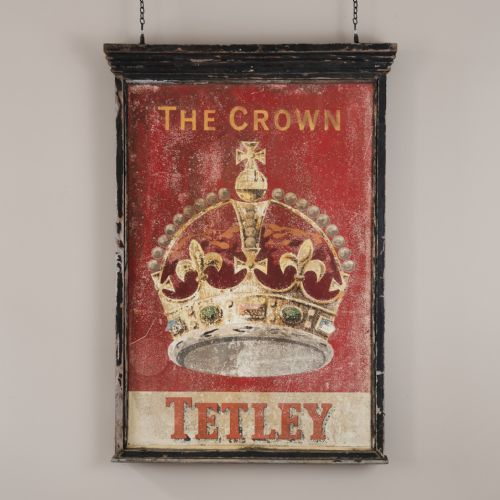
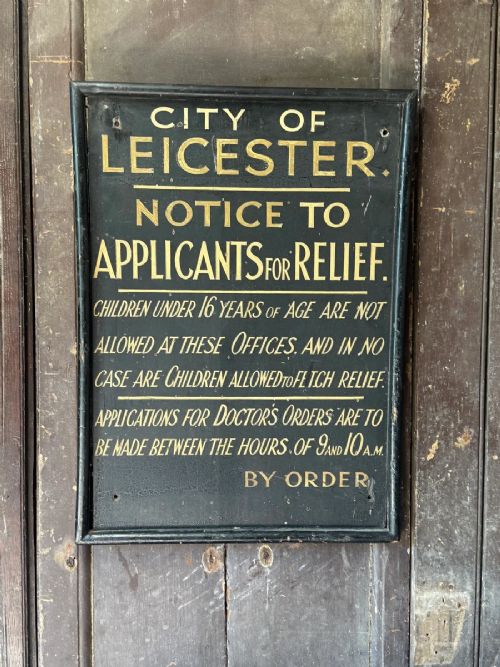
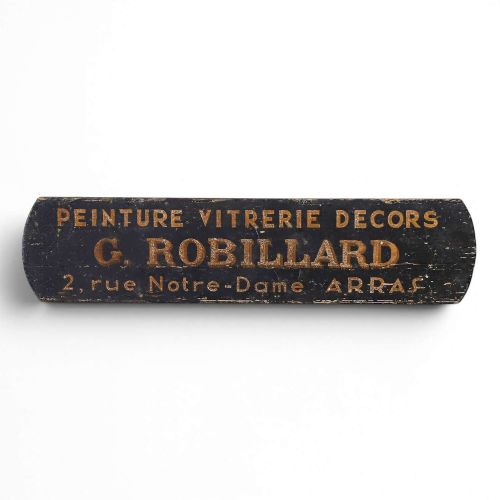
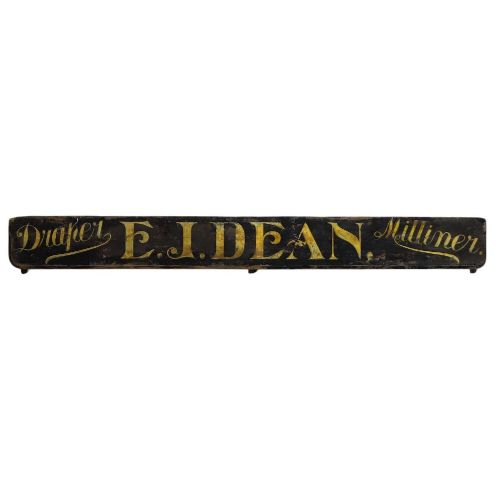
A painted wooden sign serves as a primary piece of commercial history, emerging from shops, public houses, and trade premises across the nineteenth and early twentieth centuries. These boards communicate services, goods, and civic notices through direct lettering and imagery designed to catch the eye of the passing street trade.
Most examples found on this page date from the Victorian, Edwardian, and early twentieth-century periods, spanning trade signs, wall signs, and advertising panels. They arrive shaped by practical necessity, built to endure outdoors or inside busy commercial interiors before finding their way into domestic collections.
How they were made
Signwriters typically worked on timber bases such as pine and mahogany, applying oil-based paints that could withstand regular exposure to the elements. Lettering and pictorial elements often received highlights of gold leaf or contrasting pigments to ensure legibility from a distance.
Boards frequently incorporated metal brackets, glass reflectors, or paper elements alongside the primary wood construction. The preparation involved careful priming of the timber before the freehand application of signwriting and heraldic or pictorial decoration.
Painted Wooden Sign Retail Price Guide 2026
Typical asking prices for painted wooden sign among the pieces listed under this phrase on Sellingantiques today, from the lower quarter to the upper quarter. They describe what is for sale here now, not the wider market.
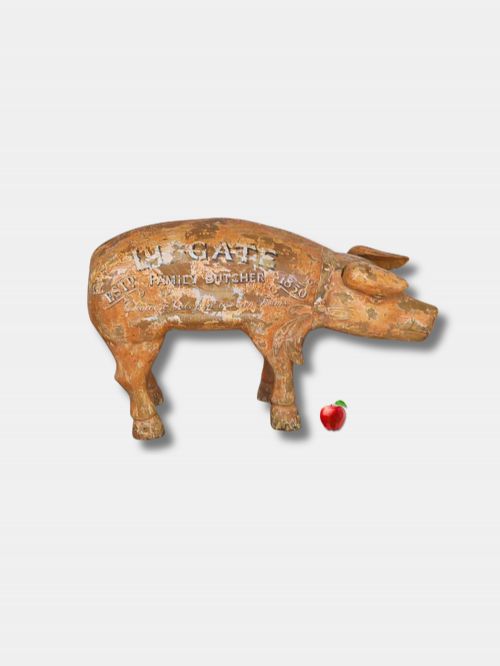
A cow trolley once rolled through a French butcher's shop.
What varies in quality
Quality rests upon the confidence of the brushwork and the clarity of the original typography. A superior piece displays the assured hand of a trained signwriter or folk artist, where letter spacing and pictorial balance hold the eye without hesitation.
Surface preservation dictates distinction. Boards retaining their original untouched paint layers and genuine weathering carry greater historical integrity than pieces that have suffered aggressive overpainting or modern restoration.
R.D. Roberts·W Williams
The Painted Wooden Sign Glossary
- Trade Sign
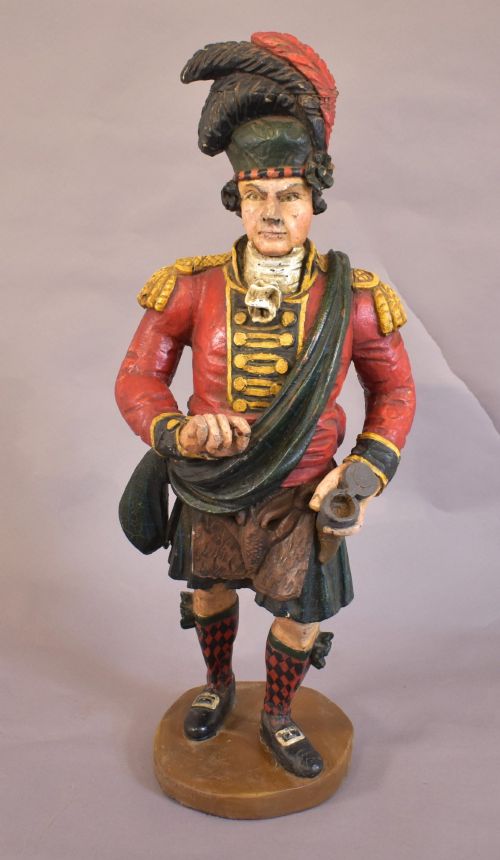
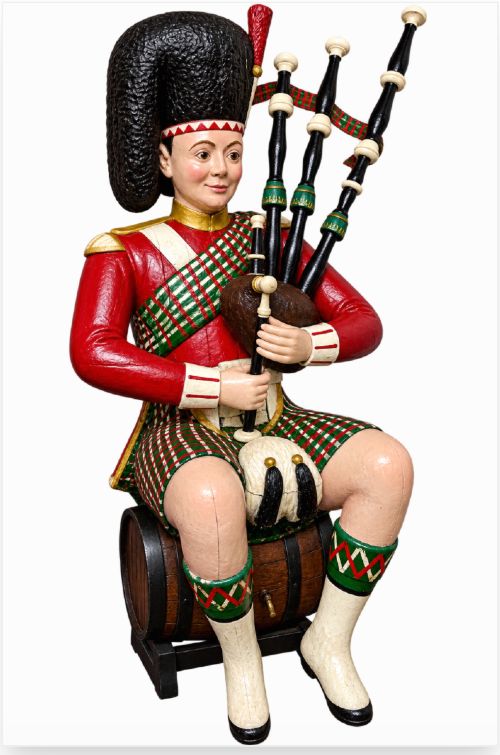
- A board or hanging object displayed outside a business to advertise the profession or goods sold within. These range from simple painterly boards to elaborate carved figures.
- Folk Art
- Objects created by self-taught makers or traditional craftspeople working outside academic art traditions. In signage, this appears in idiosyncratic lettering and charming pictorial interpretations.
- Gold Leaf
- Gold beaten into extremely thin sheets used for gilding lettering and highlights on signs. It catches ambient light to ensure the text remains visible in fading evening conditions.
- Architectural Salvage
- Building components and exterior fixtures rescued from structures slated for demolition. Many exterior signs and advertising panels survive through this preservation route.
Painted Wooden Sign: Frequently Asked Questions
Where were these signs displayed?
These boards hung outside shops, public houses, and workshops to attract passing pedestrian and carriage trade. Many occupied prominent exterior positions above doorways or along street facades.
Others functioned inside commercial premises, railway stations, and fairgrounds to direct the public or announce specific services.
How do I hang a heavy wooden sign?
Due to their solid timber construction and age, these signs require secure wall anchors fixed directly into structural studs or masonry. Weight distribution demands robust hanging wire or integrated metal brackets.
Professional consultation ensures the chosen wall can bear the specific load of the board safely.
Should I clean the original paint?
Cleaning should remain minimal, restricted to the gentle removal of loose surface dust with a dry, soft cloth. Moisture and chemical cleaners can lift fragile historic paint layers.
Preserving the untouched surface character maintains both the historical integrity and the visual depth of the piece.
How do I date an antique sign?
Dating relies upon the style of the lettering, the construction of the wooden board, and the type of pigments used. Edwardian and Victorian typography often follows specific regional conventions.
Accompanying trade details or family names referenced in the text can also anchor the piece to a specific era.