
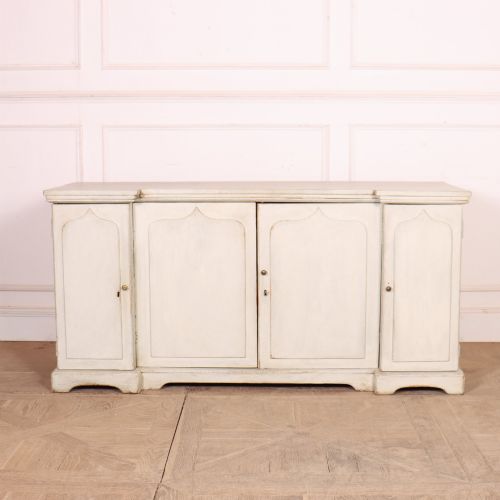
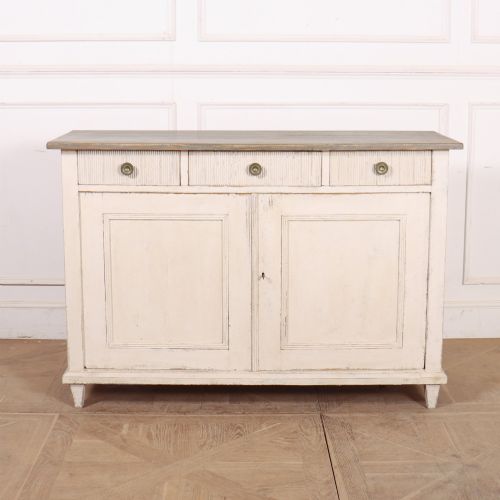
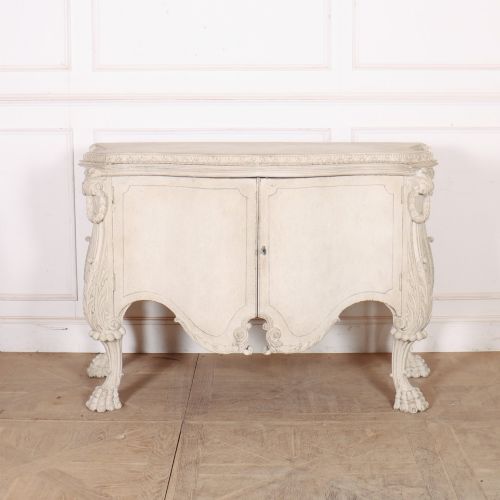
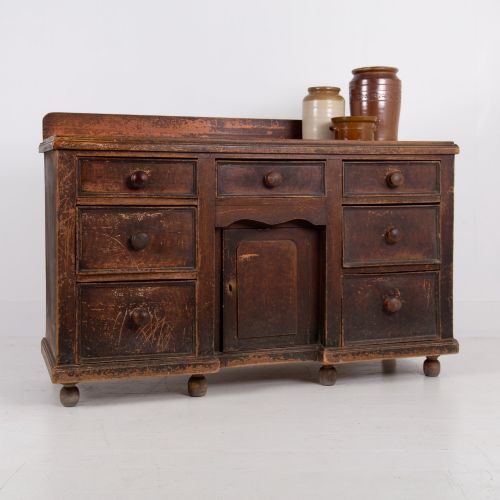
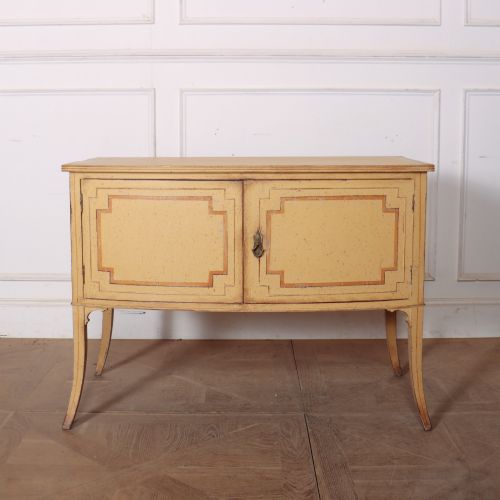
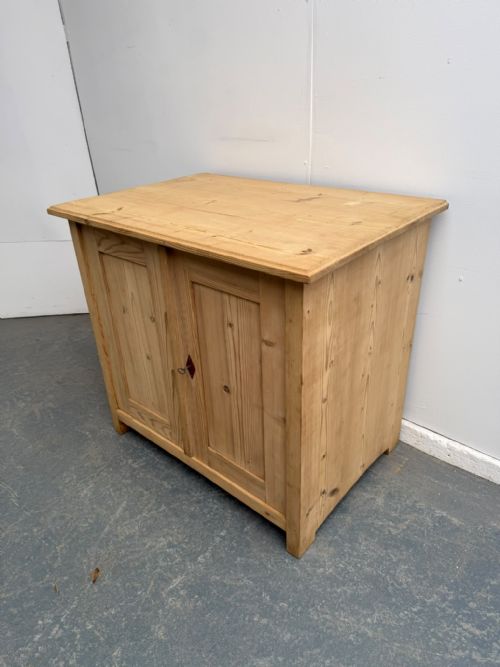
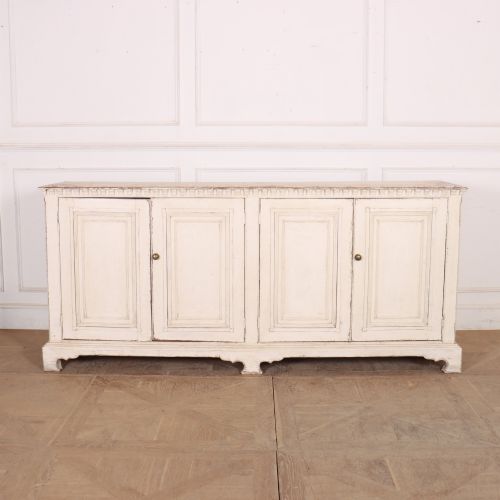


Painted Wooden Buffet
A painted wooden buffet brings domestic history into a room, offering sturdy storage wrapped in centuries of decorative brushwork.
Painted Wooden Buffet
When you search for a painted wooden buffet, you encounter a robust range of storage furniture spanning kitchen cupboards, dresser bases, and side cabinets. These pieces serve practical dining and living space needs while displaying historical surface decoration.
The most common examples on this page are nineteenth-century English dresser bases and continental cupboards, often finished in original paint. Regional forms stretch from English country houses to Scandinavian workshops and French provinces.
Forms vary from low wide storage units to tall linen cupboards and grand enfilades. Each piece reflects the utility of its period, adapted for storing tableware, linens, and provisions.
How they were made
Carpenters constructed these items primarily from solid timber such as pine and oak, utilising traditional joinery methods suited for heavy daily use. Iron and brass hardware provided structural reinforcement and operational fastenings for doors and drawers.
Surfaces received decorative treatments using layered paint finishes, ranging from plain coats to ragwork and hand-painted details. These protective and ornamental layers aged naturally over decades in domestic settings.
Some nineteenth-century cabinets hide whimsical grotesque motifs painted by contemporary hands, marrying strict utilitarian forms with playful decorative art.
What varies in quality
Quality rests in the integrity of the timber construction and the survival status of the surface finish. Pieces retaining their original paint layers without modern intervention hold greater historical consistency.
Proportion and execution distinguish regional vernacular pieces from standard workshop output. Finer examples display balanced scaling and well-preserved decorative detail across doors and drawer fronts.
Melissa White
The Painted Wooden Buffet Glossary
- Enfilade
- A long sideboard or cabinet designed for formal dining rooms, common in continental furniture traditions. These pieces provide extensive surface and interior storage.
- Ragwork
- A decorative paint technique where rags or cloths are used to manipulate wet paint on a surface. This creates textured patterns and mottled colour variations on pine furniture.
- Original paint
- A surface finish applied during the period of manufacture that has not been stripped or modernised. Collectors value this preservation for its historical authenticity.
Painted Wooden Buffet: Frequently Asked Questions
Where were these pieces used?
These items predominantly served in domestic kitchens, dining rooms, and pantries for storing provisions, tableware, and household linens. Their sturdy construction supported daily food preparation and household management.
Over time, many migrated from working kitchens to reception rooms and hallways as domestic layouts evolved and storage needs shifted.
How do I care for original paint?
Maintain painted surfaces by dusting gently with a dry, soft cloth and avoiding chemical cleaners or excess moisture. Keep the furniture away from direct heat sources and strong sunlight to prevent the timber and paint from drying out.
Wax or polish should only be applied if appropriate for the specific finish, consulting a conservator when in doubt about the surface composition.
How do I distinguish regional styles?
Regional differences appear in the choice of timber, mouldings, and the character of the paint application. Swedish and continental pieces often display lighter colour palettes and distinct proportions compared to heavier English country house furniture.
Hardware choices and construction techniques also provide clues to geographic origins, reflecting local workshop traditions of the eighteenth and nineteenth centuries.
Are these pieces suitable for modern living?
Their deep proportions and internal shelving offer practical storage solutions for contemporary homes, fitting well into dining rooms, kitchens, and living spaces. The durable timber frames handle everyday use while adding historical character to a room.
Measuring available floor space and clearance for opening doors is essential before placement, given the generous scale typical of nineteenth-century furniture.