
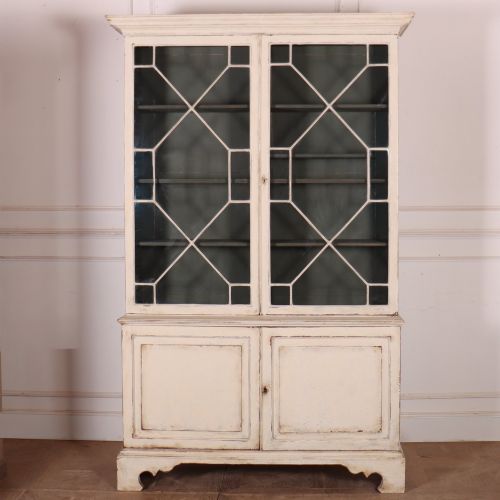
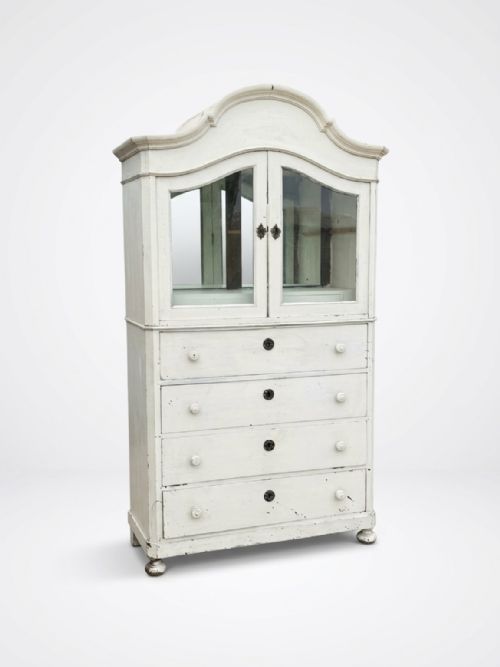
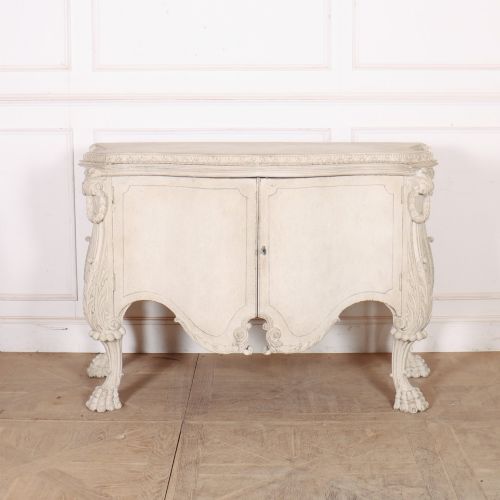
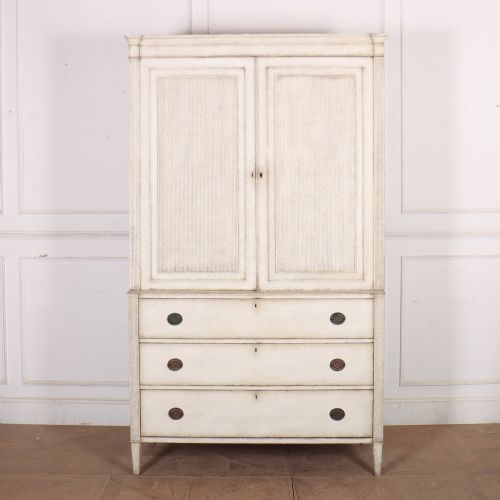



White Painted Linen Cupboard
A white painted linen cupboard brings quiet charm and generous storage to a room, combining practical proportions with historic character.
White Painted Linen Cupboard
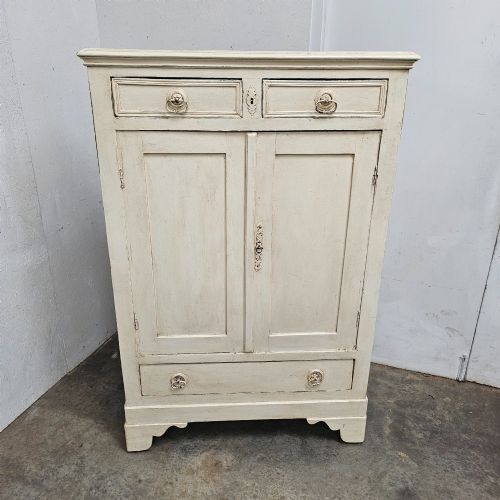
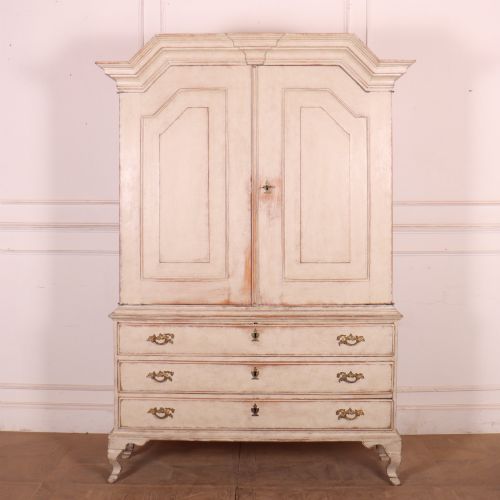
A white painted linen cupboard provides substantial storage for household textiles while displaying the surface patination built up over decades or centuries. When you search for a white painted linen cupboard, you encounter tall freestanding furniture designed to hold garments, bed linen, or household provisions in upright compartments.
The examples gathered here span several regional traditions, originating from English country houses, Swedish farmsteads, and French provinces. These pieces frequently appear in robust pine or timber, finished with accumulated layers of white or off-white paint that reveal subtle wear across the edges and mouldings.
Forms range from simple two-door cupboards and housekeeper's presses to bonnet-top cabinets and glazed bookcases adapted for domestic storage. The 18th century and 19th century periods supply the majority of these listings, alongside Victorian interpretations and regional country styles.
Materials and construction
Pine and painted timber form the primary structural materials for these pieces, offering a stable softwood base that readily accepted successive coats of paint. Joinery relies on traditional pegged mortise and tenon frames, panelled doors, and solid board backs assembled by regional joiners.
Surfaces were coated in traditional oil or lead-based paints, applied in muted white or cream tones that mellowed with age and cleaning. Hardware typically includes cast iron or brass hinges and latches, securing heavy doors while adding utilitarian detail.
Listings feature pine and painted timber pieces spanning the 18th century, 19th century, and Victorian eras.
Factors of quality and distinction
Quality rests upon the integrity of the original timber frame, the proportion of the mouldings, and the survival of early or untouched painted surfaces. Pieces retaining their original hardware and backboards possess greater historical coherence than those altered during later utility.
Finer examples display harmonious architectural proportions, balanced panel layouts, and paint surfaces showing natural patination rather than harsh modern refinishing. The subtlety of regional hand-planed details and the smooth operation of heavy doors distinguish superior country furniture from more utilitarian workshop output.
The White Painted Linen Cupboard Glossary
- Housekeeper's cupboard
- A large storage piece traditionally used in country houses for linens and dry goods, usually featuring upper cupboards and lower drawers or lower doors.
- Bonnet top
- An arched or curved upper cornice moulding found on tall cabinets, reminiscent of historic bonnet shapes.
- Buffet de corps
- A substantial French dining room or hall sideboard and storage unit with enclosed lower cupboards.
- Gustavian
- The Swedish interpretation of neoclassical design, known for restrained symmetry, pale painted finishes, and simplified classical motifs.
- Harlequin
- A term applied to sets or composite pieces where elements from different dates or matching suites are brought together.
White Painted Linen Cupboard: Frequently Asked Questions
Where were these cupboards used originally?
These cupboards served primarily in large country houses, farmhouses, and domestic sculleries to store household textiles, blankets, and provisions.
They stood in bedrooms, hallways, and dedicated linen rooms to protect fabrics from dust and dampness.
How do I care for an old painted finish?
Maintain the painted surface by dusting gently with a dry, soft cloth and avoiding harsh modern cleaning chemicals.
Keep the timber away from direct heat sources and sudden humidity changes to prevent the paint from cracking or flaking.
What is the difference between Swedish and English country pieces?
Swedish country cupboards often exhibit lighter Gustavian or Scandinavian palettes with smooth panels and restrained neoclassical lines.
English country pieces tend to display more robust pine construction, simple panelled doors, and the varied textures of accumulated domestic paint layers.
Can these cupboards be dismantled for moving?
Most antique cupboards of this scale are built as single solid units or two-part pieces consisting of an upper and lower section.
Check the construction details of each specific cabinet to confirm whether the cornice, base, or doors can be removed for transport through narrow doorways.