




Painted Wood Hall Table
A painted wood hall table brings architectural presence and a functional surface to an entrance, spanning periods from the eighteenth century to the twentieth.

Painted Wood Hall Table
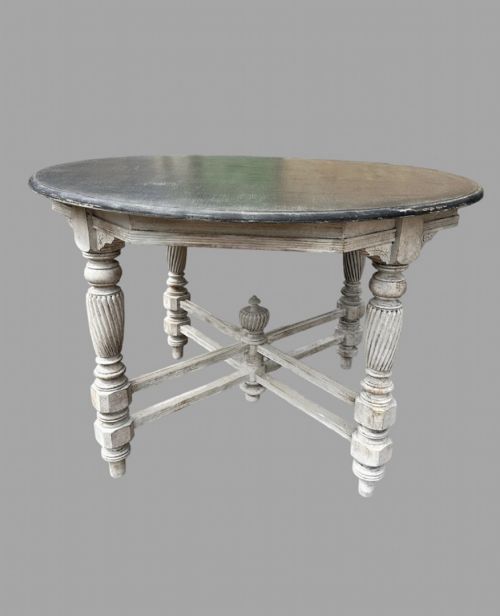
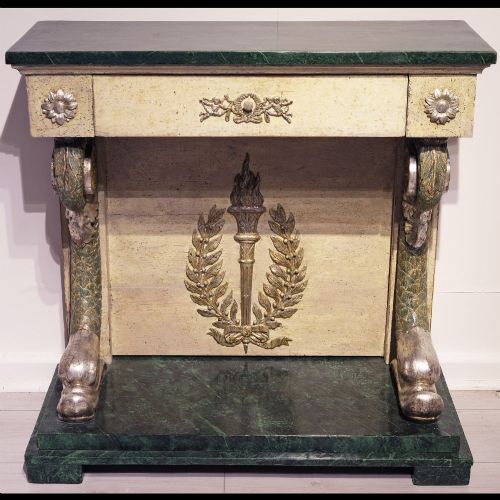
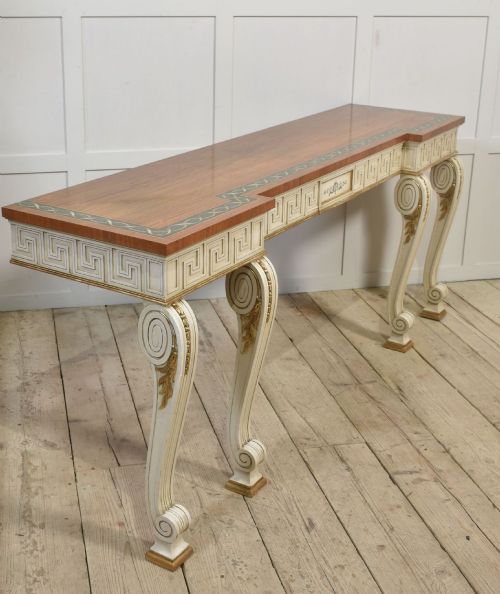
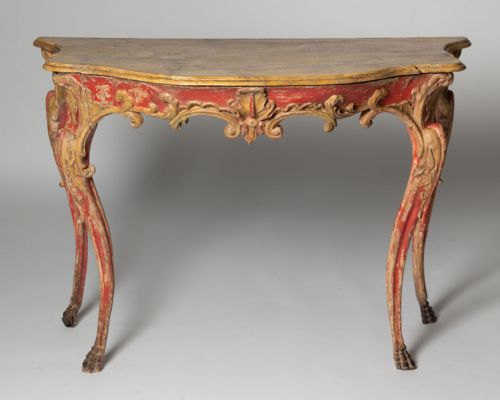
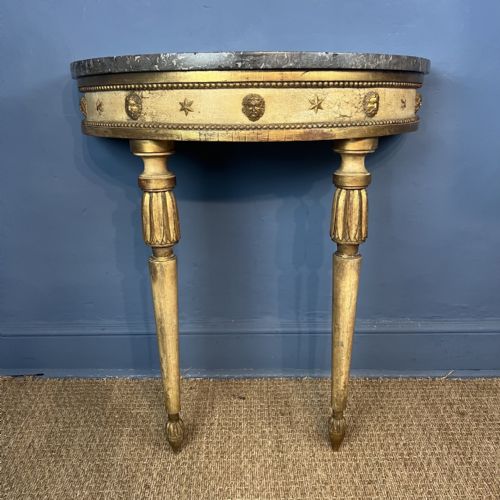
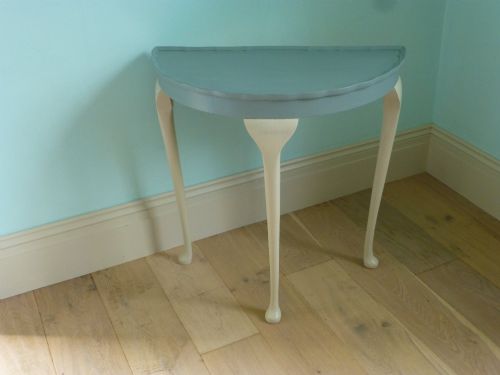
A painted wood hall table takes many structural forms, appearing most frequently as console tables, side tables, and serving tables designed to sit flush against a wall in a narrow space. These pieces emerge from diverse traditions, ranging from English country and Georgian workshops to Gustavian, Italian, and French neoclassical ateliers.
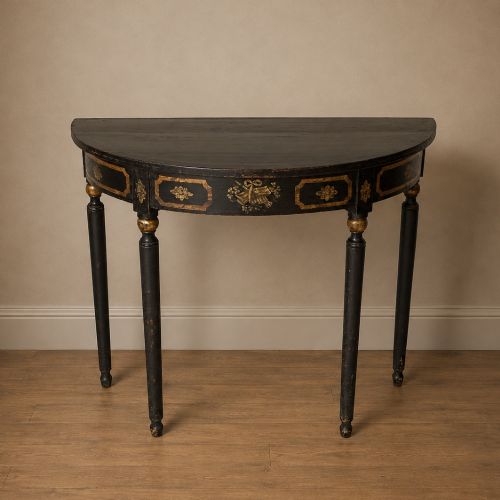
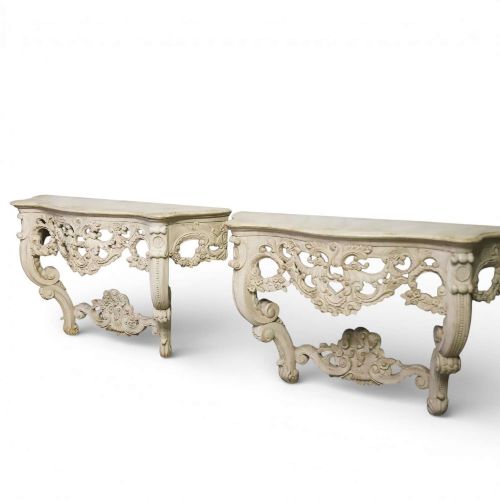
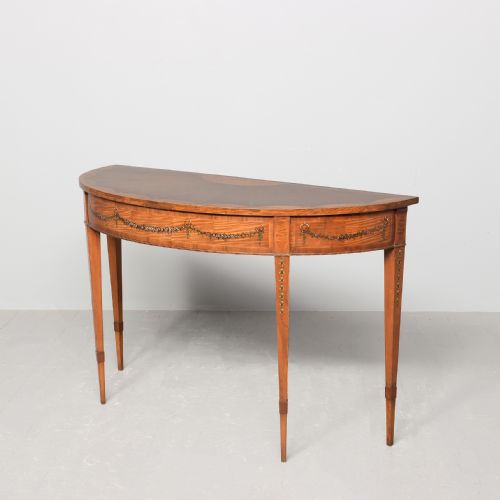
The selection here encompasses items from the eighteenth and nineteenth centuries alongside early twentieth-century examples, including pairs and demi-lune shapes specifically suited to entranceways. Buyers encounter console tables, drop-leaf or fixed side tables, and occasional pieces that combine timber construction with surface decoration.
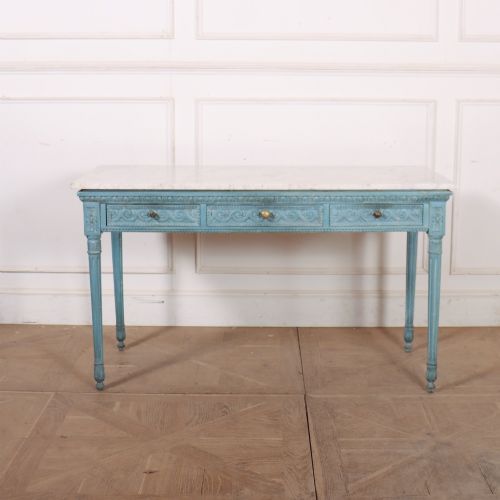
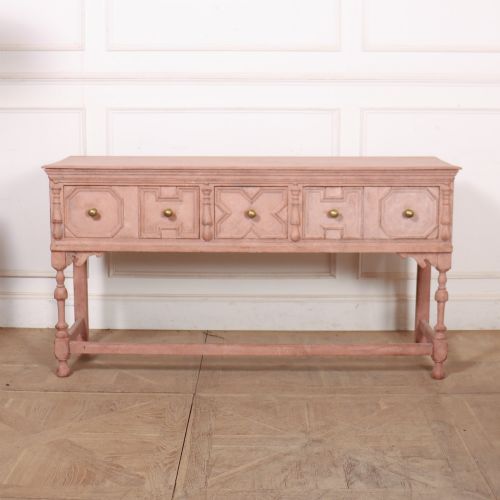
Makers utilised pine, oak, and satinwood as foundations for paint, gesso, and gold leaf, frequently incorporating marble tops into French and Italian designs. The forms span functional storage pieces like dresser bases to purely decorative wall console tables.
Materials and construction methods
Carpenters constructed these tables using solid timbers such as pine, oak, and satinwood, often shaping them into curved demi-lune profiles or rectangular side formats. Surface decoration relied upon layers of paint, sometimes augmented with gesso mouldings and parcel gilt details.
Many continental and domestic examples feature applied finishes including black lacquer, antique white, cream, and original ochre paint. Marble slabs frequently form the upper surfaces on French and Italian console tables, resting directly upon carved wooden bases.
Several tables feature faux bamboo turnings, proving that nineteenth-century makers could not resist a botanical impersonation.
Distinctions in quality and execution
The integrity of the surface finish dictates much of the character, distinguishing pieces retaining original paint or gilding from later overpainting. The subtlety of hand-carved details, particularly on Italian and French console frames, separates standard utility items from ambitious decorative works.
Structural joinery in the timber carcass and the secure seating of marble tops indicate the standard of original workshop production. Tables that maintain balanced proportions in demi-lune or D-end formats demonstrate considered design execution.
The Painted Wood Hall Table Glossary
- Demi-lune
- A half-moon shape used for tables designed to stand flat against a wall. This format is common among entrance and console tables due to its shallow depth.
- Parcel Gilt
- Partially gilded with gold leaf to highlight specific carved details or raised ornaments on a painted wooden surface.
- Gueridon
- A small circular table, often French in origin, supported by a central column or figures.
- Dresser Base
- A low rectangular cabinet or table featuring drawers and sometimes a potboard shelf below, originating from domestic English kitchens and halls.
- Gesso
- A plaster-like mixture applied to wood surfaces as a smooth base for painting and gilding.
Painted Wood Hall Table: Frequently Asked Questions
Where should a painted wood hall table be placed?
These tables suit entrance halls, corridors, and narrow reception spaces where a shallow footprint is necessary. Demi-lune and console formats fit directly against walls, offering a surface for lamps or decorative objects without obstructing passage.
Larger serving tables and dresser bases function effectively in wider hallways or dining spaces, providing both display area and occasional storage within drawers.
How do I care for antique painted surfaces?
Painted and gilded wood requires gentle cleaning with a dry or very slightly damp soft cloth to remove dust. Avoid chemical solvents, harsh detergents, and excessive moisture, which can lift or damage historic paint layers.
Keeping timber pieces away from direct heat sources and strong sunlight preserves the stability of the wood and prevents the paint from drying out or cracking.
What is the difference between a console table and a side table?
A console table is traditionally designed to be fixed to a wall or supported at the front by legs, often featuring a flat back designed to meet a vertical surface. Side tables are freestanding pieces finished on all sides and capable of standing independently in the centre of a room.
In modern usage, the terms frequently overlap, particularly with painted pieces intended for hallways where both types serve similar decorative functions.
How can I tell the period of a painted table?
Dating relies upon examining construction marks, timber choice, and the style of hand-carving or painted decoration. Eighteenth-century pieces often display hand-cut joinery and specific regional palettes like Gustavian cream or Georgian mahogany and pine.
Nineteenth and early twentieth-century examples incorporate distinct revival styles, such as Regency faux bamboo, Victorian black lacquer, and Edwardian satinwood finishes.