



Louis XVI Pier Table
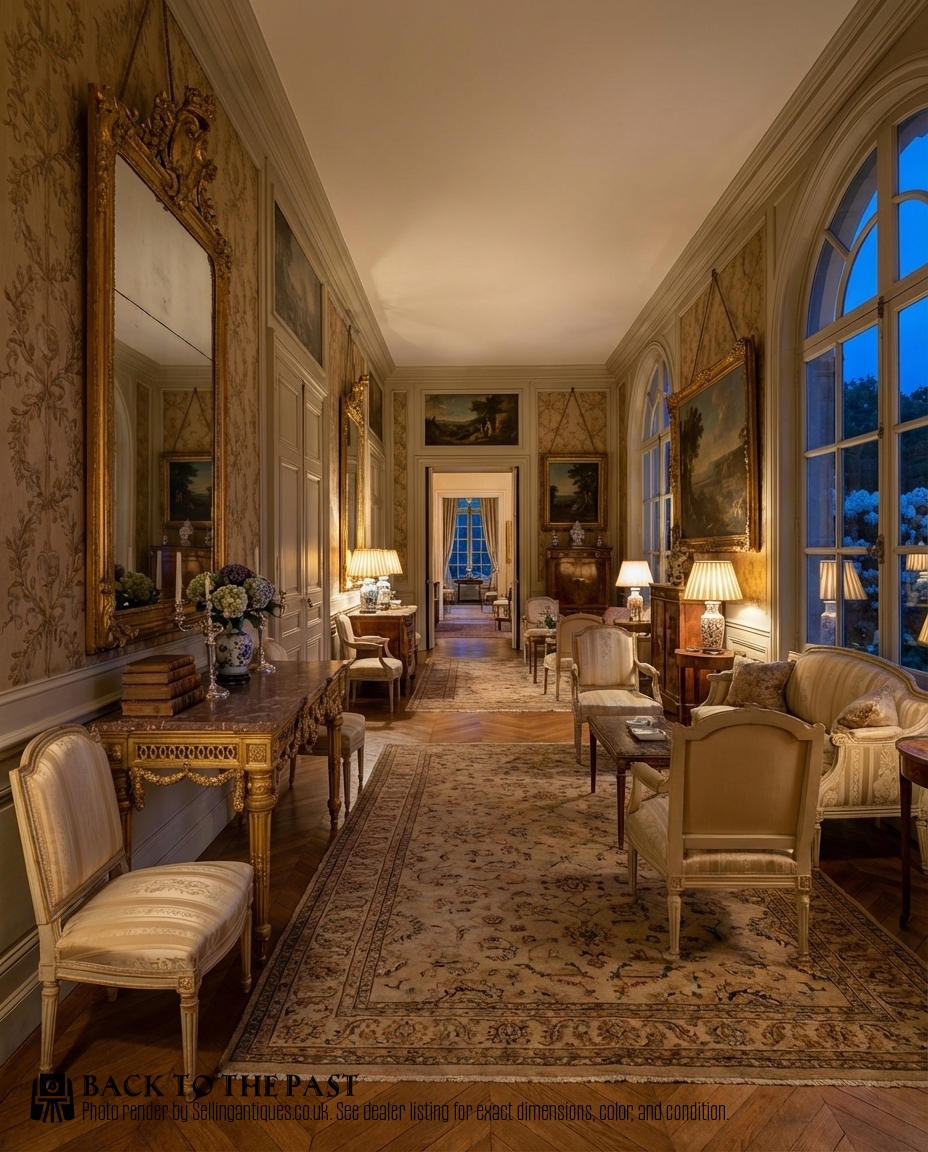
A louis xvi pier table brings architectural balance to a grand hall, anchoring a wall beneath a mirror with polished stone and gilded carving.
Louis XVI Pier Table
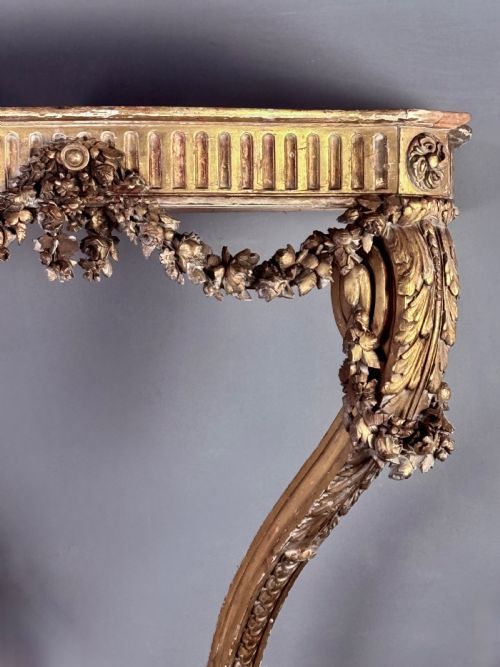
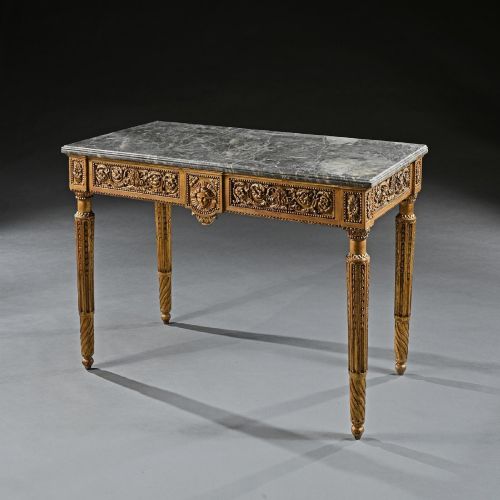
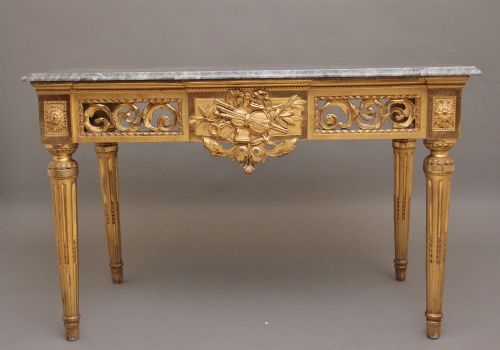
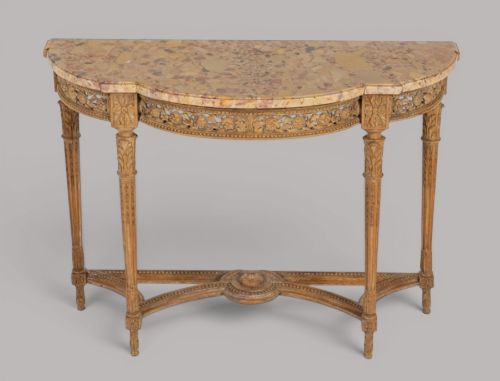
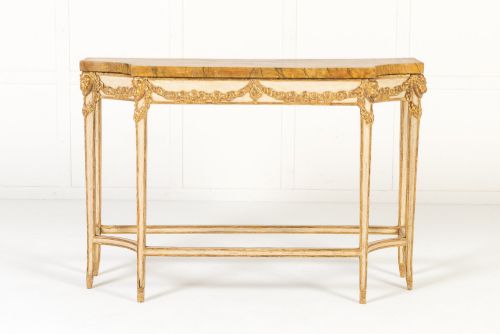
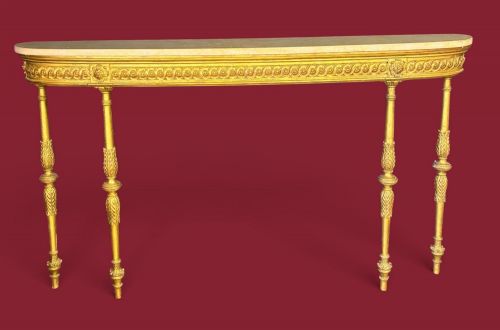
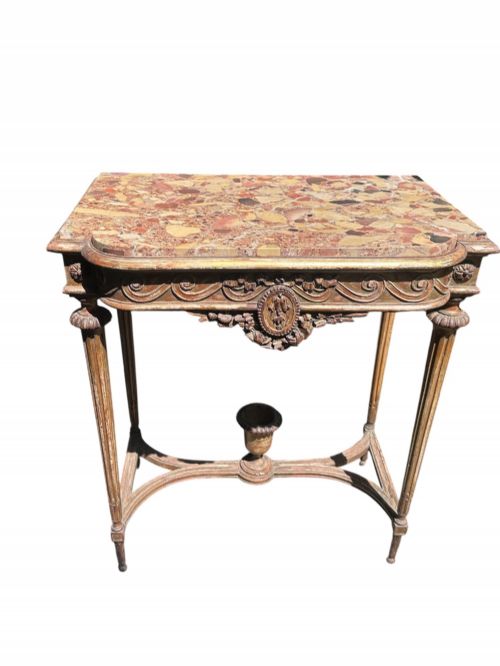
A louis xvi pier table is a console designed to stand flat against a wall, frequently positioned between windows beneath a matching glass plate. These items appear across eighteenth, nineteenth, and early twentieth century periods in diverse regional interpretations.
The selections span authentic eighteenth century French and Italian examples alongside later nineteenth century revivals. Buyers encounter console tables, side tables, and paired console tables with mirrors, rendered in forms from serpentine outlines to half moon shapes.
Materials and construction methods
Giltwood, gesso, and gold leaf dominate the surface treatments, applied over carved wood structures such as walnut, mahogany, and painted timber. Artisans combined intricate hand carving with painted finishes, parcel gilding, and marquetry detailing.
Tops consist predominantly of marble, alongside granite, supported by rigid timber frames built for wall attachment. Surviving pieces demonstrate period joinery combined with decorative plaques and inset glass mirror plates.
Listings feature pieces spanning the eighteenth century through the early twentieth century, incorporating Neoclassical, Victorian, and Regency revival styles.
Distinctions in craftsmanship
Quality rests in the crispness of the hand carving and the depth of the gilding upon the gesso and wood. Superior items display refined proportions and detailed figural or floral motifs executed by skilled workshops rather than mass production.
The selection of the stone top marks a distinct tier, with heavy marble and granite slabs fitted precisely to the wooden rails. Integration between the console base and its matching mirror indicates higher design ambition.
Felix Alfred Ternisien·Donald Ross
The Louis XVI Pier Table Glossary
- Pier table
- A table designed to stand against the wall between two windows, often paired with a matching wall mirror. These forms anchor narrow wall spaces in traditional interiors.
- Giltwood
- Timber coated with a thin layer of gold leaf or gold paint. This technique creates a luminous surface that catches candlelight or daylight.
- Gesso
- A plaster mixture applied to wood surfaces as a smooth base for gilding and painting. It allows carvers to achieve sharp, intricate relief details.
- Marquetry
- The art of applying pieces of veneer to a structure to form decorative patterns and pictures. It demonstrates high cabinetmaking skill through contrasting timbers.
- Trumeau
- A decorative wall panel or mirror frame positioned between windows or above a fireplace. These architectural elements coordinate directly with the table below.
Louis XVI Pier Table: Frequently Asked Questions
What is a pier table used for?
A pier table serves as a decorative console placed flat against a wall, historically positioned beneath a tall mirror between windows.
It provides a surface for ornamental objects like candelabra or vases while completing the architectural symmetry of a formal room.
How do I identify a louis xvi pier table?
Look for straight tapered fluted legs, neoclassical carvings, and symmetrical geometric lines that depart from curving rococo excess.
Materials frequently include giltwood or painted timber paired with an inset marble or granite top.
Are these tables free standing?
These tables are designed to stand flat against a wall rather than float in the middle of a room. Many historical examples rely on wall fixings or the weight of the stone top for complete stability.
Console tables and pier tables require this structural support because their front legs carry the primary visual and physical weight.
How do I care for marble and giltwood?
Dust giltwood gently with a soft dry brush to protect the delicate gold leaf or painted surface from moisture and abrasion.
Clean marble tops using a damp cloth and mild neutral soap, avoiding acidic substances that etch the polished stone.