


Painted Wood Decoy
These painted wood decoy pieces are working working-bird carvings turned folk art, and you want one for their bold silhouette and surface.
Painted Wood Decoy
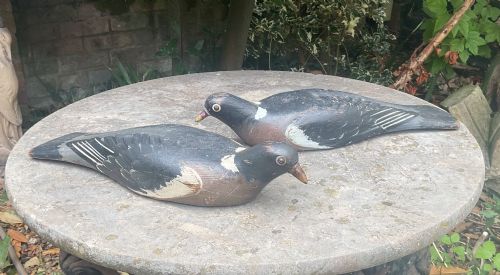
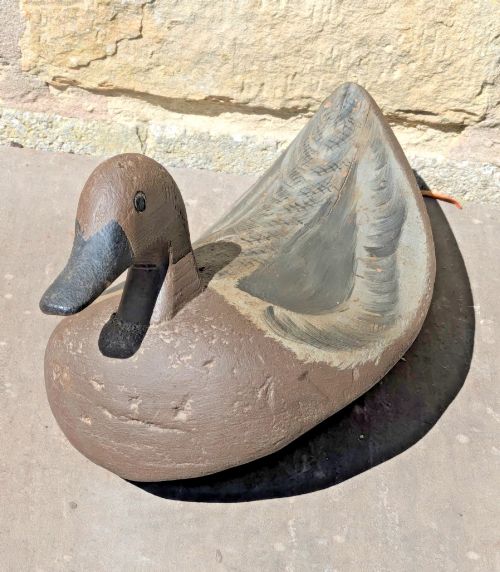
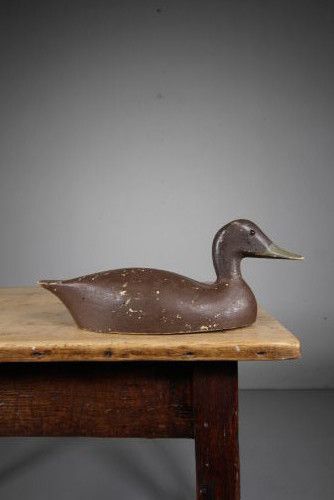
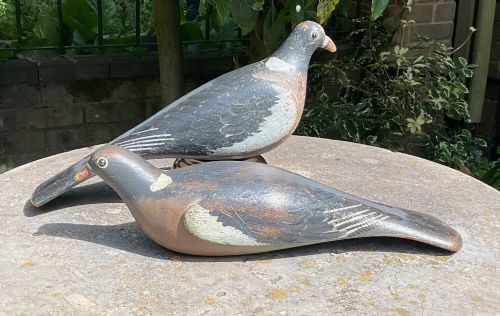
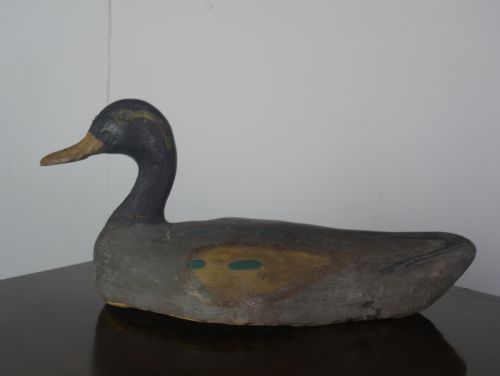
A painted wood decoy is a carved bird form made to attract waterfowl or pigeons, surviving now as a piece of folk art. You will most commonly meet ducks and pigeons on this page, shaped from timber and painted by hand.
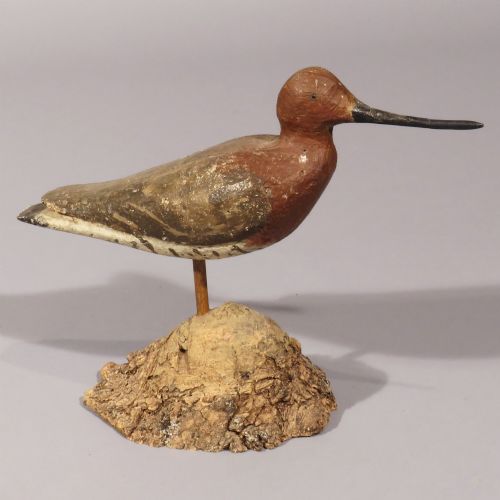
The pieces available span from the nineteenth century through the Edwardian era up to the nineteen-thirties. English examples predominate, alongside rarer forms such as geese, godwits, and loons with chicks.
Most items arrive as single working figures, though pairs and small sets occasionally surface in the listings. Their origins lie in utilitarian shooting practice, but they now function purely as decorative sculptures.
How they were made
Makers fashioned these sculptures from carved wood, timber, and occasionally bark, shaping the block with basic tools to create the simple contours of a bird. Glass was sometimes utilised for eyes to add a lifelike glint to the head.
Paint was applied directly to the wooden surface in polychrome schemes, often building up layers of feather patterns and naturalistic colour over time. Metal fixtures or internal weighting would originally anchor the bird on water or land.
One notable loon swims with its carved chick trailing close behind.
What varies in quality
Quality rests in the sculptural vigour of the carving and the integrity of the original painted surface. Pieces that retain their early polychrome skin without heavy modern intervention hold greater visual presence.
The distinction between a standard workshop piece and a finer folk art sculpture lies in the economy of the form and the character of the brushwork. Smoother anatomical accuracy sits at one end, while robust, simplified folk styling defines the other.
Harry Boddy
The Painted Wood Decoy Glossary
- Folk art
- Objects created by self-trained or traditional artisans outside academic traditions. These pieces rely on utilitarian function transformed by regional style.
- Polychrome
- Decorated in multiple colours. This term describes painted wooden surfaces that retain various hues of original pigment.
- Edwardian
- Pertaining to the reign of King Edward VII, spanning the early twentieth century. Pieces from this period often display refined carving techniques alongside traditional forms.
- Decoy
- A carved bird model used to lure game within range. In modern collections, these working objects are appreciated as decorative sculptures.
Painted Wood Decoy: Frequently Asked Questions
What is a painted wood decoy?
A painted wood decoy is a carved timber bird originally built to attract wildfowl or pigeons for shooting.
Today, these objects are collected and displayed as English folk art sculpture.
How old are these decoys?
The examples seen here mostly date from the nineteenth century, the Edwardian period, and up through the nineteen-thirties.
Earlier pieces show the wear of utilitarian service outdoors.
Which birds are represented?
Ducks and pigeons appear most frequently across the listings, reflecting the common quarry of the makers.
Geese, godwits, and loons with chicks also occur in smaller numbers.
How do I live with them?
These pieces suit placement on mantelpieces, bookshelves, or side tables where their silhouettes can be viewed clearly.
Keep them away from direct heat sources to protect the historic painted wood surfaces.
What materials were used?
Carvers utilised local timber, carved wood, and bark to form the body of the bird.
Paint provides the surface colour, while glass was occasionally added for eyes.