
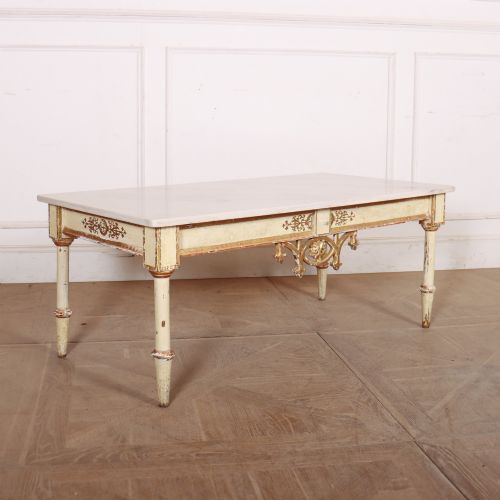
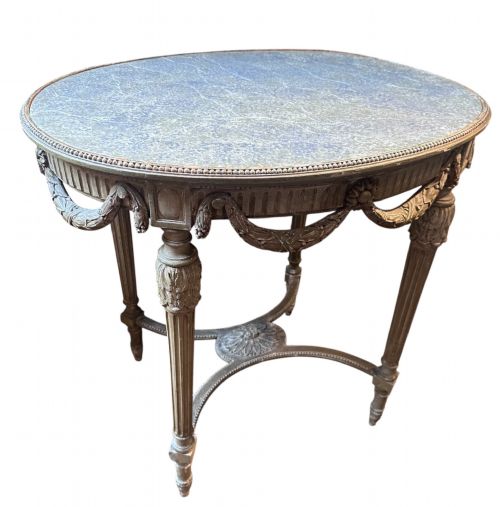
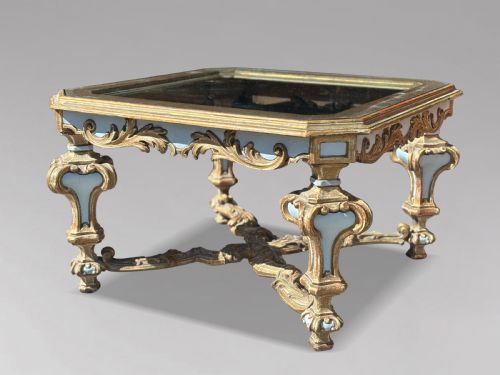


Painted Wood Center Table
These painted wood centre table examples bring character and hand-finished charm to a room, offering surface space with distinct historical style.
Painted Wood Center Table
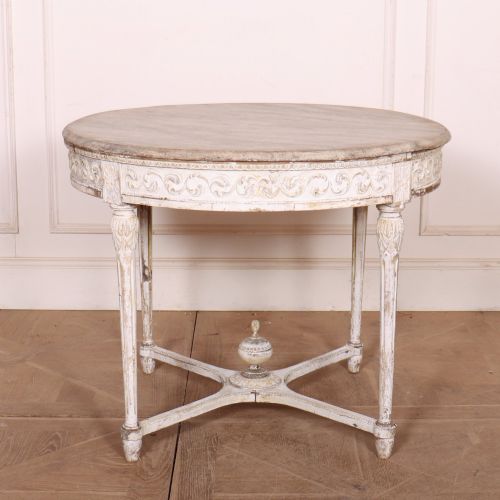
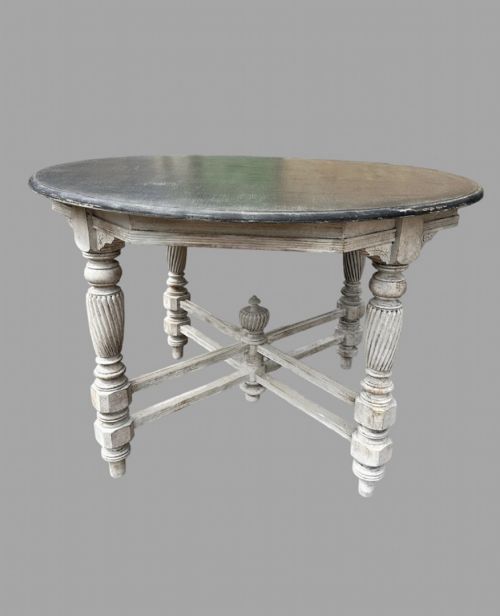
A painted wood centre table stands as a decorative focal point in a room, offering both a functional surface and a distinct artistic finish. When you search for a painted wood centre table, you encounter diverse forms ranging from French Provincial gueridons to substantial Victorian pieces and Swedish pedestal tables.
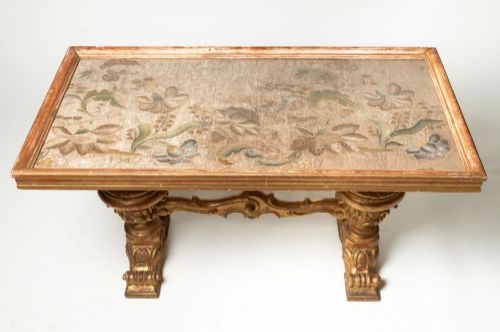
The selection includes round occasional tables, coffee tables, and breakfast tables originating from the nineteenth and early twentieth centuries. Many examples incorporate marble tops or giltwood details alongside their painted wooden frames.
Stylistic influences span French Louis XV and Louis XVI, Italian Baroque, and Gustavian traditions. These pieces reflect regional European aesthetics, uniting utility with decorative painted surfaces.
Materials and Craftsmanship
Construction relies on timber foundations, frequently utilising pine, sycamore, or walnut, shaped through traditional joinery and carved wood techniques. Artisans applied layers of paint, sometimes incorporating parcel-gilt details or varnish martin finishes to enrich the visual depth.
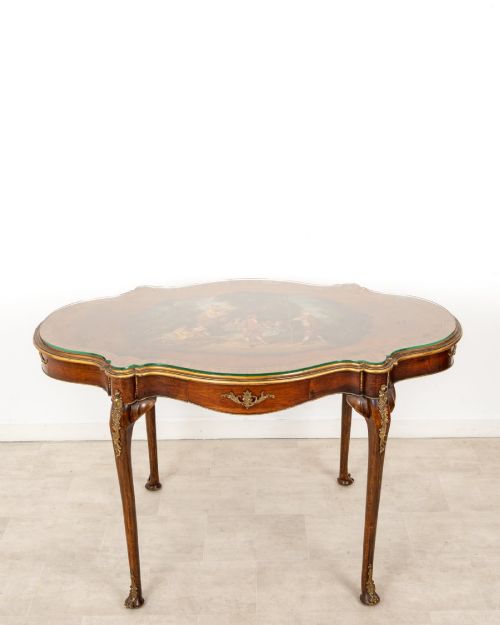
Many tables incorporate heavy inset marble tops requiring robust wooden frames for support. Glass and gilt bronze mounts appear on select pieces, combining sturdy structural materials with ornate decorative elements.
Listings feature painted wood centre tables spanning the nineteenth and twentieth centuries, incorporating materials like marble, pine, and giltwood.
Factors That Distinguish Quality
The sophistication of the painted surface work separates simpler vernacular pieces from high-status examples. Hand-applied decorative motifs, original layered paint, and subtle parcel-gilt detailing indicate superior craftsmanship.
The integration of materials such as genuine marble slabs and cast gilt bronze mounts distinguishes finer tables. Structural integrity, refined carving on the wooden base, and well-preserved period finishes define the upper tier of the range.
Harrods
The Painted Wood Center Table Glossary
- Gueridon
- A small French table, often round and supported by a single central pedestal or columns. These tables frequently feature marble tops and decorative painted finishes.
- Parcel-gilt
- A decorative technique where specific carved areas or details are partially gilded with gold leaf over a painted wooden base. This adds contrast and highlights the craftsmanship.
- Vernis Martin
- A simulated Japanese lacquer finish developed in eighteenth-century France and emulated later. It involves multiple layers of varnish to create a smooth, luminous surface.
- Sycamore
- A dense hardwood often utilised for furniture construction due to its stable nature. It provides a fine grain that accepts painted and polished finishes effectively.
- Gustavian
- The Swedish interpretation of French neoclassical design characterised by lighter painted finishes and restrained classical carving. This style emphasises pale colours and functional elegance.
Painted Wood Center Table: Frequently Asked Questions
How do I clean a painted wood centre table?
Dust the surface regularly with a soft, dry cloth to prevent accumulation. Avoid harsh chemical cleaners that can damage the historical paint or varnish layers.
For marble top variants, wipe spills immediately with a damp cloth and mild soap. Protect the wooden base from excessive moisture and direct sunlight to preserve the finish.
How do I identify the period of a table?
Examine the construction methods, wood types, and decorative motifs to determine the era of origin. Nineteenth-century pieces often display hand-carving and traditional joinery distinct from later twentieth-century manufacturing.
Stylistic cues such as Louis XV curves or Gustavian restraint offer strong hints regarding the date. Comparing the painted finish to known period palettes further clarifies the timeline.
Are marble tops original to these tables?
Many French and Italian tables were designed specifically to accommodate inset marble slabs from the outset. The weight of the marble requires robust wooden framing beneath to ensure stability.
Inspecting the edge where the wood meets the stone reveals how the top was fitted. Original marble often shows age-appropriate patination that matches the wear on the base.
Where should I place a painted centre table?
Position the table as a focal point in a hallway, drawing room, or open living space where its decorative finish is visible from multiple angles. Ensure there is enough clearance around it for comfortable movement.
Keep the piece away from radiators and intense heat sources to prevent the wood from warping and the paint from cracking. Pairing the table with complementary seating enhances its visual impact.