
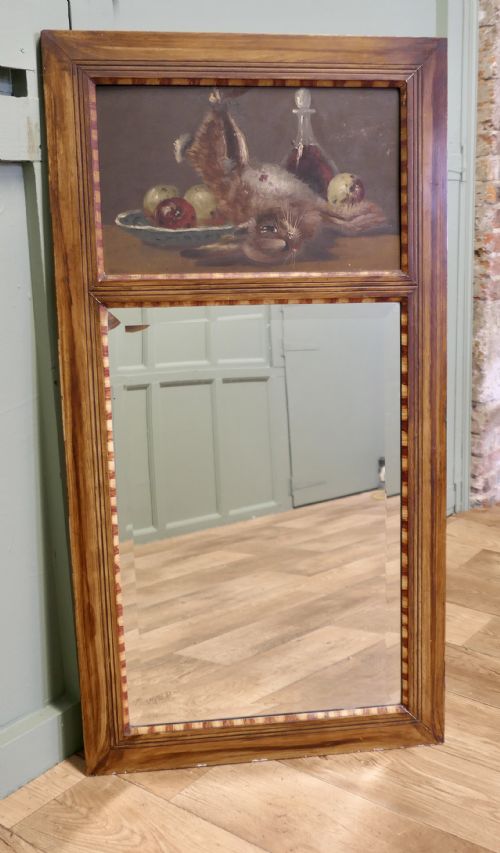
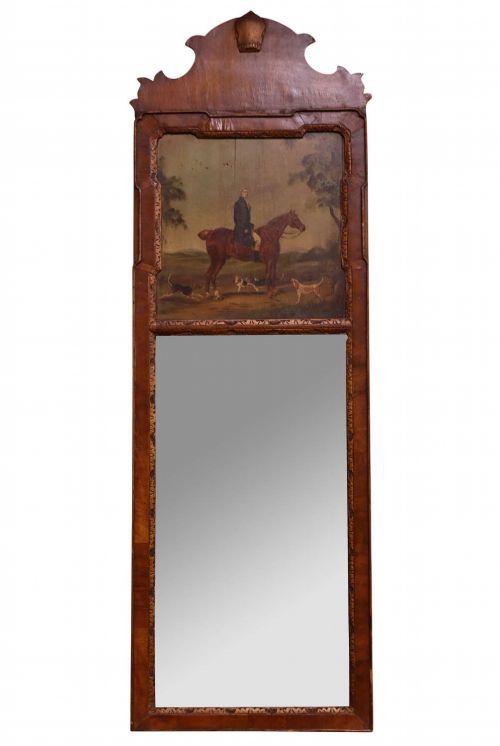


Painted Walnut Mirror
A painted walnut mirror brings together rich timber and hand-painted artistry, offering a striking focal point for any wall.
Painted Walnut Mirror
When you search for a painted walnut mirror, you are looking at wall-hung and pier mirrors that combine warm wood frames with painted decorative panels, often featuring equestrian scenes, religious subjects, or naval views. These pieces span several centuries and revival movements, ranging from Continental examples to English interpretations.
On this page, you are most likely to meet pieces from the Victorian era up through the early twentieth century, alongside earlier eighteenth-century continental designs. The forms include tall pier mirrors and wall-mounted frames, sometimes accompanied by dressing furniture with swing mirrors.
How they were made
Makers utilised solid walnut and burr walnut for the frames, frequently applying gilt wood or giltwood accents to highlight the carved mouldings and architectural outlines. The timber provides a deep, figured grain that contrasts with the painted sections.
The decorative elements consist of oil paint on canvas or directly onto wooden panels inset within the frame. These hand-painted scenes depict maritime views, floral foliate panels, or figurative subjects set above the glass plate.
Several mirrors swap standard floral decoration for dramatic nautical sea views and painted horses.
What varies in quality
The fineness of the hand-painted scene separates standard production from superior examples, with detailed brushwork and balanced composition setting the best panels apart. The quality of the walnut timber grain, especially figured burr walnut, also dictates the visual weight of the frame.
Proportion and execution in revival styles matter significantly; pieces that successfully capture the proportions of George I or Queen Anne designs demonstrate greater skill in the joinery and carving of the timber.
The Painted Walnut Mirror Glossary
- Pier mirror
- A tall mirror designed to hang on the pier of wall space between windows. These tall formats often incorporate painted panels above the glass.
- Burr walnut
- A specialised timber cut from walnut tree growths, yielding a highly swirled and mottled grain pattern. It is prized for decorative veneer work on high-end frames.
- Trumeau
- An architectural mirror or panel set into a wall, featuring an upper section containing a painted or carved scene. French country examples frequently use this format.
- Giltwood
- Wood that has been treated with gold leaf or gold paint to create a metallic finish. It appears alongside walnut to accent carved details and mouldings.
- Foliate panel
- A decorative section painted with leaf and plant motifs. These panels sit within the frame above the main mirror glass.
Painted Walnut Mirror: Frequently Asked Questions
Where should I hang a painted walnut mirror?
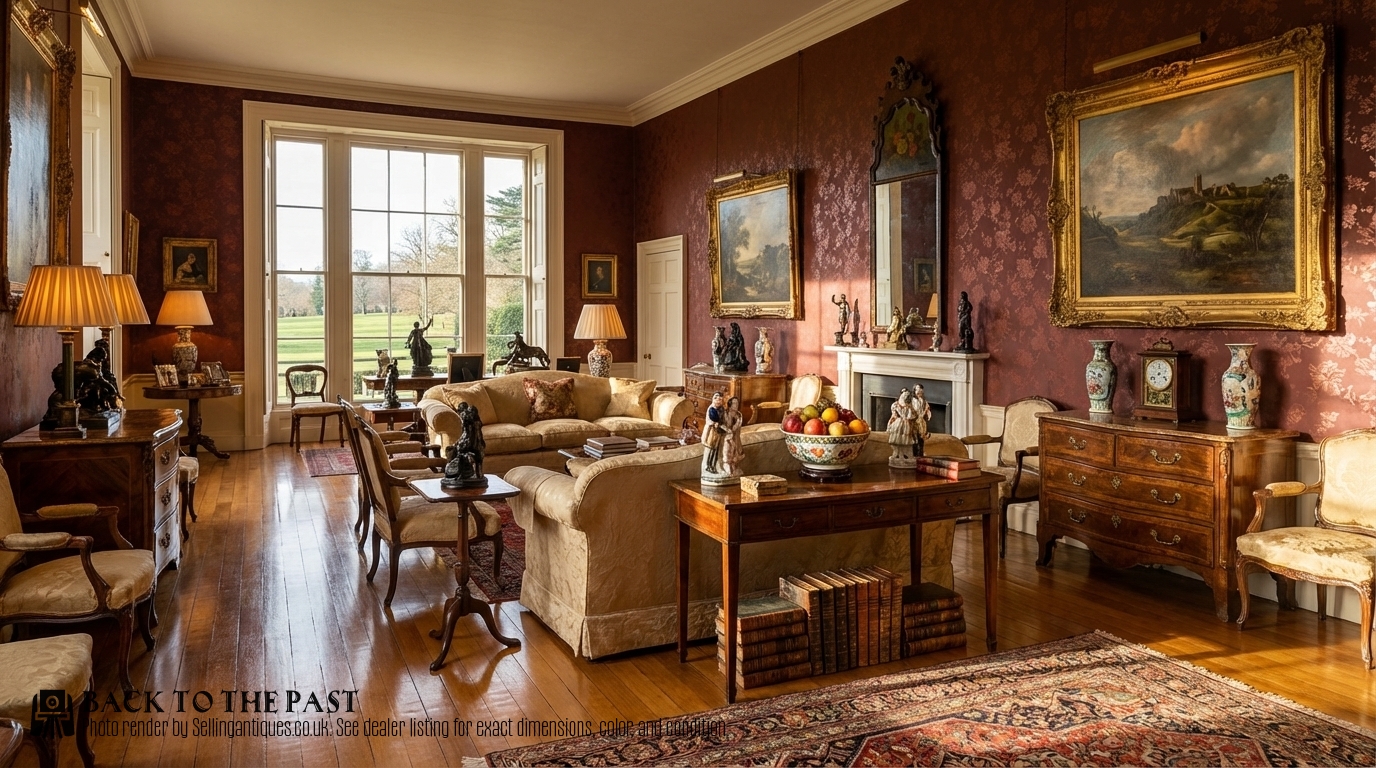
These mirrors suit rooms where the timber grain and painted panel can catch natural light, such as above a mantelpiece or on a prominent hallway wall.
Ensure the wall fixings can support the combined weight of the solid wood frame and the glass plate.
How do I date a painted walnut mirror?
Dating relies on examining the construction of the wooden frame, the backing boards, and the style of the painted subject matter.
Revival pieces from the early twentieth century often emulate eighteenth-century George I or Queen Anne proportions while retaining later fixing methods.
What is the difference between a pier mirror and a wall mirror?
Pier mirrors are traditionally taller and narrower to fit the specific wall space between two windows. Standard wall mirrors take on wider or more balanced proportions for general placement.
Both types in this selection feature walnut frames and painted artistic elements.
How do I care for the painted panels?
Keep the piece away from direct sunlight and excessive moisture to protect the oil paint and the gilded accents. Dust the frame and glass gently with a dry, soft cloth without using harsh chemical cleaners.
Maintaining a stable indoor climate prevents the walnut timber from warping over time.