
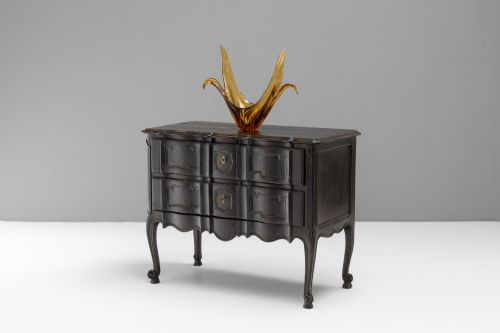
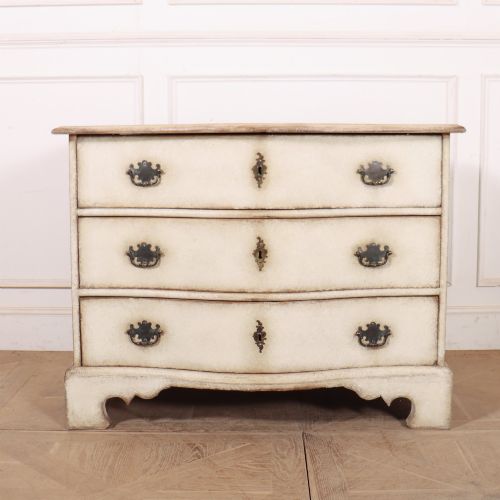
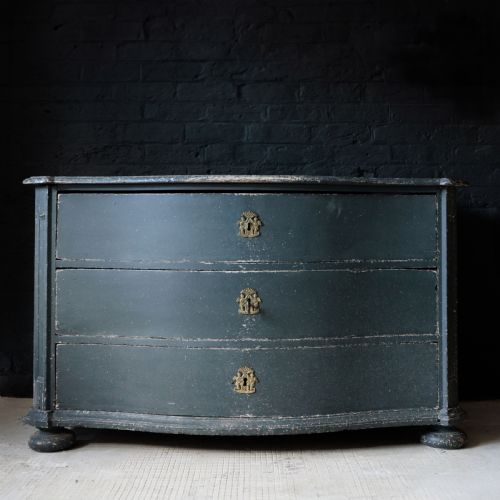


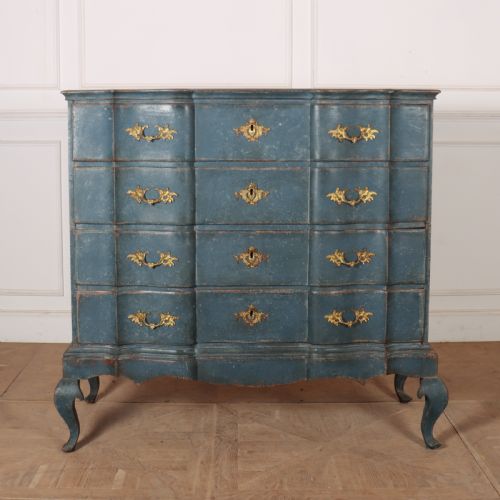


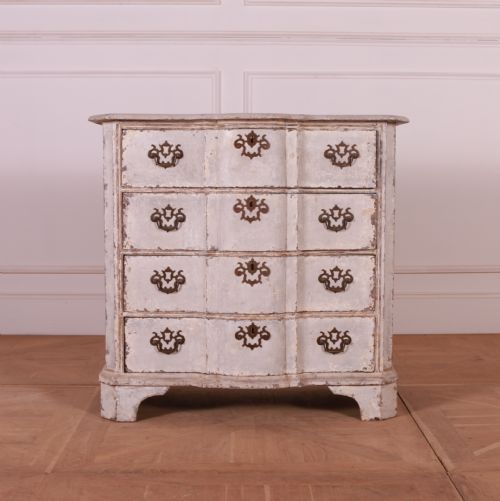
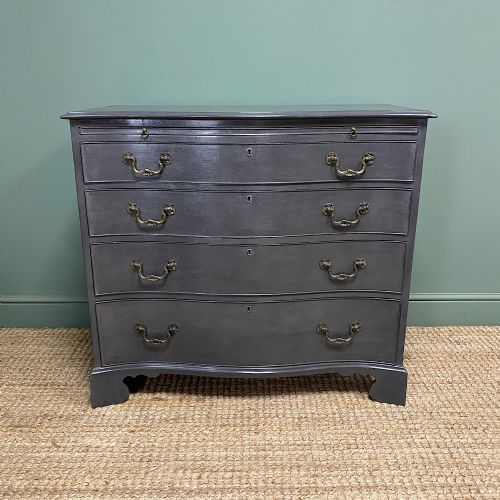
Painted Serpentine Dresser
A painted serpentine dresser brings continental flair and curved elegance to a room, offering generous storage wrapped in flowing lines.
Painted Serpentine Dresser
A painted serpentine dresser takes the form of a chest of drawers or commode featuring a distinct wavy, undulating front edge. When exploring a painted serpentine dresser, buyers encounter pieces spanning the eighteenth century through the twentieth century, alongside Victorian examples.
Originating across European workshops including French, German, Danish, Dutch, and Italian centres, these items appear in regional styles such as French Provincial, Scandinavian Country, German Rococo, and Sheraton Revival. They serve primarily as practical drawer units while functioning as striking decorative focal points.
The most common versions met on this page combine timber construction with painted finishes, ranging from rustic Scandinavian pieces to ornate German and French commodes. These chests provide deep drawer storage behind distinctive serpentine profiles that catch the light.
How they were made
Craftsmen shaped solid woods like pine and dense hardwoods to form the characteristic undulating curves of the serpentine front. Carpenters joined structural timbers using traditional joinery before applying decorative surfaces.
Makers applied gesso and paint directly to the wooden foundations, often layering colours to achieve rich painted finishes. Brass hardware such as swing handles and escutcheons completed the construction, fastened securely to the drawer faces.
What varies in quality
The sophistication of the painted decoration distinguishes simpler regional pieces from high-style commodes. Finer examples display meticulous brushwork, gesso relief, and harmonious colour palettes that enhance the curved wooden contours.
Structural integrity and the precision of the serpentine shaping dictate the tier of craftsmanship. Superior pieces maintain smooth drawer operation within complex curved frames, whereas simpler variants show heavier handling in the timber work.
The Painted Serpentine Dresser Glossary
- Serpentine
- A furniture front shaped with a central convex curve flanked by two concave curves, resembling a snake's path. This flowing contour requires advanced woodworking skill to execute properly.
- Commode
- A European term for a low chest of drawers or cabinet, commonly used in formal bedroom settings. These pieces often feature decorative painted surfaces and elaborate hardware.
- Gesso
- A plaster-like mixture applied to wood surfaces to prepare them for painting and gilding. It provides a smooth base that can be moulded into low relief details.
- Satinwood
- A durable tropical hardwood with a lustrous yellowish sheen, favoured in Sheraton Revival furniture. It provides a fine grain surface suited to delicate painted decoration.
Painted Serpentine Dresser: Frequently Asked Questions
Where did painted serpentine dressers originate?
These chests emerged from various European countries including France, Germany, Denmark, Holland, and Italy. Regional workshops adapted the serpentine form to local aesthetic preferences.
Craftsmen in these diverse regions utilised native timbers and distinctive painting traditions, resulting in varied stylistic expressions from Scandinavian country pieces to ornate German commodes.
How do I care for the painted finish?
Protect the painted wood surfaces by avoiding direct sunlight and keeping them away from direct heat sources. Dust gently with a soft, dry cloth rather than using chemical polishes.
Maintaining stable room humidity prevents the timber beneath the paint from expanding or contracting, which safeguards the gesso and decorative layers from cracking.
Are these pieces suitable for modern bedrooms?
Their undulating fronts and painted finishes allow them to serve as practical bedside or bedroom storage units. They blend effectively into contemporary interiors as statement furniture.
The deep drawers accommodate modern clothing storage needs while introducing historical character and curved lines to straight-walled rooms.
What is the difference between a commode and a chest of drawers?
While both terms describe drawer units, commode traditionally refers to continental European low chests of decorative character. Chest of drawers is a broader term encompassing various regional storage formats.
Continental commodes frequently showcase more pronounced serpentine shaping and elaborate painted schemes compared to standard domestic drawer units.