
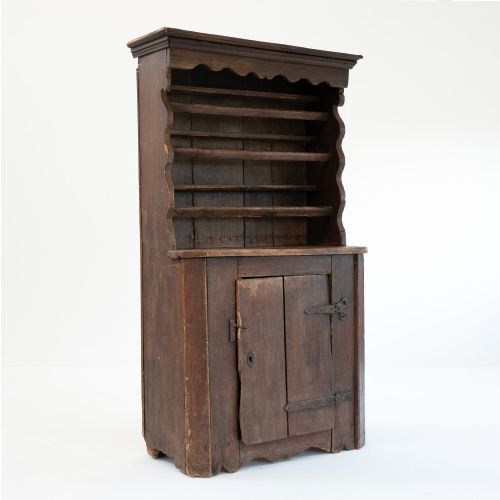

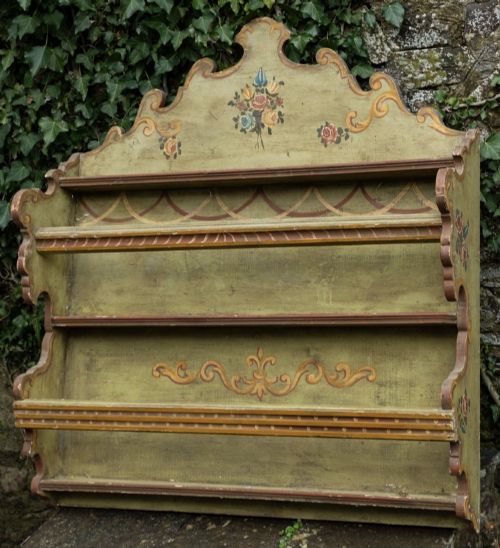


Painted Plate Rack
When you search for a painted plate rack, you find wall-mounted and dresser-integrated pine shelving that brings practical country display to a kitchen.
Painted Plate Rack
A painted plate rack serves as a utilitarian wall hanging or the upper section of a kitchen dresser designed to display ceramics upright. When you search for a painted plate rack, you encounter vernacular country pieces built from pine and finished with traditional surface coats. These items originate primarily from the eighteenth and nineteenth centuries across English, Irish, French, and Scandinavian regions.
The most common formats on this page range from dedicated wall display shelves to large dresser combinations featuring integrated racks, pot boards, and spice drawers. Regional vernacular styles dominate the selection, including West Country, Georgian, and French provincial iterations that reflect domestic utility. Buyers select these items to mount above counters or dining tables for functional daily storage and period character.
Materials and Construction
Makers constructed these racks predominantly using solid pine, selected for its availability and workability in domestic carpentry workshops. Structural elements frequently incorporate wrought iron or brass hooks and fittings to support hanging utensils alongside displayed ceramics.
Surfaces receive historical or later applied painted finishes, ranging from early layered lead paints to contemporary heritage colours such as Little Greene. Joinery methods rely on traditional pegged and nailed construction appropriate for utilitarian country furniture.
Listings feature pine structures dating from the eighteenth and nineteenth centuries, alongside regional variations from English, Irish, French, and Scandinavian workshops.
Factors of Quality
Quality in a painted plate rack rests on the integrity of the original timber and the survival of early painted surfaces rather than plain decorative flourishes. Superior examples display honest patination, genuine period construction, and well-proportioned architectural cornices or spice drawer integrations.
Pieces that retain their structural balance without excessive timber replacement command greater interest from collectors of vernacular furniture. The harmony between the original form, such as a pot board base or integrated spice drawers, and the current paint finish determines the standing of each piece.
The Painted Plate Rack Glossary
- Pot board
- An open lower shelf built into a dresser base, traditionally used for storing heavy pots and pans off damp stone floors. This feature frequently accompanies larger wall racks and dresser combinations.
- Spice drawers
- Small, multiple drawers integrated into the lower framework of a plate rack or dresser top. They provide compact storage for dry goods and culinary ingredients.
- Vernacular furniture
- Objects built by local joiners and country carpenters for everyday domestic use rather than following strict high-style metropolitan cabinet-making rules. These pieces prioritise practical function over academic ornamentation.
- Vaisselier
- A French term for a plate rack or dresser specifically designed for the display of tableware and crockery. Such pieces often incorporate enclosed cupboard space alongside open shelving.
- Waterfall shelving
- Graduated shelves that step back progressively from bottom to top, creating a cascading profile. This layout allows for clear visibility of multiple rows of plates.
Painted Plate Rack: Frequently Asked Questions
How do I hang a heavy plate rack?
Wall-mounted racks require secure fixing directly into structural studs or masonry using appropriate heavy-duty brackets to bear the substantial weight of stacked ceramic plates.
Professional installation ensures the piece remains stable under daily domestic loading and prevents accidental detachment from lath and plaster walls.
Are these racks suitable for modern kitchens?
These timber units integrate effectively into contemporary spaces by providing accessible open storage for everyday crockery and rustic display depth.
Their simple country proportions complement both minimalist and traditional interiors while offering robust utility.
How do I distinguish eighteenth-century pine from later work?
Earlier pieces exhibit hand-sawn timber marks, forged iron fastenings, and dry patinated paint surfaces built up through decades of domestic use.
Later nineteenth-century and Edwardian examples often display more uniform machining signs and cleaner interior construction details.
Can I wash the painted surfaces?
Painted pine surfaces should be cleaned gently with a dry or barely damp microfibre cloth to preserve historical finishes and wax coatings.
Avoid harsh commercial chemical cleaners that can strip away original paint layers and delicate historic patination.