






Painted Pine Sideboard
A painted pine sideboard brings domestic history and honest utility into a room through generous storage and surface presence.
Painted Pine Sideboard
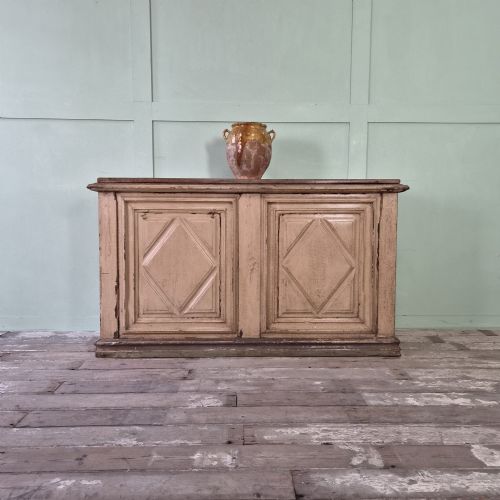
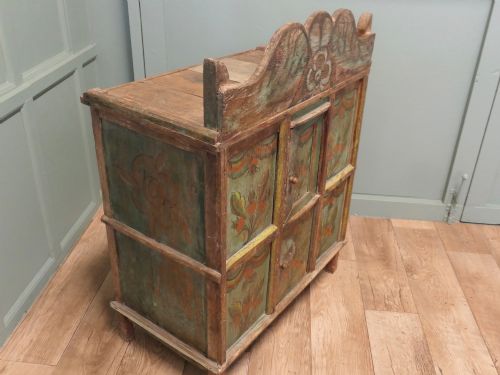
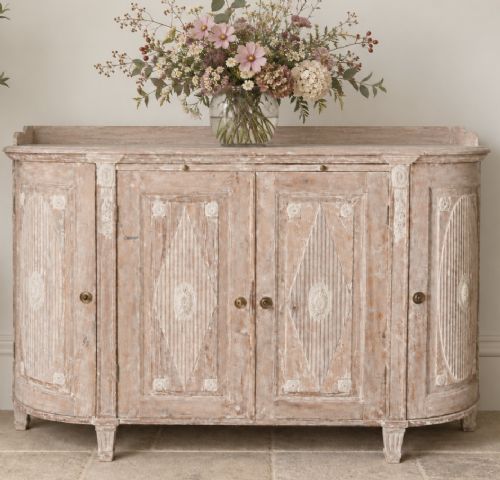
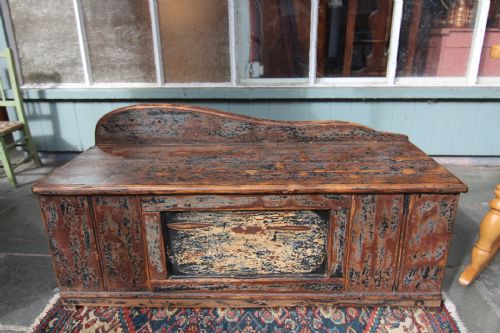
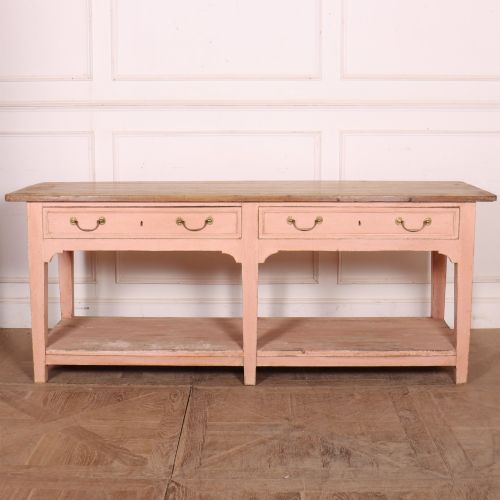
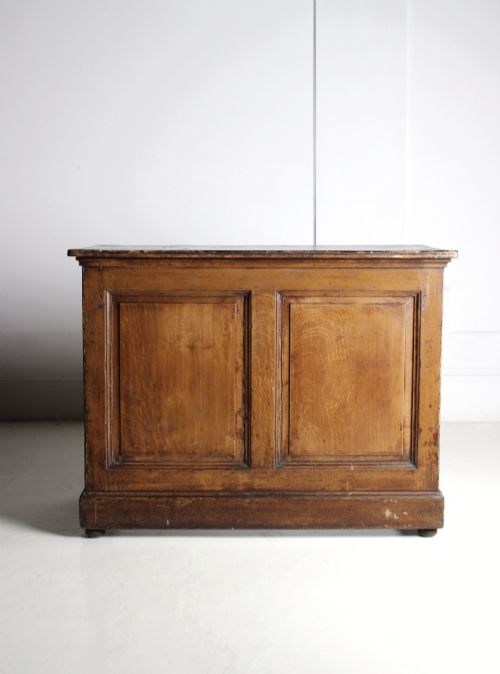
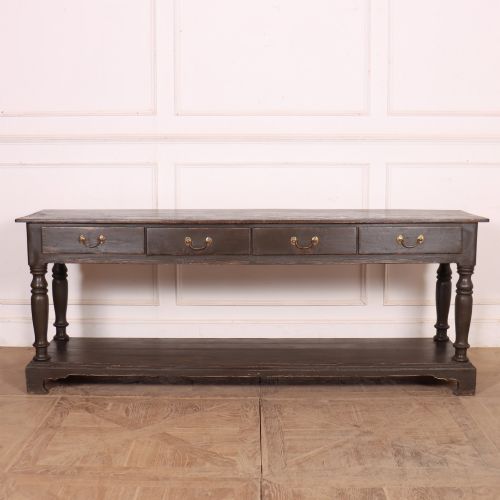
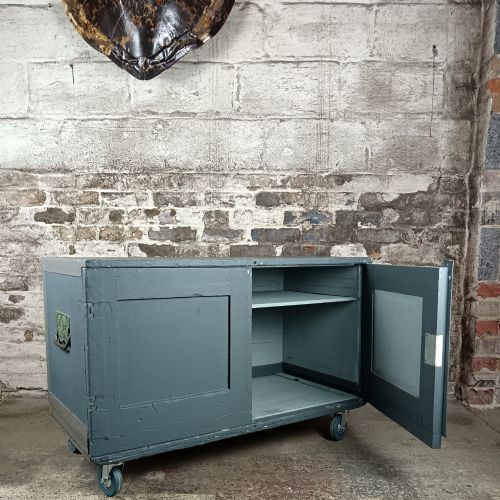
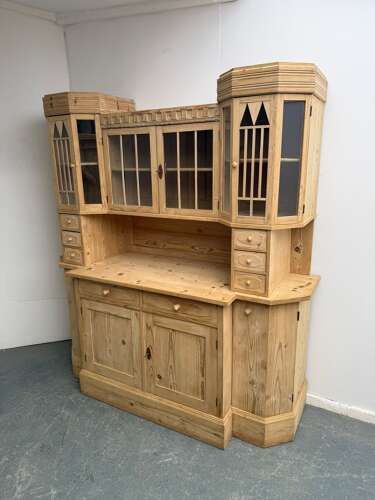
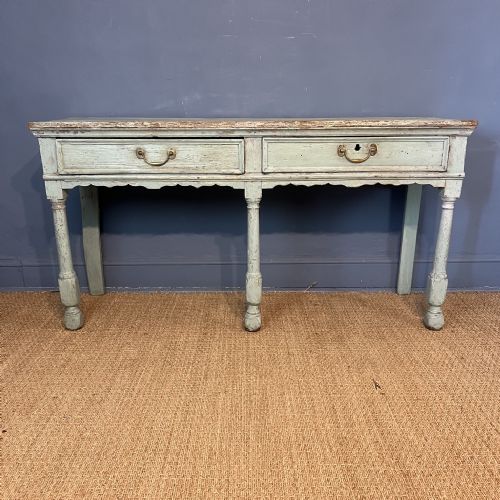
A painted pine sideboard encompasses sturdy kitchen storage furniture such as dresser bases, chiffoniers, servers, and potboard units built from softwood and finished with pigment. These practical household items range from simple English country furniture to continental examples originating in France, Denmark, Sweden, and Hungary.
The version most frequently encountered on this page is the nineteenth century dresser base or kitchen sideboard, often retaining layers of historic painted surface. Pieces span from eighteenth century Georgian and Queen Anne origins through the Victorian era and into the early twentieth century.
Regional variations appear across the selection, including West Country potboard designs, Scottish farmhouse iterations, and Scandinavian cupboards. These forms reflect the diverse domestic storage needs of rural households through successive design periods.
Materials and construction methods
Makers constructed these carcasses entirely from solid pine, utilising pegged mortise and tenon joinery for structural endurance in busy kitchens and pantries. Drawers typically feature hand-cut dovetail joints, demonstrating traditional cabinet-making competency beneath the painted exterior.
Surfaces received protective or decorative coats of paint, ranging from original lead-based pigments and simulated rosewood graining to later layers of green, black, or scraped colour. Hardware components such as brass pulls, iron hinges, and occasional glass elements completed the functional assembly.
Painted Pine Sideboard Retail Price Guide 2026
Typical asking prices for painted pine sideboard among the pieces listed under this phrase on Sellingantiques today, from the lower quarter to the upper quarter. They describe what is for sale here now, not the wider market.
The inventory spans the eighteenth century, the Regency period, the Victorian era, and the early twentieth century, constructed from pine, paint, brass, iron, and wood.
Measures of quality and integrity
The primary distinction in quality lies in the survival of original painted surfaces versus later stripped or repainted finishes. Pieces retaining undisturbed historic pigment carry greater integrity than those altered by modern interventions.
Proportion, timber selection, and joinery refinement separate standard utility items from superior cabinet work. Well-balanced proportions, intact original hardware, and minimal structural replacement elevate an individual piece within the range.
The Painted Pine Sideboard Glossary
- Potboard dresser base
- A kitchen sideboard featuring an open lower shelf traditionally used for storing pots and heavy earthenware. This board sits just above the floor, supported by sturdy stile feet.
- Confiturier
- A French jam cupboard designed with compact proportions for storing preserves and foodstuffs. These small cabinets typically feature a single door and drawer configuration.
- Chiffonier
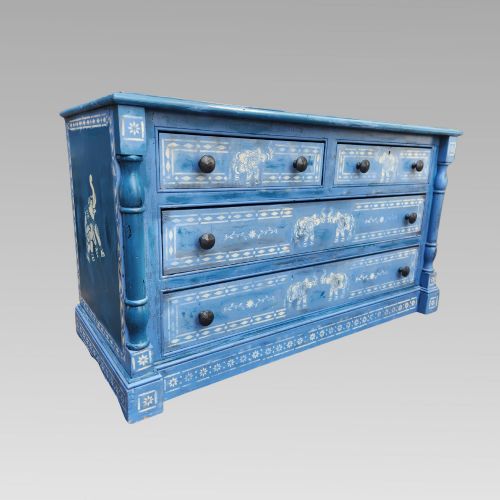
- A small sideboard or low cabinet equipped with drawers and enclosed shelving below a surface top. The Regency example in simulated rosewood shows how modest pine carcases mimicked exotic timbers.
- Dog kennel dresser
- A specialised kitchen base featuring a central open recess flanked by sets of drawers or cupboards. This layout provided knee space or storage for working domestic animals in nineteenth century kitchens.
Painted Pine Sideboard: Frequently Asked Questions
What is a potboard base?
A potboard base is a low kitchen sideboard featuring an open lower shelf positioned near the floor. This design allowed rural households to store heavy pots and culinary vessels within easy reach.
The sturdy lower platform distinguishes these pieces from standard enclosed cupboards and reflects practical country storage requirements.
How do I care for original paint?
Original painted surfaces require gentle dry dusting and protection from direct sunlight and excessive moisture. Avoid harsh chemical cleaners that can lift historic pigment layers.
Maintaining stable indoor humidity helps preserve the timber substrate and prevents the historic paint from flaking over time.
Where were these pieces used?
These sideboards served primarily in farmhouse kitchens, sculleries, and country houses for food preparation and tableware storage. Larger examples also appeared in shop interiors as counters and display fixtures.
Their utilitarian construction made them indispensable for organising domestic supplies before fitted kitchen cabinetry became common.
How can I date a pine sideboard?
Dating relies on examining construction markers such as hand-cut dovetails, tool marks, and hardware types. Eighteenth century pieces often feature different proportions and joinery compared to Victorian or Edwardian examples.
Comparing the timber condition and fastener types against known period styles helps narrow the manufacturing era.