
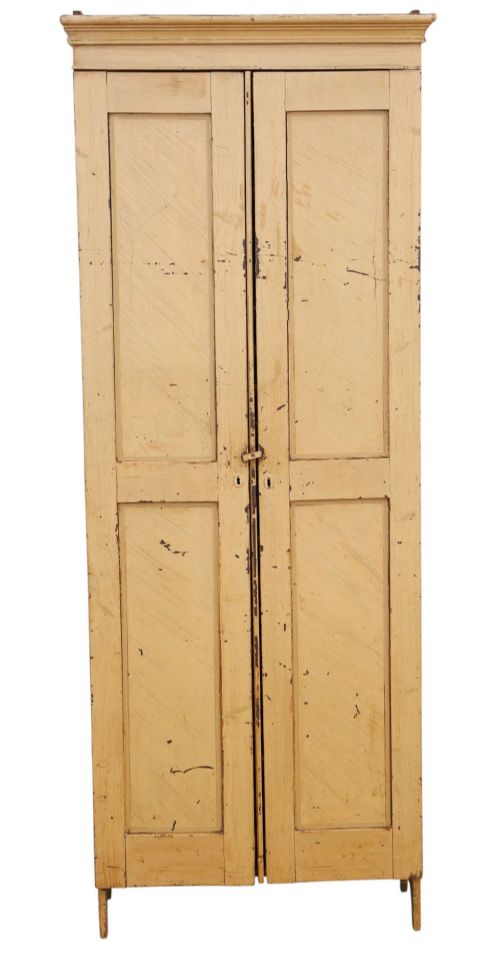
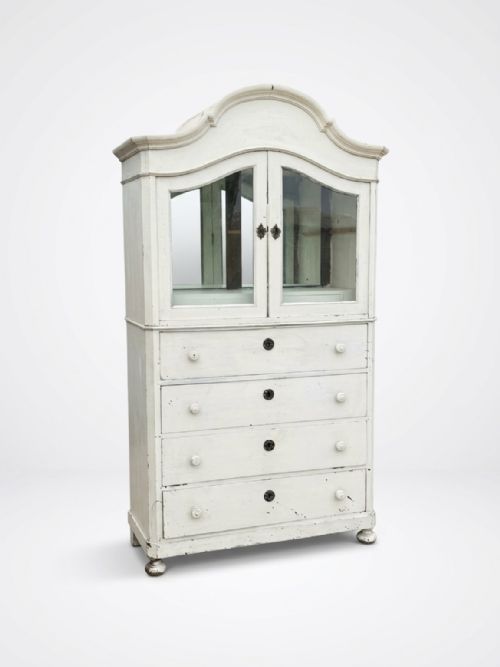
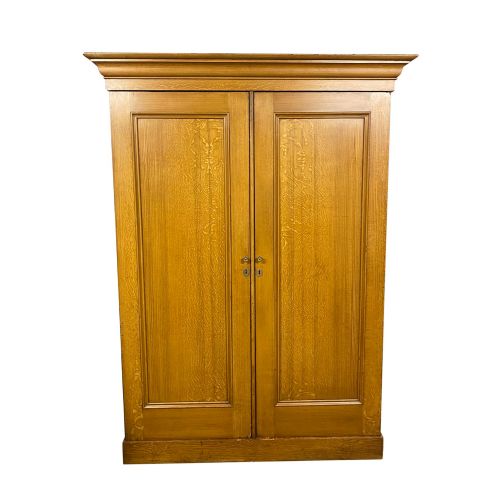
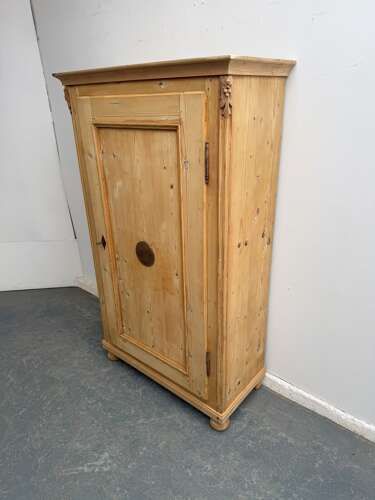
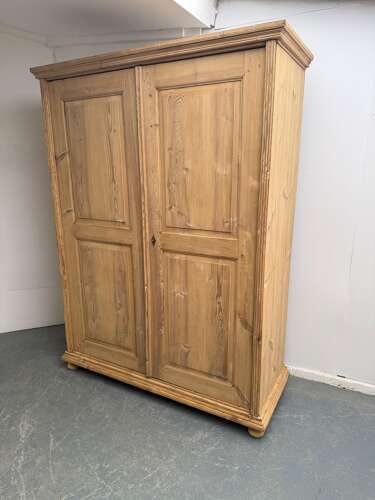
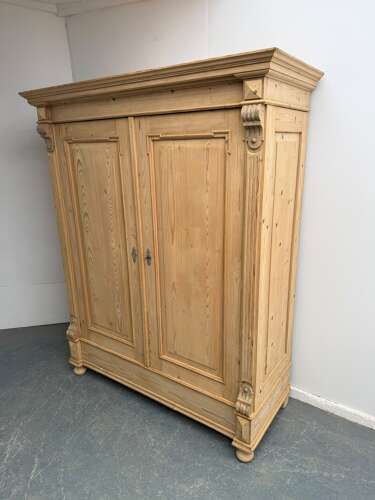
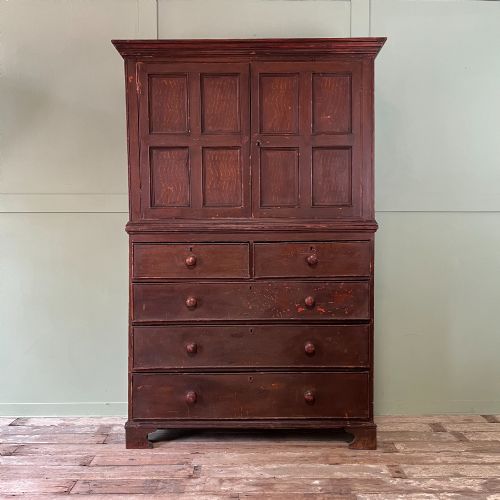
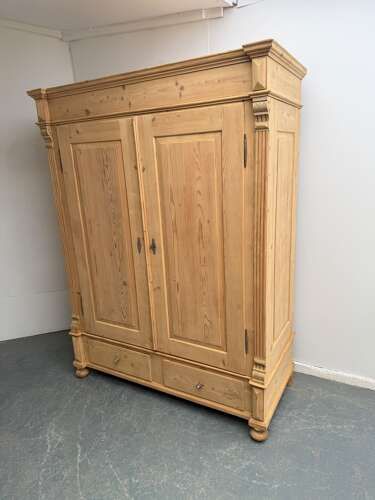
Painted Pine Linen Cupboard
A painted pine linen cupboard brings robust rural utility and soft surface colour to an interior, offering generous storage through tall doors and deep internal shelves.
Painted Pine Linen Cupboard
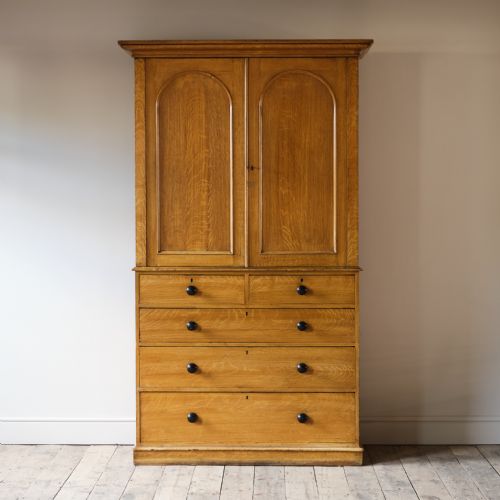
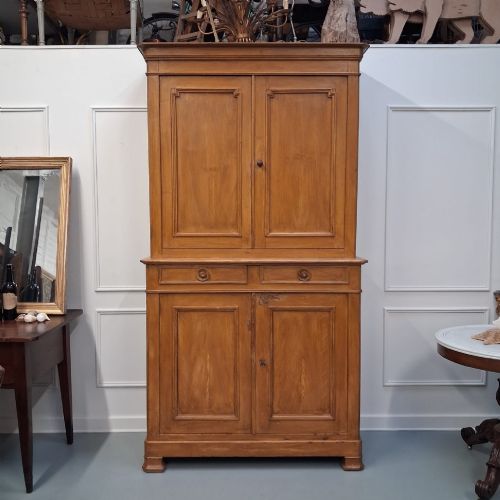
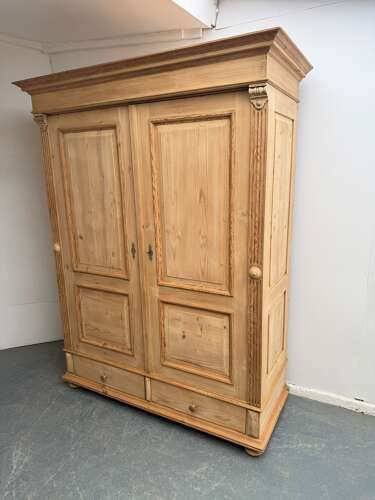
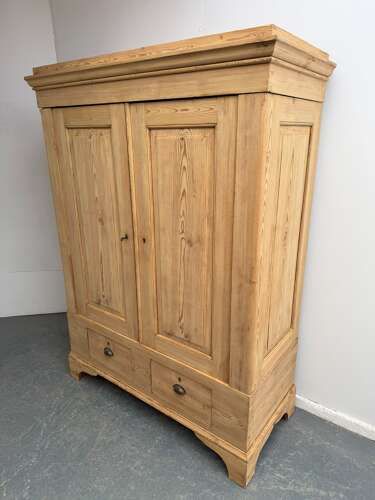
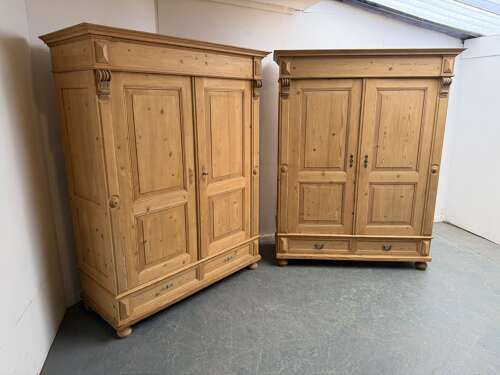
A painted pine linen cupboard encompasses sturdy storage pieces designed for domestic textiles, frequently appearing as tall presses, housekeeper's cupboards, and compact wardrobes.
The pieces on this page span Georgian, Regency, and Victorian periods, alongside regional country variants originating from English workshops, Scandinavian provinces, and French departments.
Makers built these items for utility in bedrooms, landings, and farmhouses, utilising local softwoods finished with practical coats of paint or simulated grain effects.
Materials and Construction
Makers constructed the primary carcase and internal shelving from solid pine, employing pegged joints, dovetailed drawer construction, and heavy panelled doors.
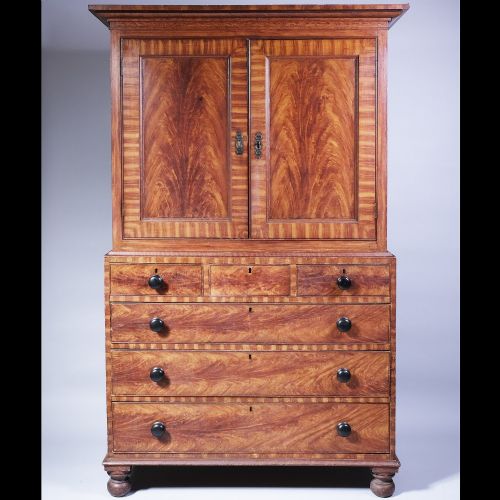
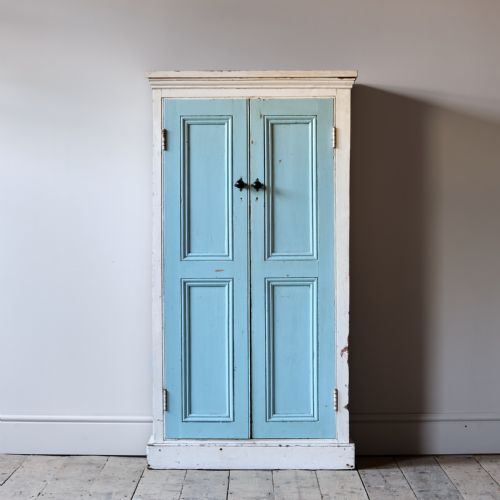
Surfaces received protective and decorative coats of paint, ranging from flat cream and historical pigments to skilled scumble glazes mimicking rich oak.
Hardware such as brass hinges, iron latches, and wooden knobs secured heavy doors, while moulded cornices and plinths finished the architectural silhouette.
Listings feature pieces spanning the Georgian, Regency, and Victorian eras, constructed primarily from solid pine with iron and brass hardware.
Judging Quality
Quality rests upon the originality of the surface finish and the integrity of the timber, where untouched historic paint layers command greater interest than stripped or later repainted surfaces.
Proportion and scale distinguish finer regional examples, with balanced cornices, slender proportions, and well-executed fielded panels separating utilitarian workshop items from more ambitious country furniture.
The Painted Pine Linen Cupboard Glossary
- Linen Press
- A tall storage cupboard featuring upper shelves for folded textiles and lower drawers for apparel. These pieces formed essential bedroom furniture in larger homes.
- Scumble
- A translucent oil-based glaze applied over a lighter base coat and manipulated with combs or brushes to imitate denser hardwoods like oak. It was widely used on pine to lend status.
- Knockdown
- A piece of furniture designed with pegged or wedged joints that dismantle for transport up narrow staircases. This construction method was common in large Victorian wardrobes.
- Housekeeper's Cupboard
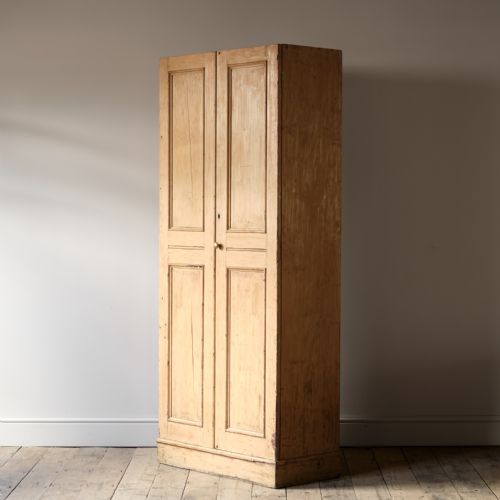
- A large multi-door utility cupboard kept in domestic offices or kitchens for storing provisions and household linens. They provide exceptional depth and internal capacity.
- Fielded Panel
- A wooden door panel with bevelled edges raised toward the centre, adding depth and structural stability against warping. It is a hallmark of traditional cabinet making.
Painted Pine Linen Cupboard: Frequently Asked Questions
What is a linen press?
A linen press is a tall storage cabinet traditionally used for airing and storing household textiles on internal sliding trays or shelves. They typically combine upper cabinet doors with a chest of drawers in the lower section.
These pieces offer substantial vertical storage while maintaining a formal architectural presence in a bedroom or landing.
How do I care for painted pine?
Painted pine surfaces require simple dusting with a dry cloth and protection from direct sunlight and excessive moisture. Avoid harsh modern chemical cleaners that can lift historic paint layers.
Wax can be applied sparingly to unpainted interior pine, while original exterior paint benefits from gentle cleaning and occasional microcrystalline wax protection.
Are these cupboards easy to move?
Many larger examples, particularly Victorian wardrobes, are built as knockdown pieces that dismantle into manageable panels and sections for transport. Smaller cupboards and press cabinets are usually single-piece items requiring adequate clearance for stairwells.
Checking the construction method before delivery ensures safe handling of heavy timber furniture.
What is scumble paint?
Scumble paint is a decorative glaze technique where a translucent darker topcoat is brushed over a pale base and manipulated with tools to simulate wood grain. It allowed makers to give humble pine the appearance of expensive oak or walnut.
Original scumble finishes develop a rich patina over time and remain highly prized by collectors of country furniture.