


Painted Wooden Pantry Cupboard
A painted wooden pantry cupboard is a practical piece of rural storage that brings character and utility to a modern kitchen.
Painted Wooden Pantry Cupboard
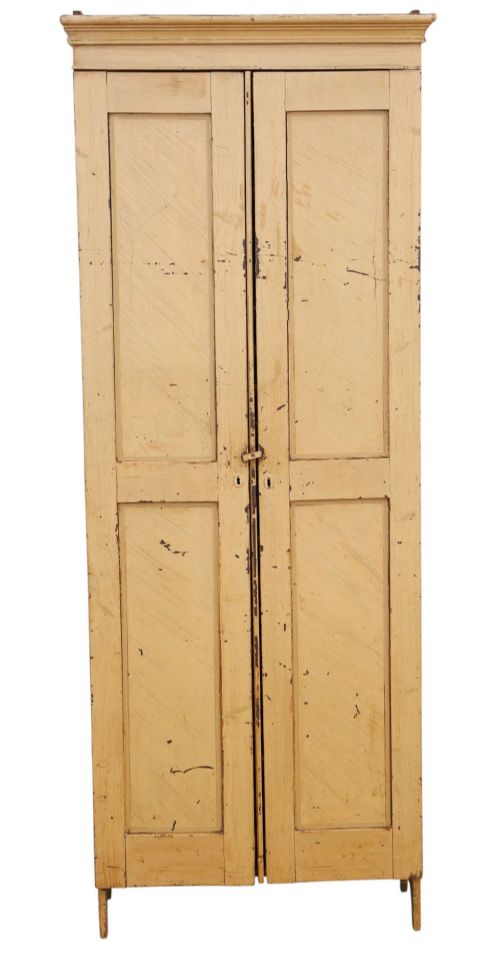
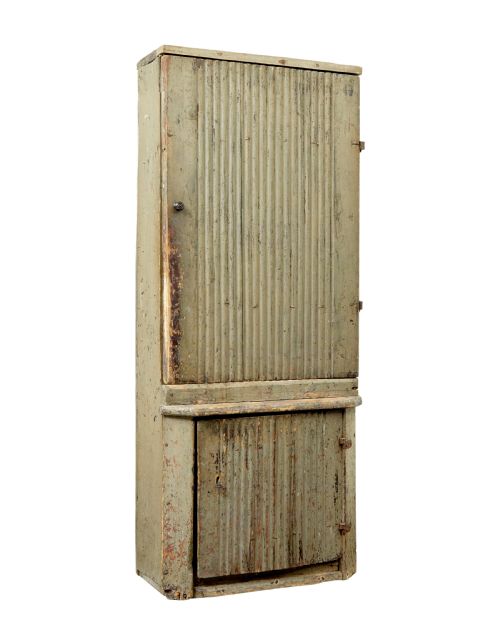
A painted wooden pantry cupboard serves as a functional storage piece originating from domestic farmhouse and country house traditions. You will encounter various forms on this page, including housekeeper cupboards, larder cupboards, and simple two-door kitchen storage units.
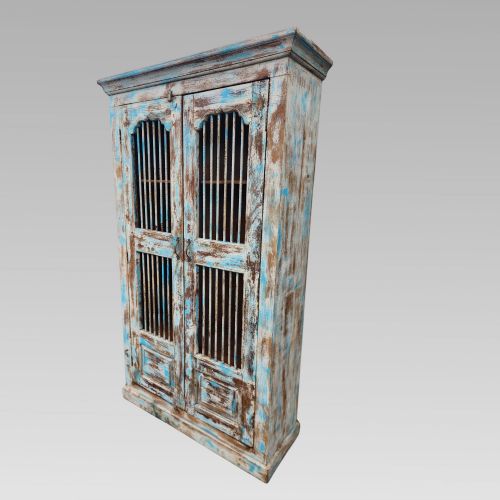
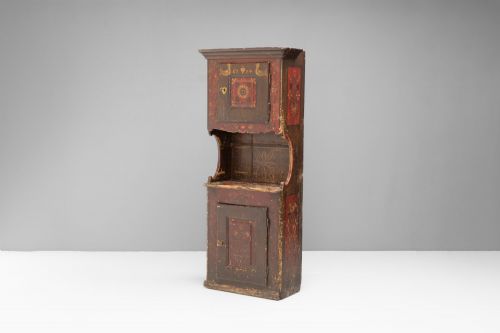
The pieces span several periods, reaching from the eighteenth century through the Victorian era and into early twentieth-century examples. Styles range from English and Scandinavian country furniture to rustic Indian and folk art interpretations.
Most examples function primarily for food and linen storage, featuring internal shelves within single or double doors. Their robust proportions reflect their original domestic utility in sculleries and farmhouses.
Materials and construction
Makers built these pieces predominantly from pine, alongside reclaimed teak in specific regional traditions. Iron and brass hardware such as hinges and latches completed the structural assembly.
Surfaces received layers of paint, sometimes applied over older waxed pine or stripped wood finishes. Hand-painted decoration appears on continental pieces, while vernacular items display working layers of historic paint.
Several cupboards show traces of historic brush bristles trapped beneath centuries of paint, reminding us of the original maker at work.
Judging quality and character
Quality rests in the integrity of the timber and the depth of the painted surface rather than crisp factory execution. Pieces retaining authentic historic paint finishes command greater interest than stripped or modernly recoated surfaces.
Proportions and structural honesty define the better examples, where original ironwork and well-fitted doors remain intact. Vernacular joinery methods show the hand of the regional maker rather than mass production.
The Painted Wooden Pantry Cupboard Glossary
- Housekeeper cupboard
- A large storage piece traditionally used for linens and provisions in a country house. These tall units usually feature multiple doors enclosing shelving.
- Scullery cupboard
- A utilitarian storage piece designed for a domestic scullery or back kitchen. They utilise straightforward construction suited to damp environments.
- Pine
- A softwood commonly utilised for vernacular country furniture due to its availability and workability. It accepts paint finishes readily.
- Vernacular furniture
- Domestic pieces made by local tradespeople for everyday use rather than high-style workshop production. They reflect regional materials and traditions.
- Linen cupboard
- A specialised tall cabinet intended for storing household textiles and bedding. Internal shelving kept textiles organised and aired.
Painted Wooden Pantry Cupboard: Frequently Asked Questions
Where did these cupboards originate?
These pieces originate from domestic domestic settings across England, Scandinavia, and continental Europe. Rural workshops produced them for everyday household storage.
Makers utilised locally available softwoods and regional painting traditions, resulting in diverse styles from English country houses to Austro-Hungarian farmsteads.
How do I clean a painted surface?
Maintain painted finishes by dusting gently with a dry, soft cloth. Avoid harsh chemical cleaners that can lift historic paint layers.
Wax or oil treatments are generally unnecessary on painted surfaces, unlike bare pine timber which benefits from occasional nourishment.
Can I use one in a modern kitchen?
These cupboards provide practical standalone storage for dry goods, crockery, and cookware in contemporary kitchens. Their deep shelves accommodate modern kitchen equipment easily.
Measuring ceiling height and doorway clearance is essential before placement, as these tall pieces often have substantial proportions.
How do I tell periods apart?
Eighteenth-century examples often display simpler plank construction and older vernacular joinery techniques. Nineteenth-century pieces frequently show more refined mouldings and standard hardware.
Paint analysis and construction methods help distinguish between early regional items and later Edwardian or twentieth-century interpretations.