




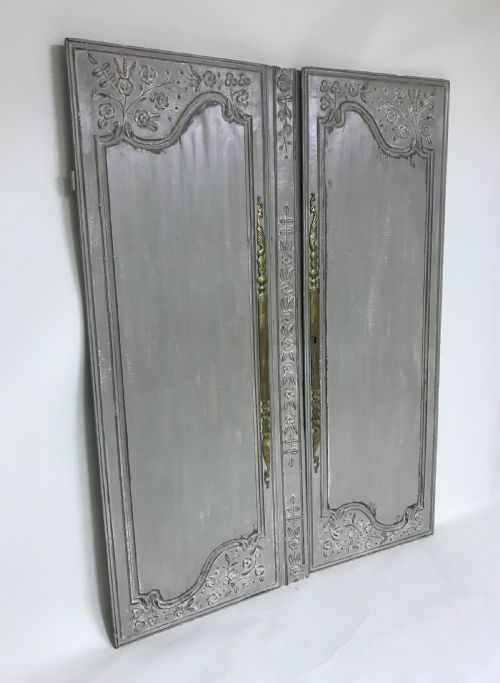


French Style Painted Armoire
These french style painted armoire pieces offer generous storage dressed in weathered paint and continental charm.
French Style Painted Armoire
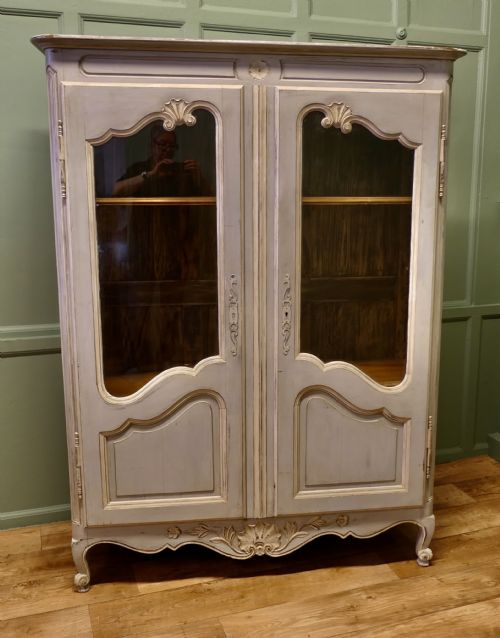
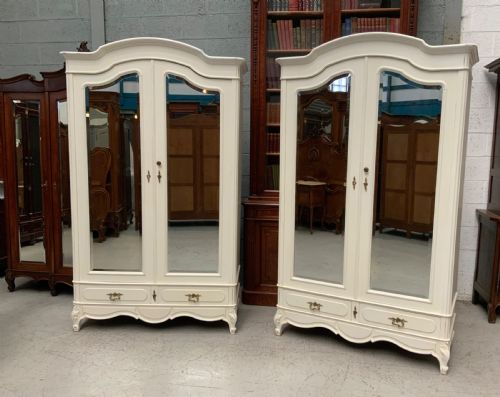
A french style painted armoire brings large-scale storage into a room through double doors, often appearing as a wardrobe, vitrine, or linen cupboard. The versions most likely to meet you on this page span the eighteenth century through to the early twentieth century, taking forms such as the buffet à deux corps and simple pine storage cupboards.
Makers and makers of the past shaped these pieces using regional styles like French Provincial, French Country, and French Rococo. They provide tall vertical presence in bedrooms and hallways, combining practical shelving or hanging space with decorative painted finishes.
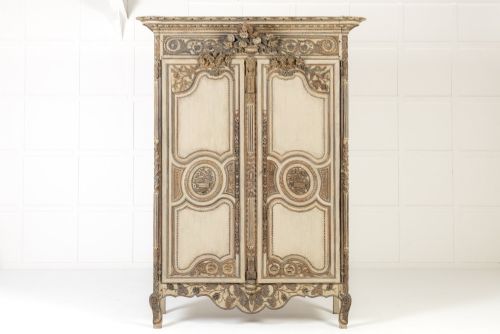
The evidence shows examples built from oak, pine, walnut, and cherrywood, finished with paint alongside unpainted wood variations. Many carry the marks of age, from distressed grey surfaces to classical carvings on doors and cornices.
How they were made
Constructed primarily from timber such as pine, oak, and walnut, these items rely on solid wood joinery for their sturdy frames. Workshops shaped panels and doors by hand, frequently incorporating carved details into the wooden structure before applying surface coats.
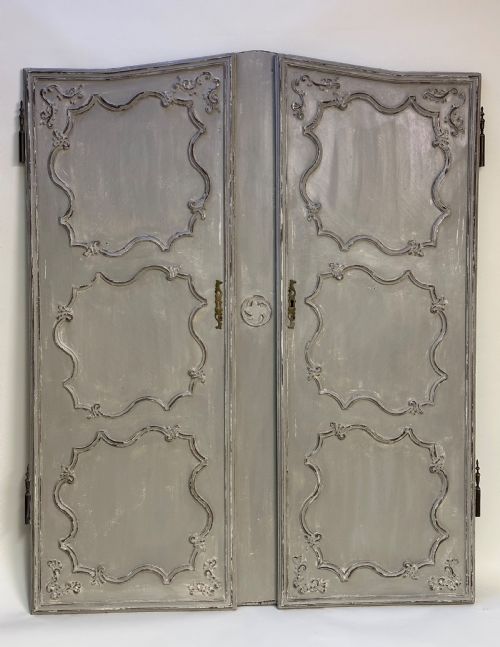
The characteristic finish involves layers of paint applied over wood, sometimes distressed over decades to show the grain beneath. Hardware components like brass and iron secure the large doors and drawers, while glass panels appear in the display cabinets and vitrines.
Listings feature items from the eighteenth, nineteenth, and early twentieth centuries, spanning periods from 1850 to 1910.
What varies in quality
Quality reveals itself in the weight and stability of the timber, alongside the proportion of hand-carved ornamentation versus simpler moulded details. Pieces featuring original painted surfaces rather than later re-painting hold greater integrity for collectors.
The structural refinement of the doors and the crispness of any carving set finer examples apart from simpler utility cupboards. Good proportions and well-preserved brass or iron hardware indicate higher workshop standards during manufacture.
The French Style Painted Armoire Glossary
- Armoire
- A tall wardrobe or cupboard with doors, used primarily for storing clothes and textiles. They provide substantial vertical storage in traditional interiors.
- Buffet à deux corps
- A large two-part cupboard or sideboard stacked vertically, offering extensive storage across upper and lower sections. This form originates from French regional furniture traditions.
- Vitrine
- A glass-fronted cabinet designed for displaying books, porcelain, or objects of curiosity. The transparent doors protect contents while keeping them visible.
- Rococo
- An ornate design style marked by asymmetric scrolls, curved lines, and natural motifs. It flourished across eighteenth-century European decorative arts.
- Pine
- A softwood commonly used for painted furniture due to its availability and workability. It forms the primary carcase material for many regional cupboards.
French Style Painted Armoire: Frequently Asked Questions
How do I use an armoire today?
These large cupboards serve well in bedrooms for hanging clothes and storing linens. They also function in living areas and hallways as decorative storage for bulky items.
Their substantial presence makes them natural focal points in a room. Interior shelving or hanging rails can be adapted to suit modern storage needs without altering the exterior character.
How can I tell the period?
Dating relies on construction methods, timber choice, and stylistic cues such as Rococo carvings or regional proportions. Eighteenth-century examples often show hand-cut joinery and early surface treatments.
Victorian and later nineteenth-century pieces may incorporate machine-sawn elements alongside hand-finished details. Examining the hinges, locks, and inner boards helps confirm the age of the piece.
Are the painted finishes original?
Distinguishing original paint from later decoration involves looking for craquelure, wear patterns, and underlying timber interaction. Traces of older pigment often linger beneath subsequent layers.
Many antique cupboards were repainted during their working lives to suit changing interior fashions. Close inspection of the surface texture reveals how many coats sit on the wood.
How do I care for antique pine?
Keep wooden furniture away from direct heat sources and dramatic humidity shifts to prevent warping. Regular dusting with a dry cloth protects the painted or polished surface.
Avoid harsh chemical cleaners that might strip the historic finish. Occasional gentle waxing helps nourish unpainted timber sections.