





Painted Pine Blanket Chest
A painted pine blanket chest brings immediate character to a room, offering practical storage wrapped in folk tradition and surviving colour.
Painted Pine Blanket Chest
A painted pine blanket chest serves as a robust storage trunk for domestic textiles, featuring a hinged lid and solid wood construction. When hunting for a painted pine blanket chest, buyers will frequently encounter nineteenth-century examples spanning Georgian, Victorian, and Regency periods alongside continental European pieces.
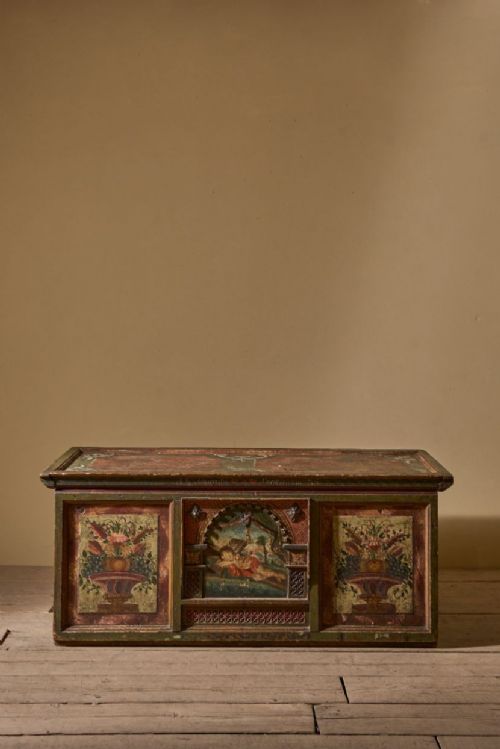
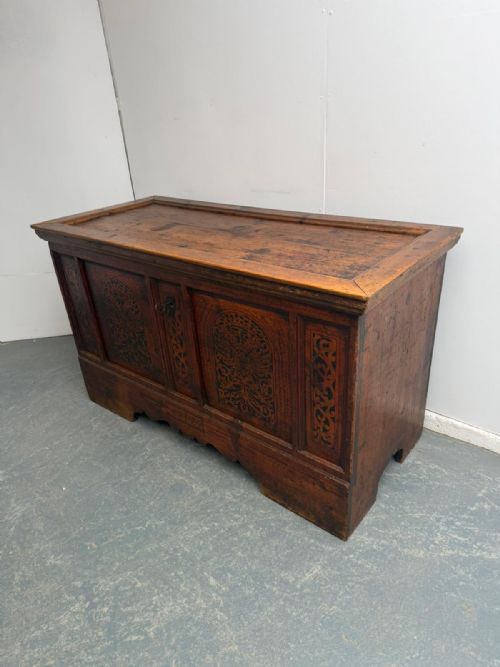
The forms range from simple dome-top boxes and mule chests fitted with lower drawers to grand marriage trunks originating from Swedish and Hungarian workshops. Many pieces exhibit regional folk art traditions, displaying floral motifs or geometric decoration directly applied to the softwood timber.
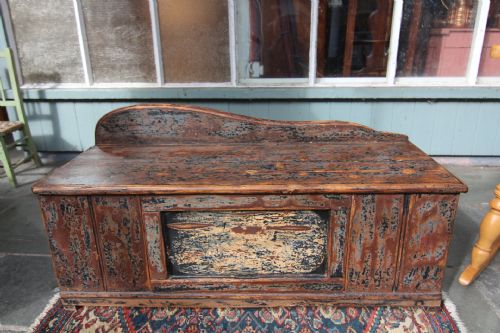
Domestic storage needs shaped these objects, leading makers to construct them in various sizes from small portable boxes to massive coffer chests. Surviving examples often display the marks of long utility, retaining traces of scumble glazes, graining, or original pigment layers beneath subsequent wear.
Materials and construction methods
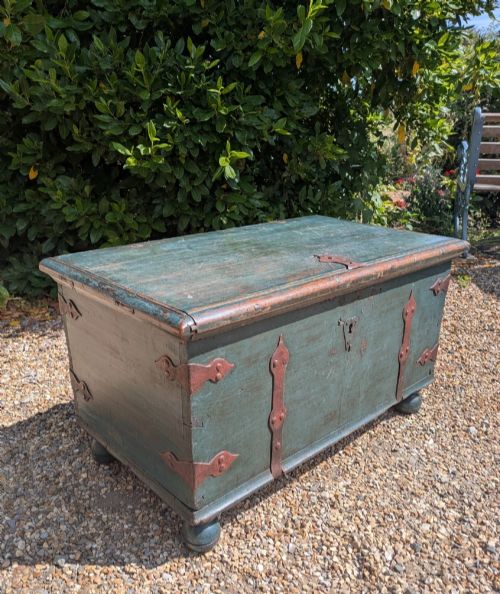
Carpenters built these trunks primarily using native and imported pine, joined at the corners with dovetail or rebate techniques to withstand heavy domestic use. Wrought iron strapwork, hand-forged hinges, and brass key escutcheons reinforced the structural integrity of the lids and corners.
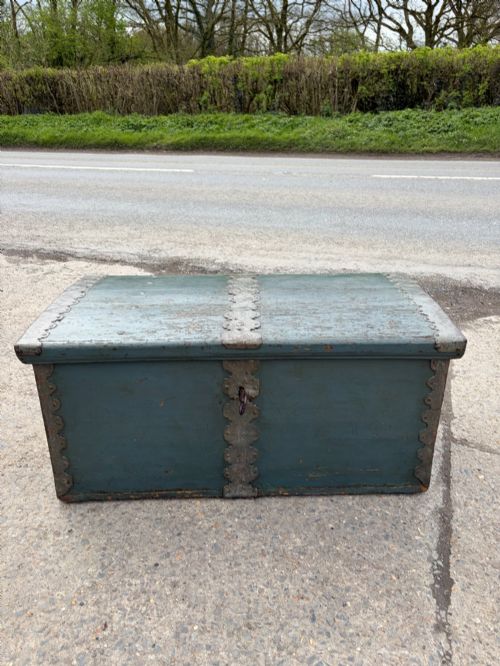
Workmen applied initial coats of lead-based or oil paints directly to the bare softwood, sometimes employing scumble techniques to imitate costlier hardwoods. Pigments were mixed locally to create distinctive surface colours, ranging from deep greens and teals to soft country creams finished with hand-painted details.
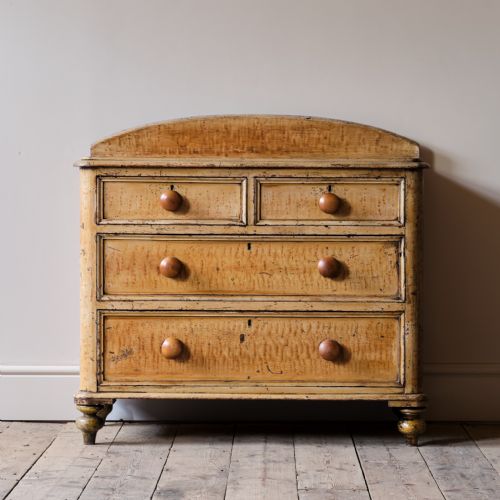
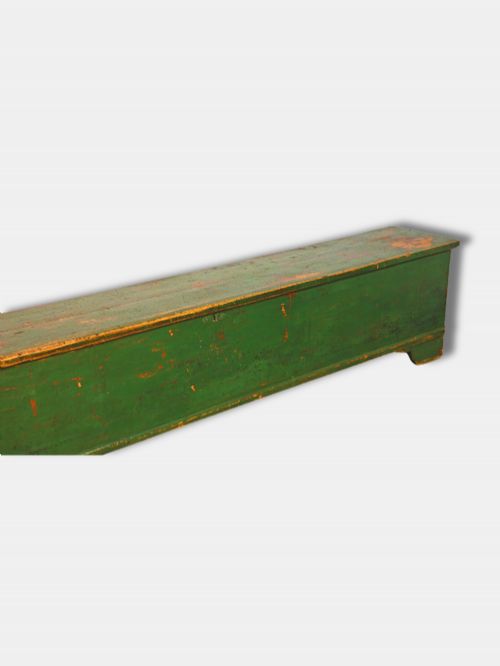
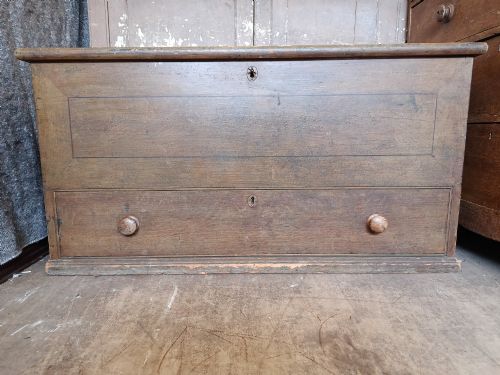
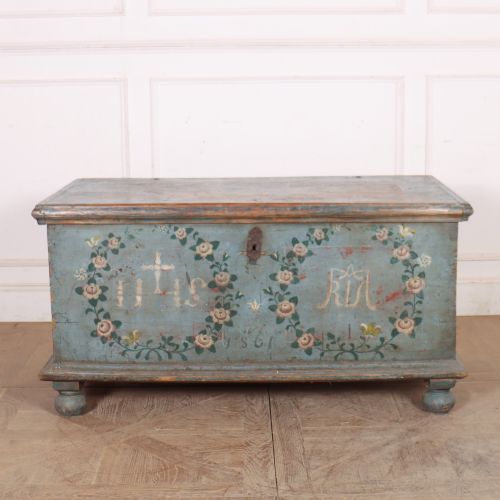
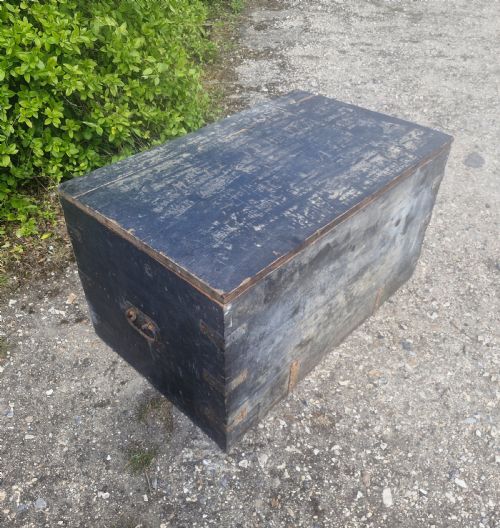
Listings feature pine blanket chests spanning the Georgian, Regency, and Victorian eras alongside continental folk art pieces.
Judging quality and surface survival
The distinction between ordinary utility boxes and superior examples rests largely on the survival and integrity of the original decorative surface. Pieces retaining their untouched early paintwork command greater attention than those stripped or subjected to later repainting.
Structural heft and the quality of the blacksmith's work on the iron strapwork and carrying handles distinguish provincial work from finer estate-made items. Subtle details such as hand-cut dovetails, original working locks, and untampered interior till boxes separate standard storage trunks from exceptional folk art.
The Painted Pine Blanket Chest Glossary
- Mule chest
- A storage chest featuring one or more drawers built into the base beneath the main compartment. This form evolved during the eighteenth century to provide easier access to linens without opening the primary lid.
- Scumble pine
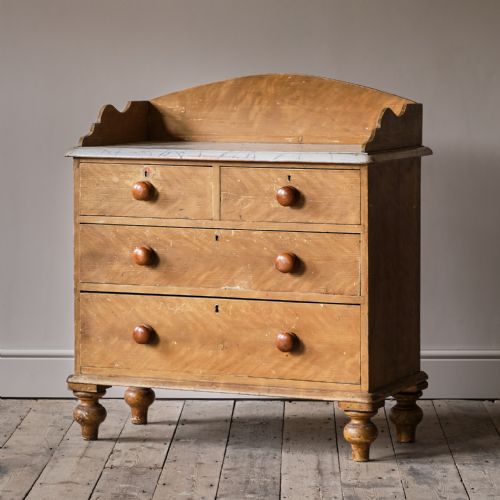
- Pine timber treated with a translucent glaze manipulated with combs, rags, or brushes to create decorative faux-grain patterns. This technique was popular in Victorian households to elevate inexpensive softwood.
- Strapwork
- Flat bands of wrought iron or brass applied across the exterior corners and lid of a chest to reinforce the joints. It provides both structural strength and decorative contrast against the painted pine surface.
- Till box
- A small internal compartment fixed inside a chest, used for storing candles, keys, or small valuables. These lidded compartments often survive intact in untouched nineteenth-century boxes.
- Coffer
- A heavy wooden chest traditionally used for storing valuables, documents, or high-value textiles. Unlike standard blanket boxes, coffers frequently feature heavily reinforced construction and multiple locks.
Painted Pine Blanket Chest: Frequently Asked Questions
What is a painted pine blanket chest?
A painted pine blanket chest is a wooden storage box constructed from softwood and finished with decorative paint, pigments, or scumble glazes. These pieces were built for domestic utility to store heavy textiles, quilts, and garments.
Surviving examples often reflect regional traditions, ranging from English estate-made trunks to Scandinavian and Hungarian marriage chests adorned with hand-painted motifs.
How were these chests used historically?
Households relied on these trunks to protect woolen blankets, linens, and winter clothing from dampness, dust, and moths. Their sturdy lids allowed them to double as casual seating or tables within modest living quarters.
Marriage chests held a bride's dowry and personal belongings, serving as central items of family heritage that travelled with couples to their new homes.
How do I care for original paint?
Preserving an antique painted surface requires stable indoor humidity away from direct sunlight, which can fade historic pigments and dry out the pine. Dust the surface gently with a dry, soft cloth and avoid modern chemical cleaning products entirely.
If the paint is stable and chalky, microcrystalline wax can sometimes nourish the wood, though untouched dry surfaces are usually best left undisturbed.
How can I tell the age of a chest?
Dating relies on examining construction clues such as hand-cut dovetails, forged iron hardware, and the composition of the underlying pine timber. Machine-sawn boards and modern screws point firmly toward later Victorian or twentieth-century production.
Wear patterns around the handles, keyholes, and base boards offer further evidence of age, alongside the chemical composition and crackle of the paint layers.