

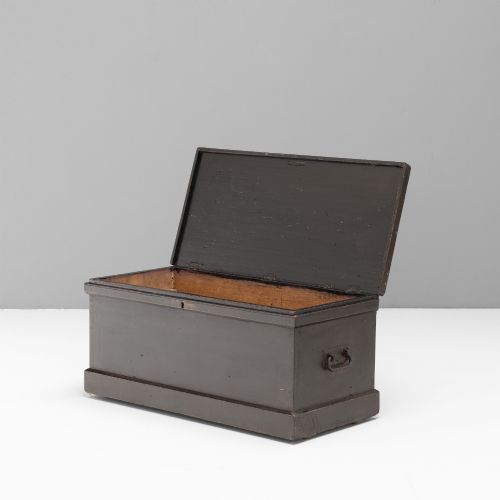
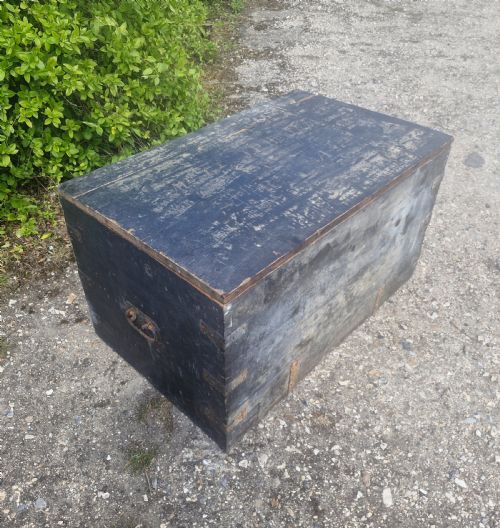
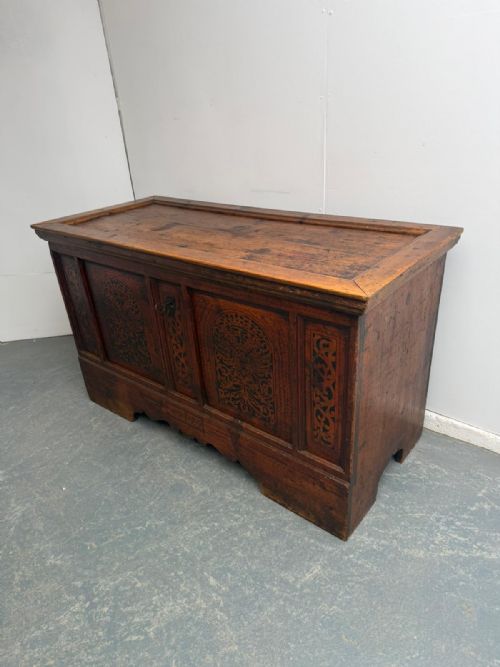


Dark Painted Pine Trunk
These dark painted pine trunk examples combine utilitarian storage with regional folk art traditions spanning the eighteenth to early twentieth centuries.
Dark Painted Pine Trunk
A dark painted pine trunk serves as a robust storage vessel, emerging in various regional forms across British, Scandinavian, and European workshops. Buyers seeking a dark painted pine trunk encounter forms ranging from simple blanket boxes and mule chests to heavy seaman's chests and campaign boxes.
The pieces on this page span the Georgian period, the nineteenth century, and the early twentieth century, showing influences from Welsh vernacular to Scandinavian country and Hungarian folk art. Most items present practical domestic or travel storage altered by decorative painted surfaces over native softwood.
How they were made
Construction relies primarily on solid pine boards joined to form deep rectangular or oval box bodies, often reinforced with iron or wrought iron hinges, carrying handles, and strapwork. The timber receives a protective and decorative coat of paint, sometimes executed as intricate folk art or strong box finishes.
Hardware elements like rope beckets on maritime pieces and heavy metal locks on campaign and strong boxes provide functional security and ease of transport. The union of soft pine and durable metalwork defines the structural reality of these storage pieces.
Dark Painted Pine Trunk Retail Price Guide 2026
Typical asking prices for dark painted pine trunk among the pieces listed under this phrase on Sellingantiques today, from the lower quarter to the upper quarter. They describe what is for sale here now, not the wider market.
Listings feature pine storage pieces spanning the Georgian era through the nineteenth century to nineteen-thirty, incorporating iron, rope, and painted wood.
What varies in quality
Quality rests in the survival of original decorative painted surfaces, where untouched folk art or regional pigments command greater interest than later overpainting. The integrity of the underlying pine carpentry, including dovetail joints and original iron hardware, distinguishes superior examples.
Provenance and specific historical context elevate certain chests, such as documented military campaign pieces or named folk marriage boxes. The balance between utilitarian strength and decorative artistry dictates where a piece sits within the range.
The Dark Painted Pine Trunk Glossary
- Mule chest
- A traditional storage chest featuring one or more drawers built into the base beneath the primary compartment. This form bridges the gap between simple blanket boxes and fully developed chests of drawers.
- Campaign trunk
- A portable storage chest designed for military officers on the move, typically fitted with recessed carrying handles and reinforced corners. These trunks utilise robust construction to withstand frequent travel.
- Seaman's chest
- A heavy wooden box used by sailors to store personal belongings aboard ship, often equipped with rope handles known as beckets. They reflect maritime utility and vernacular carpentry.
- Strong box
- A secure chest built for holding valuables, featuring reinforced metal straps and complex internal locking mechanisms. They provide heavier security than standard domestic blanket boxes.
- Cofer
- An alternative spelling of coffer, denoting a traditional chest with a lid used for safekeeping valuables or textiles. These pieces often display early vernacular construction methods.
Dark Painted Pine Trunk: Frequently Asked Questions
What were these trunks used for?
These trunks served diverse storage functions ranging from domestic linen and blanket containment to military travel and maritime voyages. Household owners kept garments and valuables safe inside them, while sailors and soldiers transported personal gear.
Over time, many of these utilitarian chests transitioned into static furniture pieces within homes, functioning as coffee tables or decorative storage solutions while retaining their original structural capacity.
How do I date a painted pine chest?
Dating relies on examining construction techniques such as hand-cut dovetails, the type of iron hardware utilised, and the composition of the painted surface. Earlier pieces often display vernacular hand-planed boards and forged iron hinges.
Stylistic cues in the folk art painting, alongside specific period characteristics like Georgian proportions or Victorian campaign fittings, help narrow the manufacturing window within the eighteenth to twentieth-century span.
Are the paint finishes original?
Paint longevity varies significantly, with some pieces retaining their first decorative schemes while others carry later layers applied during subsequent decades of use. Pigment analysis and surface wear patterns assist in determining whether the dark paint dates to the original manufacture.
Original folk art or campaign finishes show natural craquelure, oxidation, and wear consistent with age, whereas later decorative interventions often sit uniformly over older wear.
How should I care for painted pine?
Maintaining these pieces involves keeping them in stable environmental conditions away from direct sunlight and excessive humidity swings that can cause the pine timber to warp. Gentle dusting with a dry cloth preserves the fragile historic paint layers.
Avoid using harsh chemical cleaning agents or modern polishes on the painted surfaces, as these can strip away historic pigments and patination built up over centuries.