
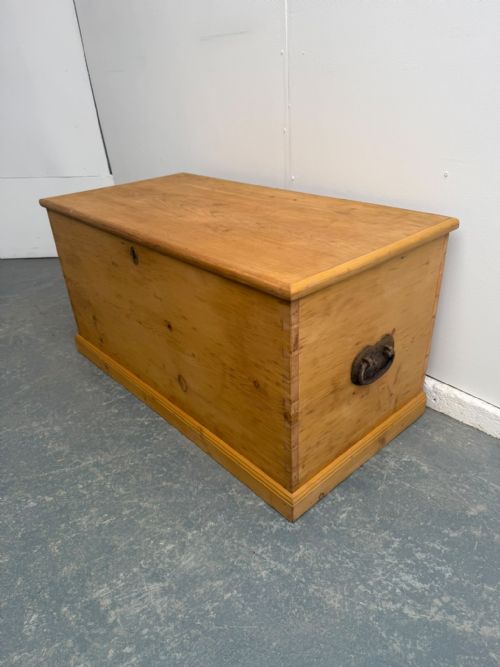


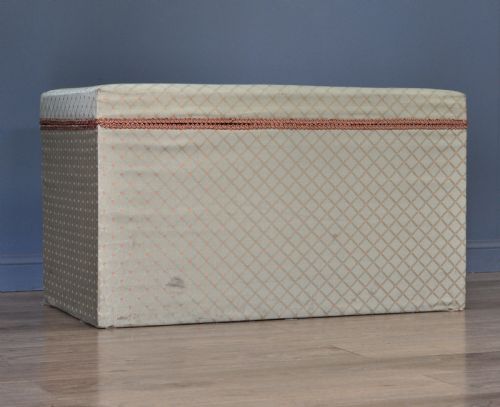
Pine Ottoman Box
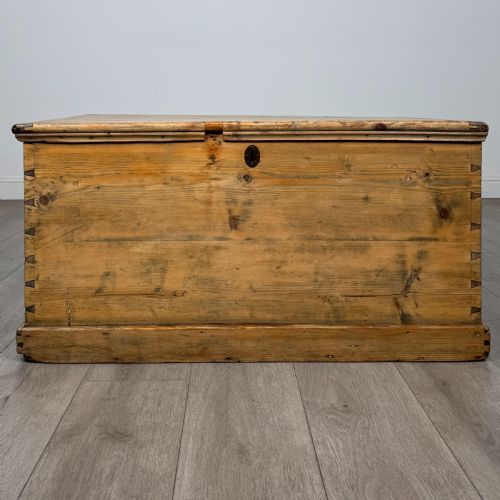
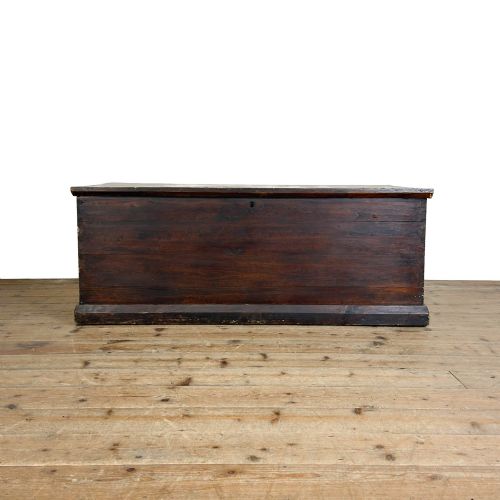
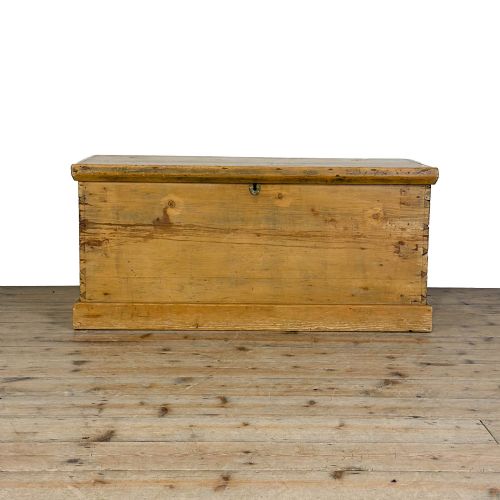
These pine ottoman box examples offer sturdy domestic storage, fashioned in robust timber to serve generations of everyday use.
Pine Ottoman Box
A pine ottoman box serves primarily as a utilitarian storage trunk, often encountered in Victorian country contexts designed for household linens, blankets, and personal effects. These pieces emerge predominantly from the nineteenth century, including specific dates such as 1880, 1890, and the wider Victorian period.
Forms span basic storage chests, blanket boxes, mule chests fitted with lower drawers, and low wide boxes adapted into coffee tables. Materials comprise solid pine augmented by iron, brass fittings, fabric, paint, baize lining, and wax polish.
How they were made
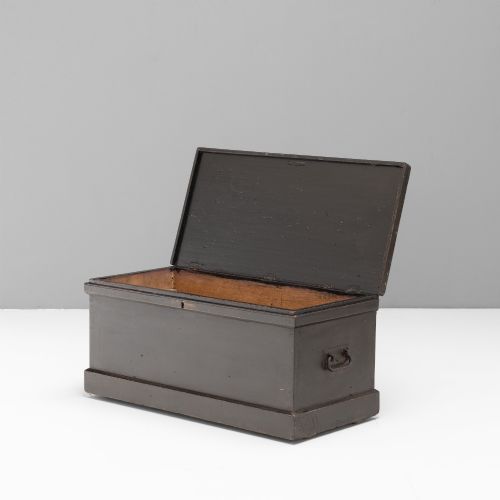
Construction relies on solid pine boards assembled to withstand heavy household demands, finished either with traditional wax polishing, surface paint, or stripped finishes exposing the bare timber grain. Metalwork forms an integral part of the fabrication, utilising iron and brass for side lifting handles and working locks.
Internal spaces occasionally incorporate baize lining or fabric upholstery, whilst exterior presentations range from rustic farmhouse surfaces to polished Victorian finishes.
Listings span the Victorian era, 1880, 1890, and 1920, utilising materials such as solid pine, iron, brass, baize, and wax.
What varies in quality
Quality rests upon the integrity of the timber construction, the presence of original hardware such as working locks and brass or iron side lifting handles, and the finish applied to the surface. Examples featuring mule chest configurations with lower drawers or specialised forms like upholstered lids demonstrate greater joinery complexity than simple plain boxes.
The degree of surface preservation and whether a piece retains its original wax polish or historical painted finish alters the visual weight and historical character of the trunk.
The Pine Ottoman Box Glossary
- Mule chest
- A storage chest featuring one or more drawers beneath the main lift-top compartment. This form bridges the traditional blanket box and the chest of drawers.
- Baize
- A coarse woolen material resembling felt, frequently utilised to line the interior compartments of storage chests to protect delicate textiles. It provides a soft friction-free surface.
- Kist
- A traditional regional term for a heavy wooden storage chest or box. These pieces were standard household items for securing valuables and garments.
- Wax polish
- A protective coating applied to timber surfaces to nourish the wood and produce a subtle sheen. It enhances the natural grain of the pine.
Pine Ottoman Box: Frequently Asked Questions
What were pine ottoman boxes used for originally?
These chests served primarily for holding heavy household textiles, woolen blankets, linens, and personal garments in nineteenth century homes.
Their robust construction allowed them to double as sturdy seating or luggage when moving house.
How do I date a Victorian pine storage chest?
Dating relies upon examining construction marks, the type of hardware utilised, and the presence of period characteristics like hand-cut dovetailing or specific lock mechanisms.
Pieces originating from the nineteenth century often display distinct wax finishes, iron side handles, and structural wear consistent with active domestic service.
Can I use a pine trunk as a coffee table?
Low and wide variations of these boxes function effectively as coffee tables while offering substantial concealed storage capacity within the living space.
Their flat timber tops accommodate books and objects securely once properly waxed and finished.
What is the difference between a blanket box and a mule chest?
A standard blanket box consists solely of a top-opening lid over a single deep storage well.
A mule chest incorporates one or more functional drawers beneath the main compartment, offering segmented access to stored items.