

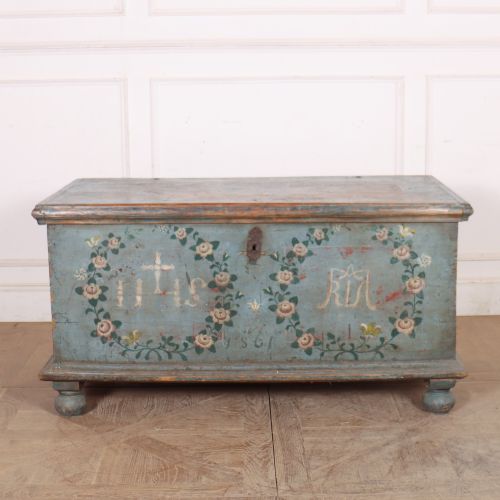


Blue Swedish Blanket Box
A blue swedish blanket box brings rustic charm to any room, offering robust storage disguised in vibrant folk art.
Blue Swedish Blanket Box
A blue swedish blanket box sits firmly within the traditions of Scandinavian Country and Folk Art craftsmanship. These storage chests, coffers, and trunks served essential household functions in rural homes during the nineteenth century.
Most examples encountered here date from the nineteenth century, specifically around eighteen sixty, reflecting regional carpentry and decorative customs. The form encompasses flat lids as well as dome top coffers designed to shed dust and debris.
Makers constructed these storage boxes primarily for domestic utility, often as marriage chests or dowry trunks to hold textiles and valuables. The surviving pieces combine heavy timber construction with distinctive painted surfaces that define the style.
How they were made
Carpenters built these pieces using solid pine or oak planks joined to withstand heavy daily use in rural farmsteads. The primary woods provided a stable canvas for the decorative finishes applied across the surface.
Artisans applied pigment paint over the wood, creating the characteristic blue coloration that identifies a blue swedish blanket box. Wrought iron and brass hardware, including strap hinges and carrying handles, reinforced the structural corners and lid edges.
Blue Swedish Blanket Box Retail Price Guide 2026
Typical asking prices for blue swedish blanket box among the pieces listed under this phrase on Sellingantiques today, from the lower quarter to the upper quarter. They describe what is for sale here now, not the wider market.
Some nineteenth century couples stored their entire worldly linens inside a single painted box that doubled as a bench for the hearth.
What varies in quality
The sophistication of the hand painted decoration distinguishes standard utilitarian storage from finer folk art expressions. Surviving pigment surfaces show varying degrees of preservation, with untouched original paint elevating the historical integrity of the coffer.
Joinery techniques and the weight of the timber used for the carcass indicate the original maker's skill and intended purpose. Heavier construction paired with intact wrought iron fastenings represents the sturdier end of the available selection.
The Blue Swedish Blanket Box Glossary
- Coffer
- A heavy wooden chest traditionally used for storing valuables or textiles. These sturdy boxes often feature hinged lids and iron reinforcements.
- Marriage chest
- A specialised storage trunk commissioned or decorated to mark a wedding union. They frequently display specific dates, initials, or symbolic folk motifs.
- Dome top
- A rounded lid construction designed to shed water or dust effectively. This curved profile adds interior height while altering the exterior silhouette of the trunk.
- Pigment paint
- Colouring matter ground in a liquid medium and applied to timber surfaces. In these pieces, the blue formulations create the signature aesthetic of the style.
- Wrought iron
- Iron beaten into shape by hand while hot to create durable hardware. Strap hinges and mounts made this way secure the corners of heavy chests.
Blue Swedish Blanket Box: Frequently Asked Questions
What is a blue swedish blanket box?
It is a nineteenth century wooden storage chest originating from Scandinavia, typically decorated with folk art painting.
These coffers served practical household storage needs while displaying traditional regional design motifs.
How were these chests used originally?
Rural households utilised them to store blankets, garments, and household textiles safe from dust and pests.
Many functioned specifically as marriage chests to hold a bride's dowry items.
Where should I place one at home?
They sit well at the foot of a bed, in a hallway, or acting as a coffee table in a living space.
The flat or dome top surfaces provide convenient display areas for decorative objects.
How do I identify the period?
Nineteenth century examples show construction methods like hand cut boards and traditional wrought iron hardware.
Stylistic cues such as folk art painting styles help distinguish these regional pieces from later reproductions.