




Painted Pier Glass
A painted pier glass fills the narrow wall space between high windows with reflected light and deliberate colour.
Painted Pier Glass
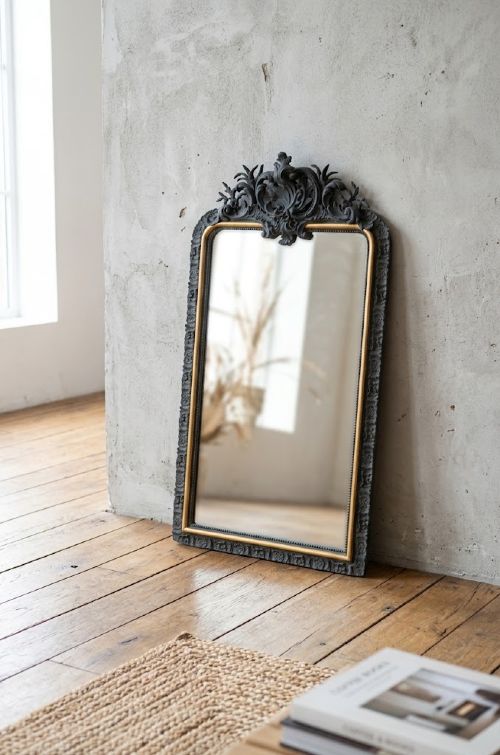
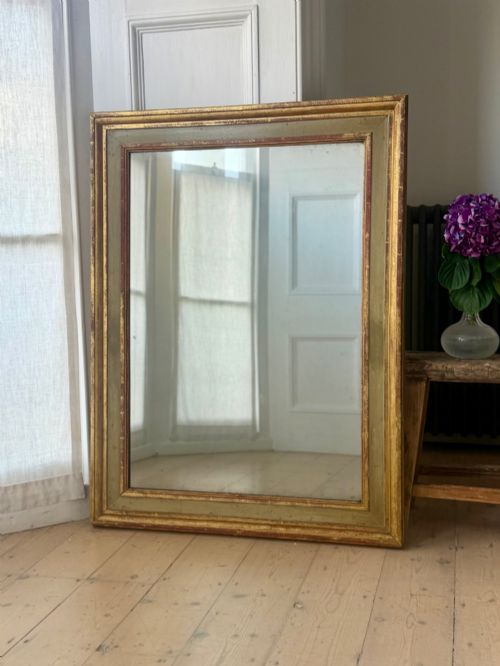
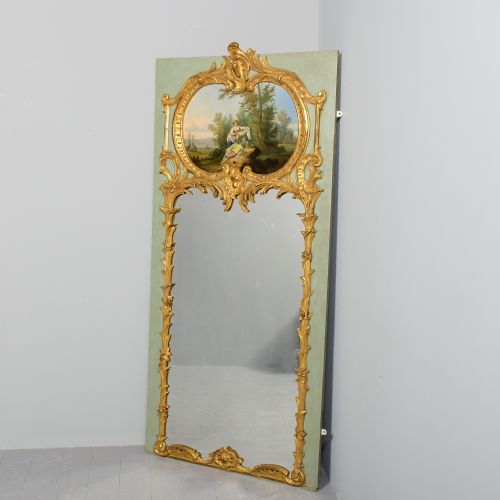
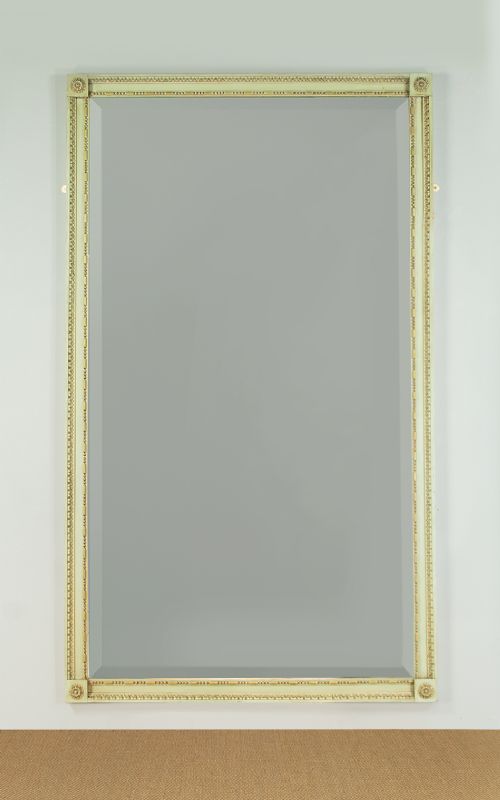
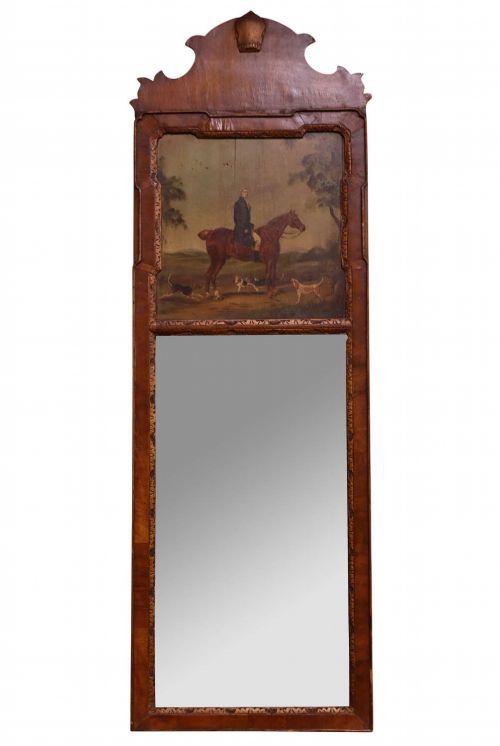
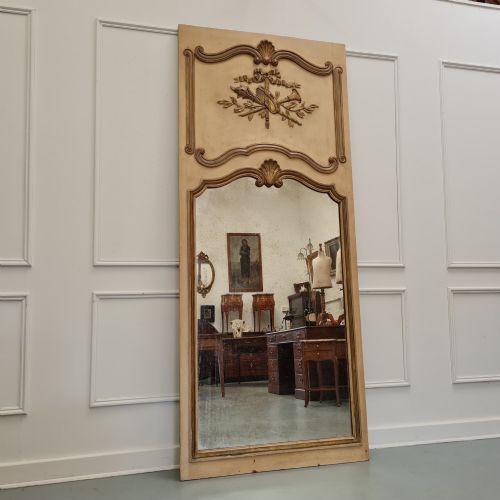
A painted pier glass is a tall wall mirror designed specifically to hang on the narrow wall between two windows, known as the pier. These architectural mirrors extend the perceived light and space of a room while acting as a focal point between architectural openings.
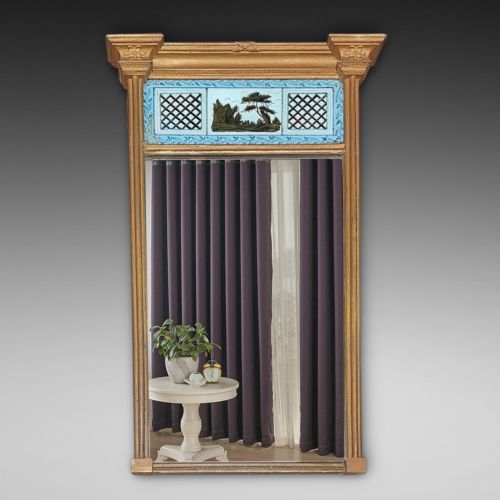
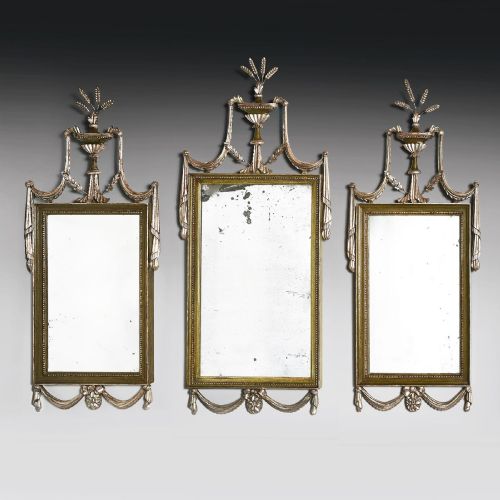
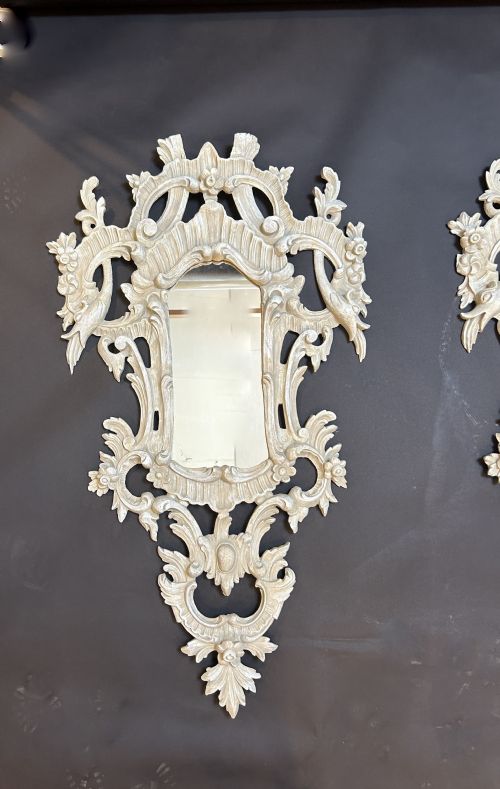
The versions most common on this page span the eighteenth, nineteenth, and early twentieth centuries, drawing heavily on French trumeau forms, Regency classical restraint, and Italian decorative traditions. Many examples incorporate painted wooden frames, parcel-gilt detailing, and integrated oil paintings or reverse-glass panels.
Beyond standard wall mirrors, the selection includes related console tables, pier cabinets, and overmantle mirrors sharing the same decorative vocabulary. These pieces combine functional glass with painted surfaces, lacquer work, and pastoral or historical scenes set above the main mirror plate.
Materials and construction
Frames are built from timber such as walnut, maple, and general wood substrates, heavily built up with gesso to receive intricate carved ornament and paint layers. Giltwood and parcel-gilt sections rely on thin layers of gold leaf applied over bole to create contrast against painted surfaces.
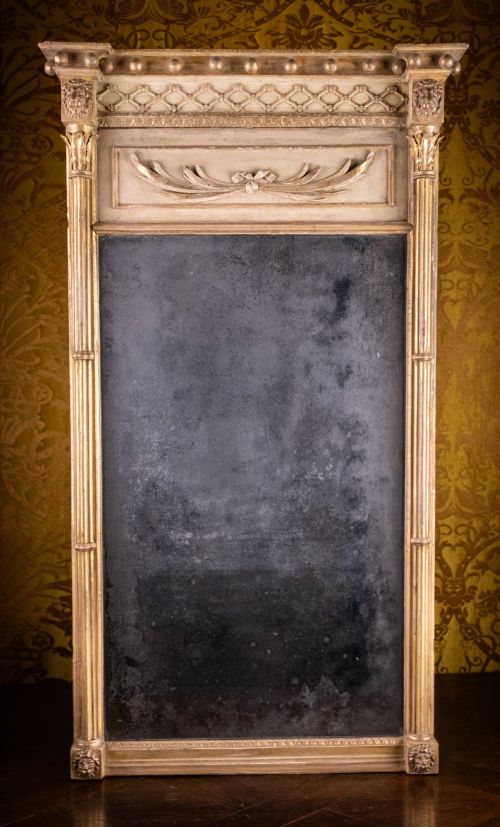
The reflective surfaces utilise traditional mercury glass or early silvered plate, often showing characteristic ageing, foxing, and distortion inherent to period manufacturing methods. Upper panels frequently employ verre églomisé, a technique of painting and gilding on the reverse side of glass, alongside oil paintings on canvas or wood.
Decorative schemes incorporate hand-painted floral motifs, Chinoiserie lacquering, and architectural mouldings influenced by French Empire, Neoclassical, and Rococo styles. Lion masks, carved urns, and architectural cornices are common structural additions fixed to the upper frame.
An unusual nineteenth-century maple-framed mirror records history with a reverse glass print depicting a brisk naval engagement between American and British forces.
Distinctions in quality
Quality rests in the harmony between the primary mirror plate and the accompanying artwork above, such as an original oil painting or a detailed verre églomisé panel. Weaker pieces often feature later replacement panels or uninspired decorative painting that lacks the crispness of period handwork.
The depth and execution of the gesso and carved wood ornamentation dictate the visual weight of the frame. Superior examples display sharp, undercut carving and refined gilding that adheres tightly to the timber contours, whereas lesser items show heavy, flat moulding.
Gillows Of Lancaster
The Painted Pier Glass Glossary
- Pier glass
- A tall mirror specifically proportioned to hang on the narrow wall space between two windows. It frequently includes a console table placed directly beneath it.
- Trumeau
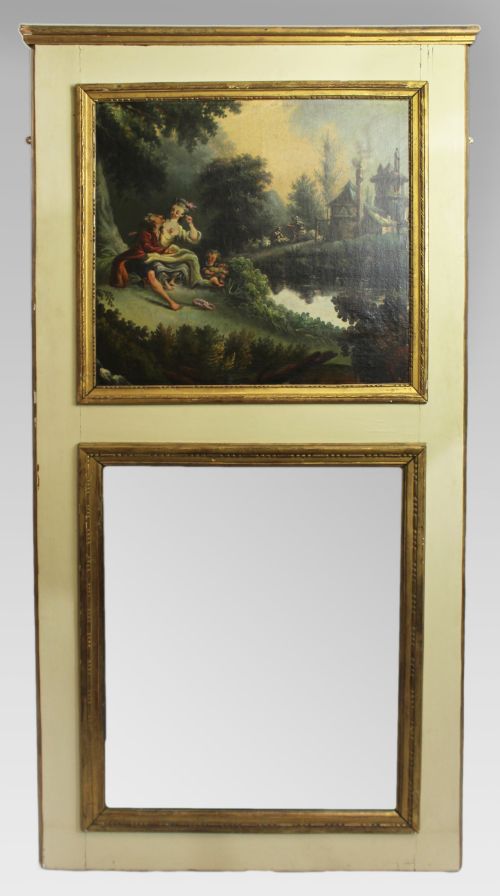
- A decorative architectural wall panel containing a mirror, a painting, or a carved relief, popular in eighteenth and nineteenth-century interiors. The upper section often holds an oil painting on canvas or wood.
- Verre églomisé
- A cold-painting and gilding technique applied to the reverse side of glass. It produces a reflective, metallic finish often used for decorative panels above the main mirror.
- Gesso
- A plaster-like mixture applied to wood frames to create a smooth surface for gilding and painting. Fine application preserves the crisp detail of the underlying wood carving.
- Parcel-gilt
- Partially gilded, where gold leaf is applied only to specific raised carved details while the rest of the surface is painted. This technique highlights architectural mouldings and relief decoration.
Painted Pier Glass: Frequently Asked Questions
Where should I hang a pier glass?
These mirrors suit narrow wall spaces between large windows, echoing the original architectural purpose of reflecting light back into the room. They also function effectively above low console tables or sideboards in entrance halls and reception rooms.
Because of their vertical proportions, ensure the hanging fixings secure directly into structural wall anchors to support the substantial weight of the timber and glass frame.
What is a trumeau mirror?
A trumeau mirror is a specific French wall mirror that incorporates a painted or carved decorative panel directly above the glass plate. These upper panels frequently feature pastoral oil scenes or mythological subjects.
The style became widespread during the eighteenth and nineteenth centuries, bringing architectural structure and integrated artwork into domestic interiors.
How do I identify mercury glass?
Period mercury glass displays characteristic dark speckles, uneven reflectivity, and soft oxidation beneath the surface of the plate. These visual traits result from the historical backing process utilised before modern silvering methods became standard.
Plates often show subtle waviness and edge darkening that distinguish them from modern, flawless float glass.
Can these mirrors be cleaned safely?
Clean the glass surface gently with a soft microfibre cloth and minimal moisture, avoiding harsh chemical cleaners that might seep behind the edges of the plate. Take care around antique silvering or mercury backing to prevent further degradation.
Dust carved wood and gesso frames with a dry, soft brush to protect fragile painted surfaces and historic gold leaf.