




Full Length Leaning Mirror
A full length leaning mirror brings scale and reflected light to a room, drawing the eye upwards while anchoring the interior scheme.
Full Length Leaning Mirror
A full length leaning mirror serves as both a practical dressing glass and a striking architectural element within a room. When you search for a full length leaning mirror, you encounter substantial vertical formats designed to rest directly against a wall without permanent fixtures.
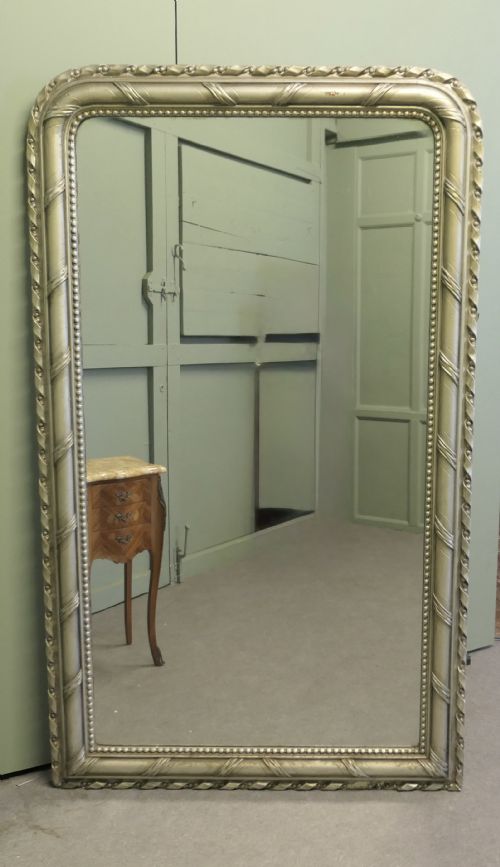
The pieces available here lean towards nineteenth-century French and Victorian designs, encompassing Louis Philippe frames and ornate revival styles. These tall glasses bring height and proportion to domestic spaces, reflecting natural light across the floor and walls.
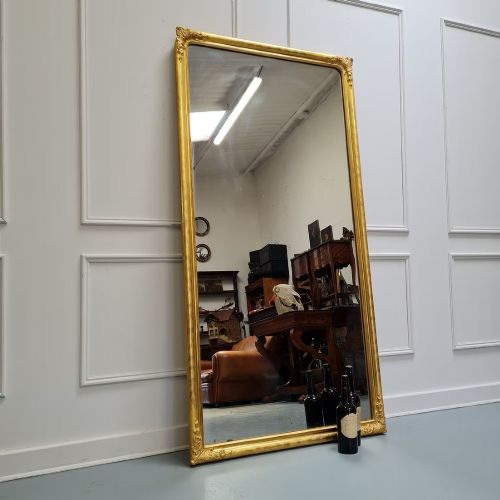
Most examples originate from the nineteenth and early twentieth centuries, displaying generous proportions and traditional framing techniques. You will find both heavily decorated giltwood constructions and simpler painted wooden frames suited to diverse interior settings.
Materials and construction methods
Makers constructed these tall frames using solid timbers such as pine, applying layers of gesso to build up decorative relief work. Carved wood forms the structural core of the more ornate pieces, providing a stable base for subsequent surface treatments.
Gilding was achieved through the application of gold or silver leaf onto the prepared gesso grounds, creating a luminous metallic finish. Alternatively, simpler frames received coats of paint or ebonising to suit contemporary aesthetic demands.
The listings span the nineteenth and early twentieth centuries, featuring materials such as gesso, giltwood, ebonised wood, and painted pine.
Assessing quality in antique mirrors
Quality reveals itself in the crispness of the carved wood and the depth of the gesso ornamentation applied to the frame. Superior examples display sharply defined scrollwork and mouldings that remain intact despite centuries of movement.
The integrity of the original silvering and the clarity of the glass plate itself mark the distinction between standard and finer pieces. Original mirror plates often exhibit subtle foxing and age spots that testify to their antique origin without obscuring the reflection.
The Full Length Leaning Mirror Glossary
- Gesso
- A plaster-like mixture applied to wood frames to create a smooth surface for gilding or painting. Artisans carved intricate decorative motifs directly into this dried compound.
- Giltwood
- Timber coated with a thin layer of gold leaf over a prepared base. This material gives frames their characteristic warm metallic lustre.
- Louis Philippe
- A mid-nineteenth-century French style characterised by restrained classical proportions and softened rectangular corners. These frames often feature understated beaded or scroll mouldings.
- Pier glass
- A tall mirror designed to hang or stand on the wall space between windows. They frequently match narrow architectural proportions.
- Foxing
- Small dark spots and discoloration that develop within the silver backing of older glass over time. This process occurs naturally through chemical reactions across decades.
Full Length Leaning Mirror: Frequently Asked Questions
How do I secure a leaning mirror safely?
Large mirrors resting against walls require proper anchoring to prevent tipping and ensure household safety. Discreet brackets fixed to the upper frame and secured into the wall structure maintain stability while allowing the piece to lean at the desired angle.
Positioning the base on a stable floor surface away from heavy foot traffic further protects the frame and glass from accidental impacts during daily use.
Can these mirrors be hung on the wall?
Many taller frames retain weight and proportions intended primarily for floor placement rather than wall hanging. Checking the original structural battens and hanging loops on the reverse determines whether a particular piece supports wall mounting.
Professional assessment of the wall fixings is essential for heavier carved wood and gesso frames to ensure the fixings can bear the substantial load safely.
What is the difference between silver gilt and gold gilt?
Silver gilt utilises thin sheets of silver leaf applied to the gesso ground, often toned with a translucent glaze to achieve a cooler metallic sheen. Gold gilt employs genuine gold leaf, producing a warmer, richer yellow tone that does not tarnish in the same manner.
Both finishes reflect light differently within an interior space, influencing the overall mood and colour palette of the surrounding room.