


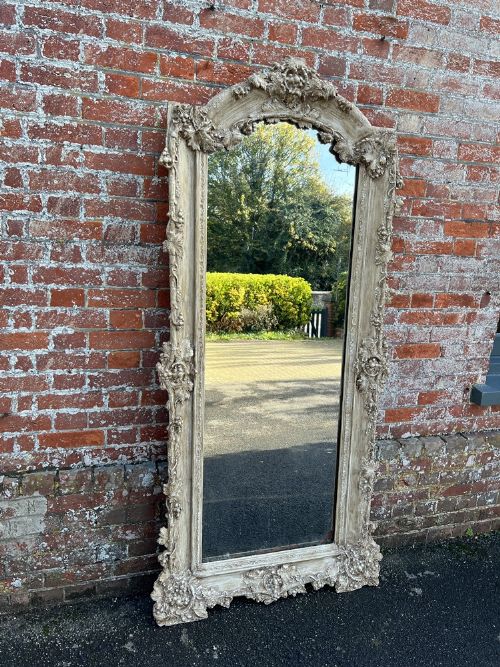


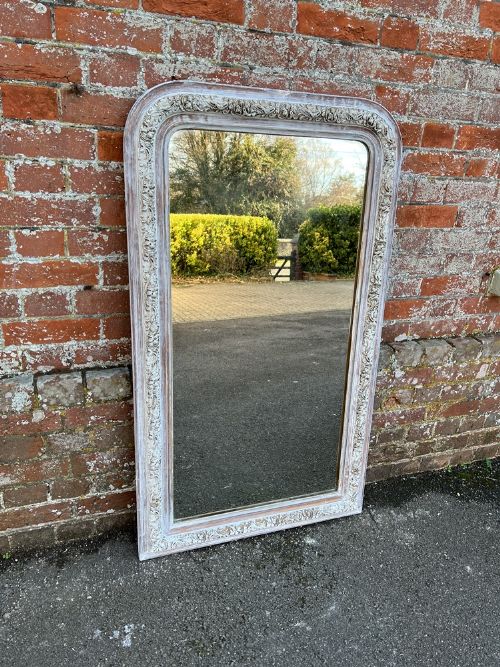


Distressed Wood Floor Mirror
These large distressed wood floor mirror pieces bring aged French and English character into a room through weathered painted surfaces and carved gesso details.
Distressed Wood Floor Mirror
A distressed wood floor mirror provides significant scale within an interior, appearing primarily as tall French and English pieces dating from the mid nineteenth century to the early twentieth century. These large items frequently present arched, shaped, or plain rectangular tops designed to lean against a wall.
The selection centres on designs drawing from French Chateau, provincial, Rococo Revival, Neoclassical, and Louis Philippe traditions alongside English country aesthetics. Most items combine substantial wood frames with painted finishes, gesso ornamentation, and original mirror glass.
Materials and construction
Maker construction relies heavily on carved wood frameworks built to support large expanses of mirror glass. Artisans applied layers of gesso to create crisp architectural mouldings and decorative relief details upon the timber base before finishing the surface.
Surfaces receive paint treatments, and select examples incorporate silver leaf or gilt highlights beneath intentional weathering. The combination of carved wood, gesso, and paint defines the physical presence of these pieces.
Assessing quality and character
Quality reveals itself in the depth and execution of the carved wooden ornament and the crispness of the applied gesso mouldings. Finer examples display balanced proportions across their large frames, whether shaping an arched top or a plain rectangular silhouette.
The integrity of the original painted surface and silvered glass contributes greatly to the character of each piece. Superior items retain harmonious ageing across the painted wood and gesso without compromising the stability of the heavy frame.
The Distressed Wood Floor Mirror Glossary
- Gesso
- A plaster-like material applied to carved wood frames to create smooth surfaces for painting or intricate raised ornamentation. It allows for sharp decorative details that define nineteenth-century mirror styles.
- Overmantle mirror
- A large horizontal or vertical mirror traditionally designed to hang or stand above a fireplace mantelpiece. These pieces often feature arched tops to draw the eye upward in a room.
- Louis Philippe
- A mid nineteenth-century French style characterised by understated elegance, gently rounded top corners, and minimal ornamentation compared to earlier Rococo excesses. It provides a clean architectural outline.
- Bistro mirror
- A simpler commercial-style mirror frame originating from French establishments, usually featuring a plain linear wooden border. These functional pieces focus on practical reflection rather than elaborate carving.
- Silver leaf
- A very thin sheet of beaten metal applied to decorative surfaces to impart a metallic sheen beneath paint or weathering. It adds a subtle reflective quality to the frame.
Distressed Wood Floor Mirror: Frequently Asked Questions
How do I style a large mirror?
Lean the heavy wooden frame directly against a living room or bedroom wall to create an illusion of depth and space. This placement allows the aged paint and carved gesso details to anchor the room naturally.
Ensure the floor surface is level and secure the top of the frame to the wall for safety. Let the scale of the piece dictate the surrounding furniture arrangement.
What periods do these mirrors come from?
The available pieces originate primarily from the nineteenth century, spanning decades such as the eighteen-fifties, sixties, seventies, and nineties, alongside early twentieth-century examples. French provincial and English country workshops produced the majority of these large formats.
Stylistic cues like Louis Philippe shaping or Rococo Revival curves help indicate the specific era of manufacture. Each period brings distinct moulding profiles and framing techniques.
Are the mirror plates original?
Many examples retain their original mirror glass, which often exhibits characteristic foxing and age spots developed over generations. This authentic ageing provides a softer reflection than modern glass.
Inspect the glass for consistency within the heavy wooden rabbet. Original plates contribute significantly to the historic integrity of the piece.
How do I care for painted wood frames?
Dust the carved wood and gesso surfaces gently with a dry, soft cloth to prevent particulate buildup in the intricate mouldings. Avoid liquid cleaners that might compromise aged paint and distressed finishes.
Keep the mirror away from direct sources of extreme heat or dampness to protect the wooden structure and underlying gesso. Regular gentle maintenance preserves the historic surface patina.