
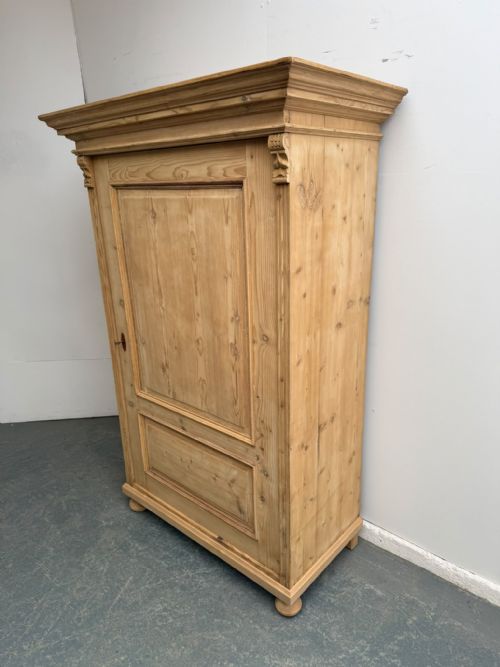


Painted Panel Cabinet
A painted panel cabinet brings narrative charm and decorative colour to a room through surface artistry applied directly to timber.
Painted Panel Cabinet
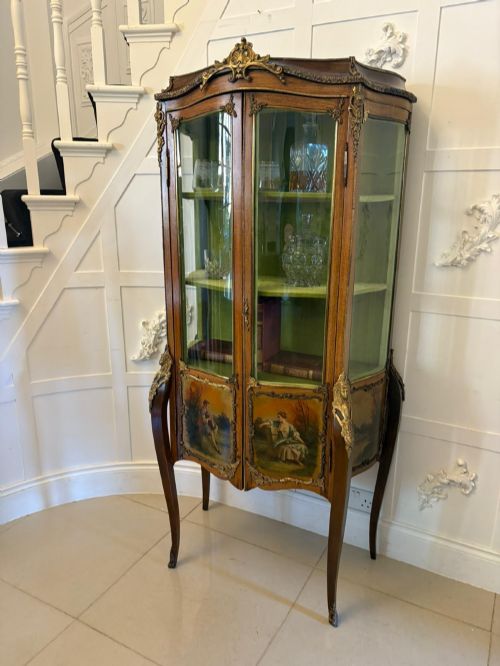
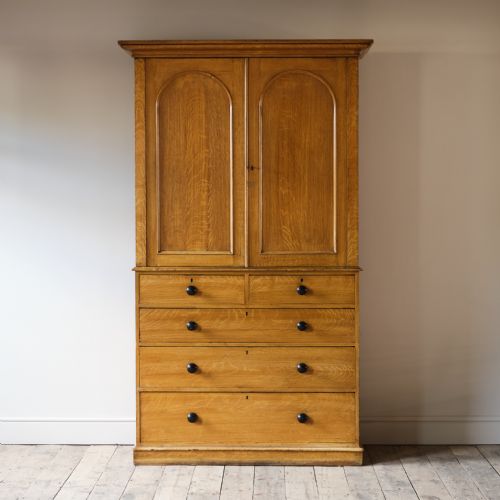
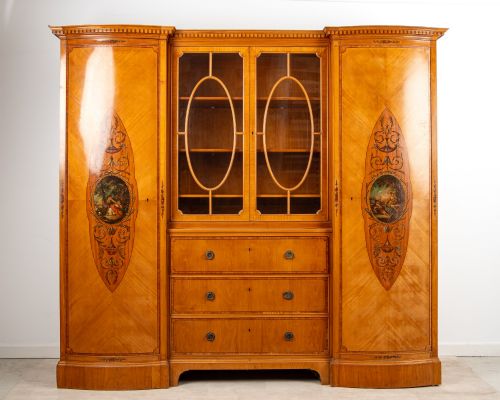
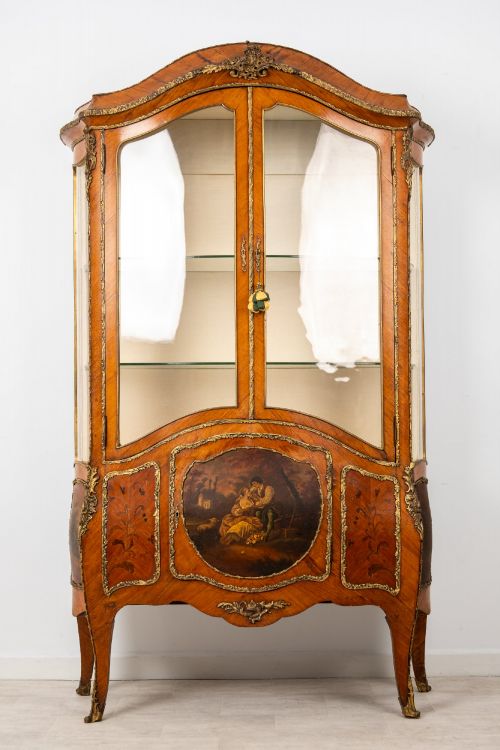
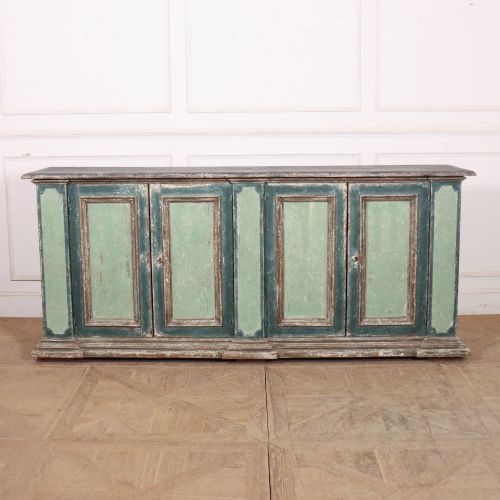
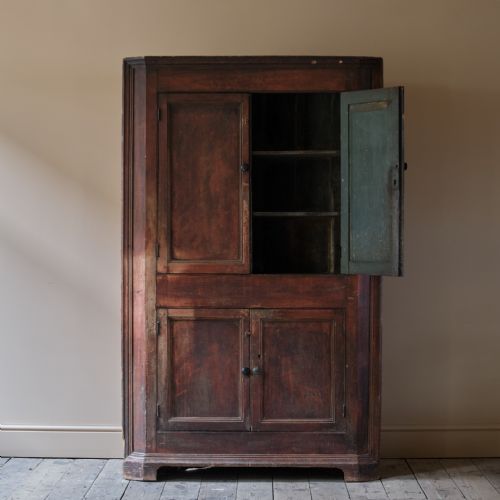
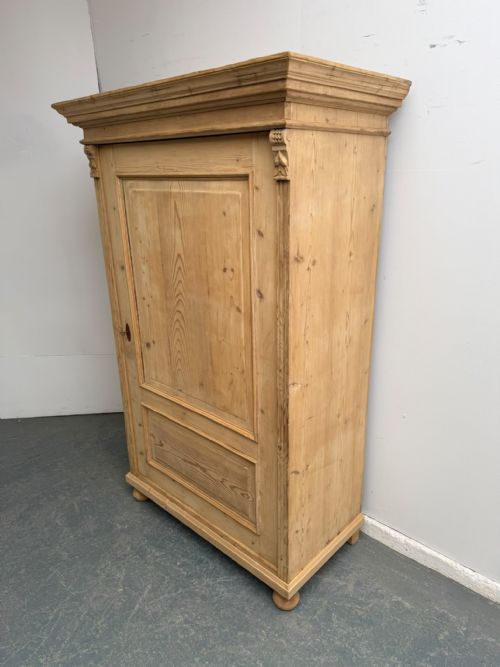
A painted panel cabinet combines functional storage or display with artistic surface decoration, taking forms such as vitrines, commodes, wardrobes, and corner cupboards across this selection.
The pieces span various origins and eras, notably the nineteenth century, Victorian period, and Edwardian epoch, alongside Georgian country pieces and French Revival designs.
Buyers frequently encounter French vitrines featuring ornate mounts alongside English pine country cupboards and satinwood commodes displaying classical or pictorial motifs.
How they were made
Cabinet makers utilised foundational timbers including pine, walnut, mahogany, and kingwood, often pairing solid construction with applied mouldings, glass panes, and marble tops.
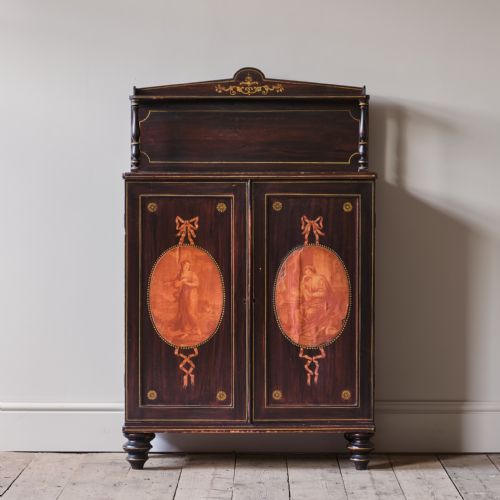
Decorative surfaces relied on specialised painting techniques, from simulated rosewood graining and original regional paint to intricate Vernis Martin lacquer and hand-painted pastoral scenes.
High-status French and English cabinets incorporated cast ormolu mounts, brass hardware, and gilt bronze details to frame the painted elements.
The selection bridges eighteenth-century vernacular food cupboards with twentieth-century Edwardian satinwood pieces and French vitrines.
What varies in quality
Quality rests significantly on the execution and preservation of the painted panels, distinguishing skilled artistic hand-work from simpler decorative finishes.
The choice of primary timber and secondary wood influences overall integrity, with dense hardwoods like kingwood and satinwood sitting alongside robust structural pine.
The refinement of ancillary mounts, such as fire-gilded ormolu or cast brass, demonstrates the original workshop's commitment to luxury.
The Painted Panel Cabinet Glossary
- Vernis Martin
- A type of simulated Japanese lacquer developed in eighteenth-century France and emulated later, using multiple resin layers to protect delicate painted scenes. This finish is frequently found on French vitrines.
- Ormolu
- Gilded bronze mounts cast and chased to ornament the corners and frames of fine cabinets. These decorative elements signal high-status nineteenth-century furniture.
- Vitrine
- A glass-fronted display cabinet designed to showcase porcelain, curiosities, or books. They often incorporate painted panels beneath the main display area.
- Satinwood
- A light-coloured, lustrous hardwood favoured for fine cabinet making during the Georgian and Edwardian periods. It provides an ideal smooth canvas for hand-painted decoration.
- Commode
- A low chest of drawers or cabinet with doors, originating in France. In later periods, these pieces often feature serpentine fronts and elaborate painted panels.
Painted Panel Cabinet: Frequently Asked Questions
How do I care for painted panels?
Painted panels require stable room environments away from direct sunlight to prevent the pigments from fading or the underlying wood from moving. Dusting should be done gently with a dry, soft cloth without chemical polishes.
Maintaining moderate humidity levels protects both the paint surface and the structural integrity of the surrounding cabinet timber.
Where were these cabinets placed?
These cabinets served multiple domestic functions depending on their form, from displaying prized porcelain in formal drawing rooms to storing household linens in country houses. Smaller commodes and side cabinets often stood in bedrooms or boudoirs.
Larger wardrobes and bookcases functioned as principal storage furniture in grander chambers.
How do I distinguish French from English pieces?
French cabinets frequently employ exotic woods like kingwood and walnut, paired with heavy cast ormolu mounts and curved Louis-style silhouettes. Vernis Martin and vitrine configurations are particularly common in these continental workshops.
English equivalents often favour satinwood, mahogany, or pine construction, leaning towards rectilinear Georgian proportions or Edwardian satinwood commodes.