


French Glass Showcase
A French glass showcase brings Parisian craftsmanship into a room to hold porcelain, silver and small treasures behind clear panels.
French Glass Showcase
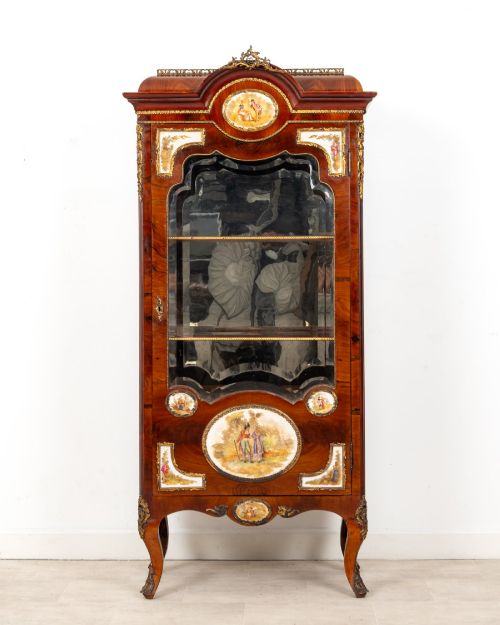
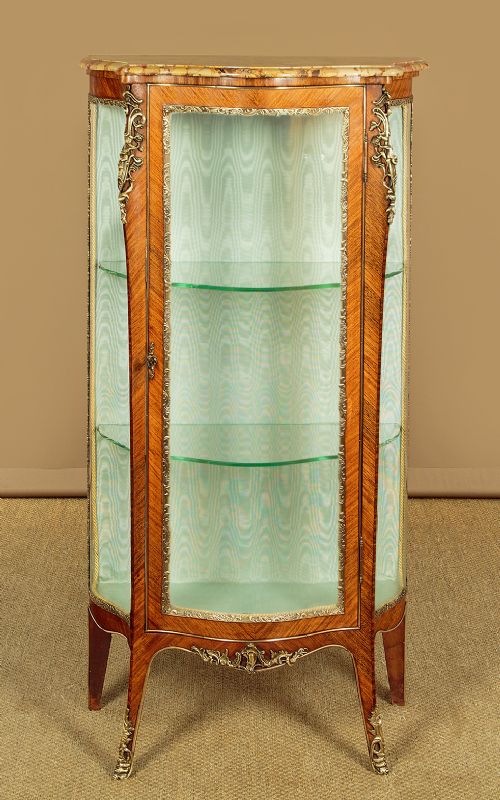
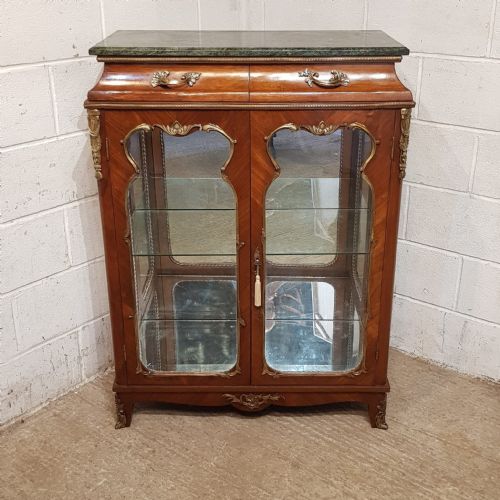
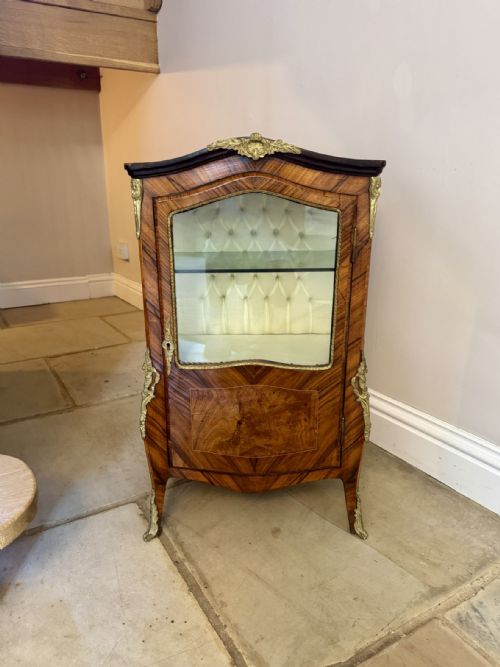
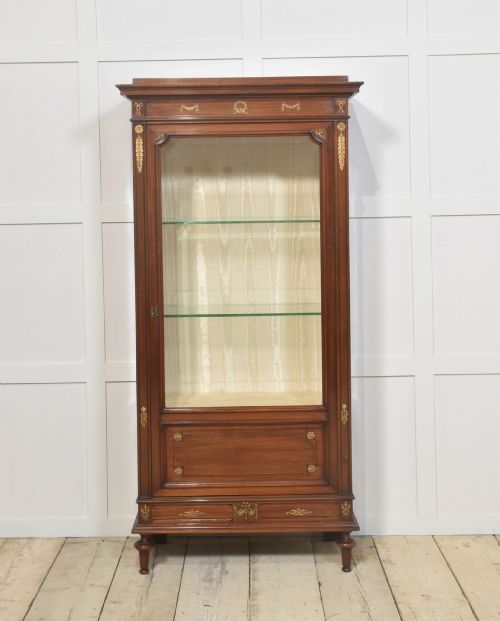
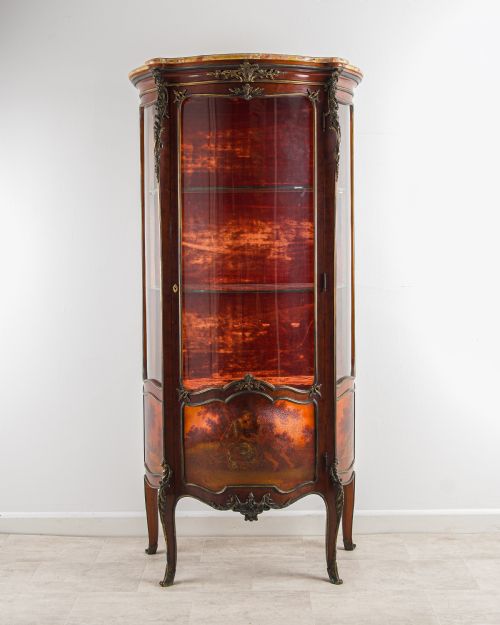
A french glass showcase appears across this selection primarily as a freestanding vitrine, china cabinet or low bijouterie table designed to exhibit collections. These pieces emerge predominantly from the nineteenth century, running through the Edwardian era and into the nineteen-twenties.
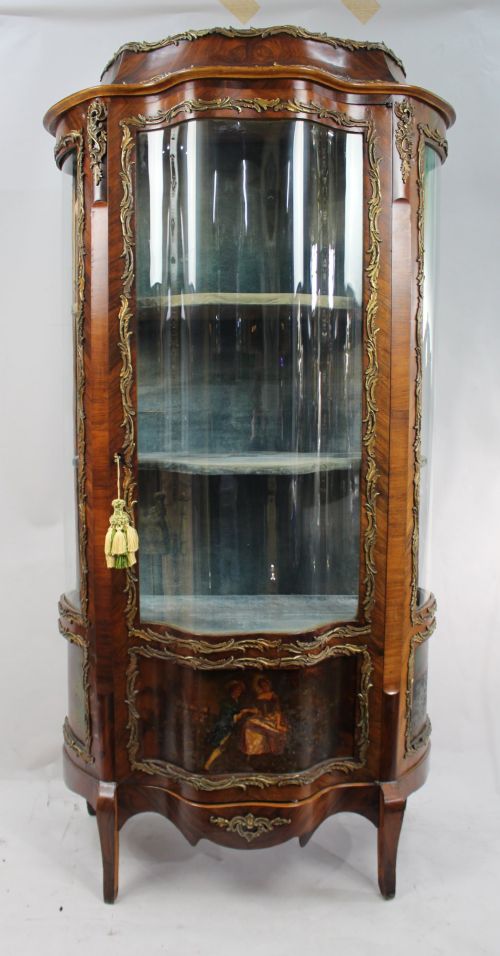
The prevailing aesthetic leans heavily on Louis XV and Louis XVI revivals, alongside French Empire and Rococo influences. Buyers encounter serpentine fronts, cylindrical pedestals, and compact petite cabinets scaled for domestic drawing rooms or specialised shop interiors.
Makers and workshops of the period construct these cabinets to maximise light entry through glazed doors and side panels. The resulting furniture balances functional storage with decorative display.
Materials and Construction
Cabinet makers build the structural carcase from dense hardwoods including walnut, mahogany, rosewood, oak and yew, often veneered in kingwood with intricate parquetry patterns. Many examples incorporate painted lower panels following the Vernis Martin technique, finished with delicate pastoral scenes.
Gilded bronze or ormolu mounts frame the glass panes, corners and feet, providing structural reinforcement and decorative flourish. Marble tops appear frequently on nineteenth-century cabinets, adding weight and a cool stone surface to the upper carcase.
Cabinet makers occasionally deployed secret compartments beneath glazed display tiers, giving meticulous owners a hidden place for extra keys and receipts.
Craftsmanship and Proportion
The standard of an ormolu mount dictates the visual success of the piece, separating crisp, hand-chased bronze work from softer, mass-produced castings. Superior cabinets display meticulous parquetry matching grain directions across curved serpentine doors.
The integration of glass panels within wooden or metal rebates shows the care taken by the original workshop. Finer pieces retain original fabric linings inside the display chamber, complementing the exterior wood tones without distracting from the objects placed inside.
François Linke·Angela Kaufman·Siegel
The French Glass Showcase Glossary
- Vitrine
- A glass-fronted cabinet designed specifically for displaying porcelain, curiosities and fine objects. These freestanding cases rely on glazed sides to illuminate the interior from multiple angles.
- Ormolu
- Gilded brass or bronze applied to furniture as decorative mounts and feet. The technique involves treating metal with a mercury-gold amalgam before heating.
- Vernis Martin
- A type of simulated Japanese lacquer developed by the Martin brothers in eighteenth-century France. Cabinet makers later revived this technique to decorate panel doors with painted varnish scenes.
- Bijouterie table
- A shallow glass-topped display table intended for holding jewellery, medals and small ornaments. These tables lift the collection to eye level for seated viewing.
- Parquetry
- Geometric wood inlay arranged in patterns across cabinet surfaces. Artisans contrast timbers like kingwood, walnut and rosewood to create three-dimensional optical effects.
French Glass Showcase: Frequently Asked Questions
How do I light objects inside a vitrine?
Most antique glass showcases rely on ambient room light passing through side and door glass panels. Placing the cabinet near a window maximises this natural illumination.
Avoid placing delicate organic materials under direct modern spotlights that generate heat inside enclosed wooden carcases.
What is the difference between a vitrine and a bijouterie table?
A vitrine is an upright vertical cabinet with shelves enclosed by glass doors for standing objects. A bijouterie table is a low, horizontal case with a glazed top designed for flat items and small curiosities.
Both serve to display collections, but they occupy different vertical spaces within a room scheme.
Can I adjust the shelves inside an antique cabinet?
Most nineteenth-century display cabinets feature fixed wooden supports or early stationary ledge systems rather than modern adjustable tracks. Altering shelf heights requires professional carpentry to maintain structural stability.
Buyers should measure their tallest porcelain or silver pieces before selecting a specific cabinet height.
How do I care for marble tops on cabinets?
Marble surfaces require regular dusting with a dry microfibre cloth to prevent surface grit accumulation. Wipe spills immediately using plain water and mild soap, avoiding acidic cleaning agents that etch polished stone.
Applying a specialist stone wax periodically protects the porous surface from moisture rings.