


Painted Open Arm Chair
A painted open arm chair brings lightness and decorative character to a room, drawing on centuries of European seating design.
Painted Open Arm Chair
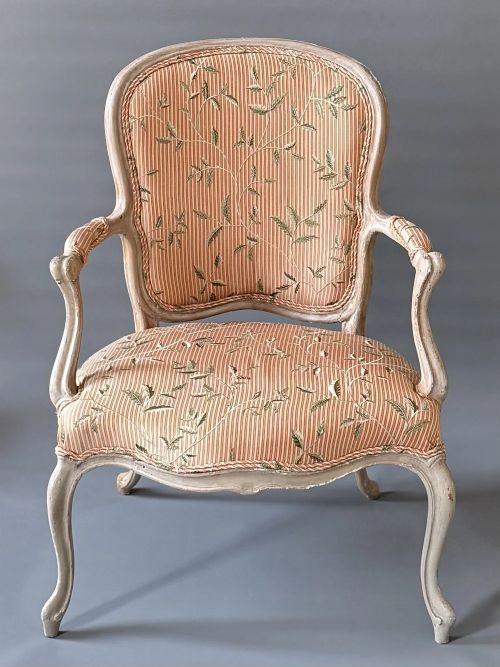
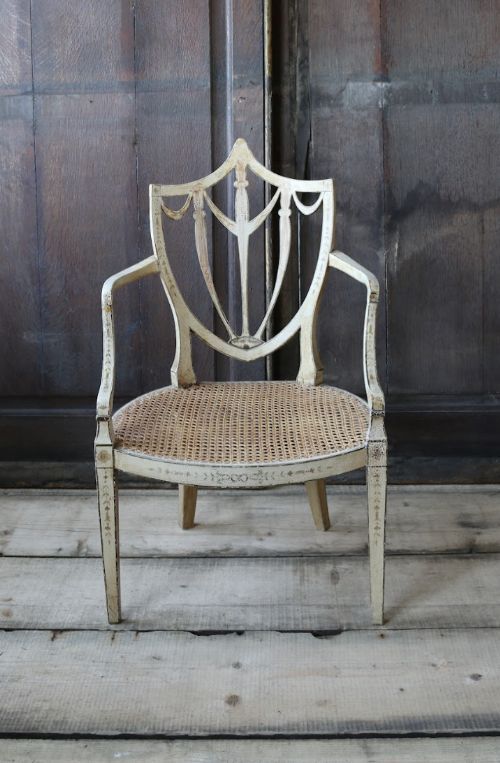
When you search for a painted open arm chair, you encounter seating ranging from eighteenth-century Georgian and Sheraton examples to nineteenth-century Regency and French provincial pieces, alongside early twentieth-century revivals. These chairs combine timber frames with decorative painted surfaces, often featuring open sides rather than solid upholstered wings.
The version you are most likely to meet on this page is a French or English design from the Georgian, Regency, or later revival periods. They appear in forms such as shield-back armchairs, library chairs, and fauteuils, frequently paired or in sets alongside single examples.
Makers utilised various decorative finishes on these chairs, including parcel gilt, ebonised details, japanning, and simulated satinwood. The underlying frame construction typically relies on beech, walnut, or mahogany beneath layers of historic or later paint.
How they were made
Carpenters shaped timber frames from woods such as beech, mahogany, and walnut, employing joinery techniques suited to supporting armrests and open back designs. Caning, fabric, needlepoint panels, or modern upholstery were then fitted to the seats and backs.
Craftsmen applied ground coats of paint, often layering pigments and size before introducing decorative motifs, floral decoration, or gilt highlights. Surface treatments like japanning and simulated satinwood required careful finishing to mimic more costly exotic timbers.
Makers occasionally incorporated brass details or carved elements such as block feet and shield backs to elevate the appearance of the chair.
Some nineteenth-century makers decorated chair backs with carved Prince of Wales feathers.
What varies in quality
The distinction between ordinary and superior pieces rests on the crispness of the carved details and the survival of original decorative paint schemes rather than later overpainting. Chairs retaining their earliest painted or gilt decoration command greater attention from collectors.
Proportion and structural integrity define the higher tiers of these chairs, where balanced lines and refined arm supports reflect the skill of the original workshop. Lesser pieces may display heavy restoration or clumsy alterations to the frame and painted surface over successive generations.
Gillows·Liberty of London·John Gee
The Painted Open Arm Chair Glossary
- Fauteuil
- An open-arm armchair originating in France, typically featuring an exposed wooden frame with upholstered seat and back pads.
- Japanning
- A European imitation of East Asian lacquerwork, created by applying layers of varnish and paint with decorative motifs.
- Parcel Gilt
- A technique where selective parts of a wooden frame receive gold leaf, contrasting with the painted ground.
- Shield-Back
- A chair back shaped in the outline of a heraldic shield, popular in late eighteenth-century English design.
- Simulated Satinwood
- Paintwork executed on a base wood to imitate the golden grain and figure of genuine satinwood.
Painted Open Arm Chair: Frequently Asked Questions
What periods do these chairs cover?
The pieces span from the mid-eighteenth century through the nineteenth century and into the early twentieth century. Styles include Georgian, Regency, Louis XVI, and Arts and Crafts revivals.
Craftsmen across these eras adapted classical forms, utilising painted and gilt finishes to suit changing interior fashions.
Were these chairs used at desks?
Library chairs and elbow chairs served multiple domestic functions, including reading, writing, and social gatherings in drawing rooms. Their open arms allowed comfortable seating while wearing bulky historical garments.
They were placed around tables or beside desks, functioning as both movable seating and decorative room accents.
How do I spot original paint?
Examining the surface under magnification reveals craquelure, wear patterns, and the accumulation of dirt within the layers that modern repainting lacks. Historic paint often shows multiple underlying priming coats appropriate to the period of manufacture.
Expert assessment looks for consistency between the wear on the timber frame and the deterioration of the painted finish.
Can I use them daily?
These chairs function well in modern interiors when placed with care regarding their age and structural condition. Many retain sturdy joinery from beech or mahogany frames that supports everyday sitting.
Upholstery and caning can be maintained or renewed by specialists to ensure the seating remains practical for modern use.
What is a bergere?
A bergere is an enclosed or open upholstered armchair with an exposed wooden frame, differing from standard stiff-backed chairs by offering a deeper, more relaxed seat.
They often feature cane panels on the sides and back, paired with loose seat cushions for added comfort.