


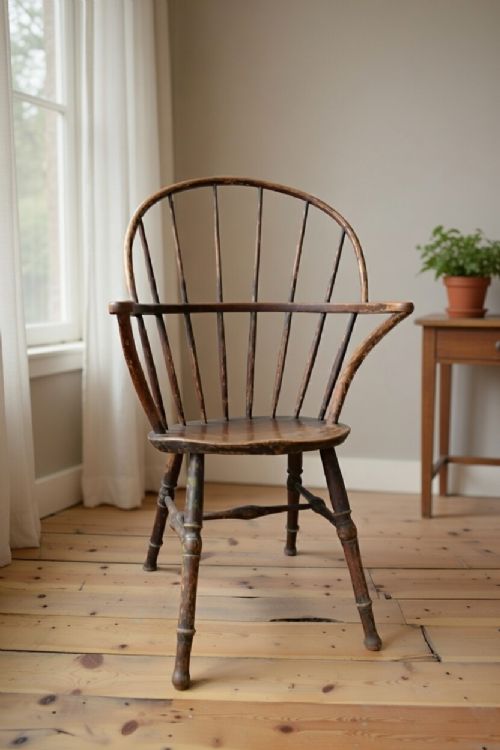
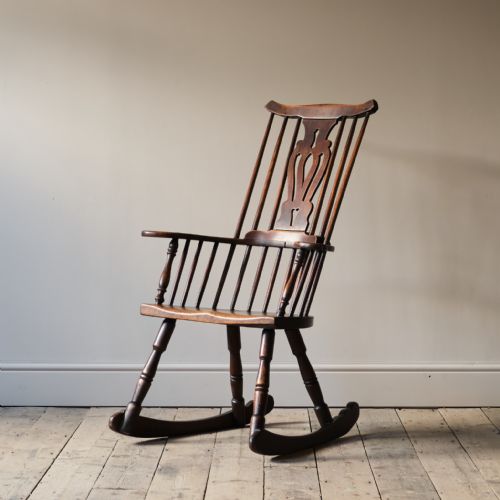
Late 18th Century Armchair
A late 18th century armchair brings solid proportion and distinct regional character to a room, offering functional seating rooted in Georgian and continental design.
Late 18th Century Armchair
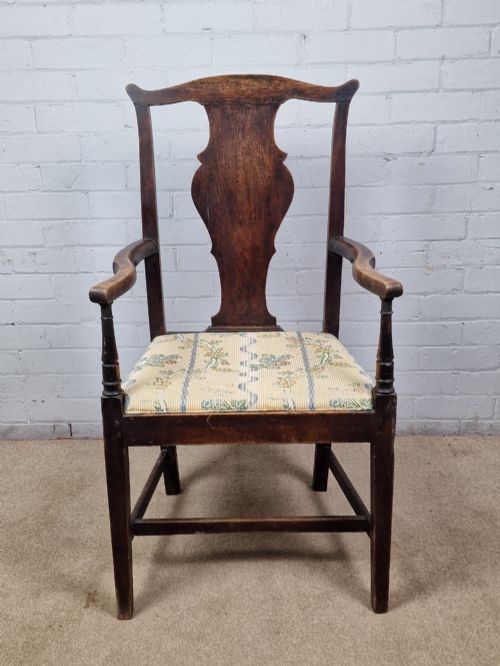
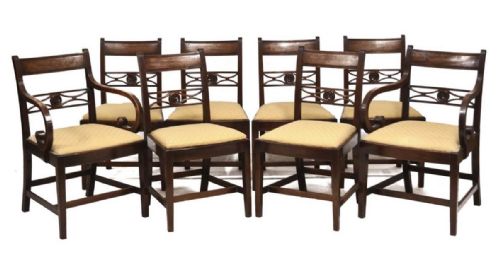
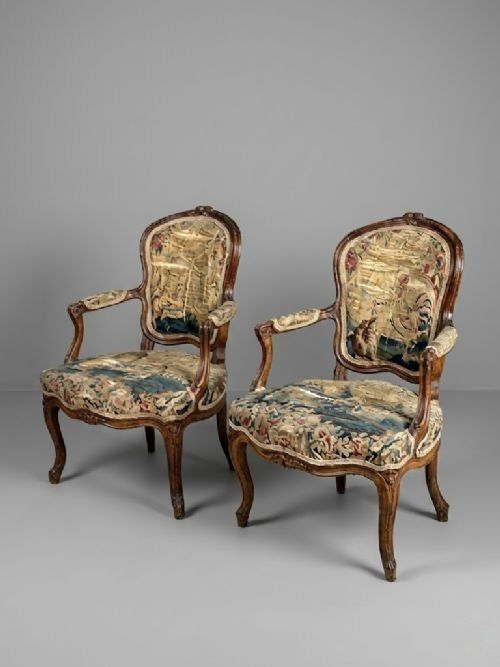
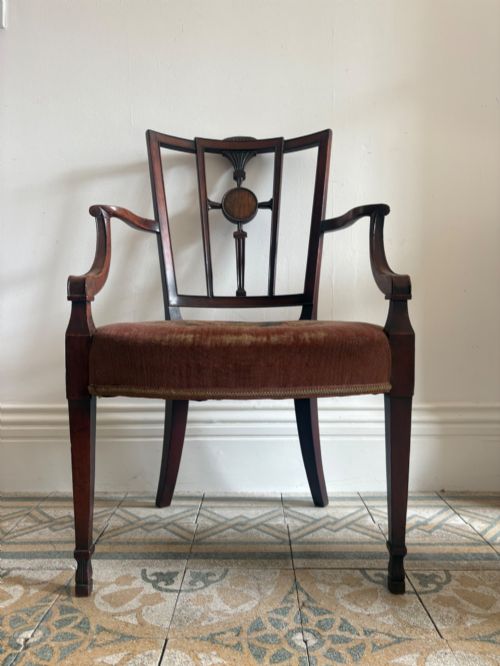
A late 18th century armchair encompasses a wide variety of seating forms originating from the Georgian period, the 1800s, and continental European workshops. Buyers exploring this category encounter formal mahogany dining carvers, elegant French open armchairs, sturdy country Windsor chairs, and specialised forms such as corner chairs and porters chairs.
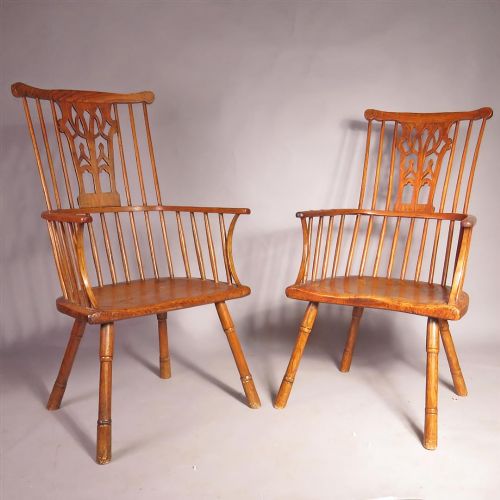
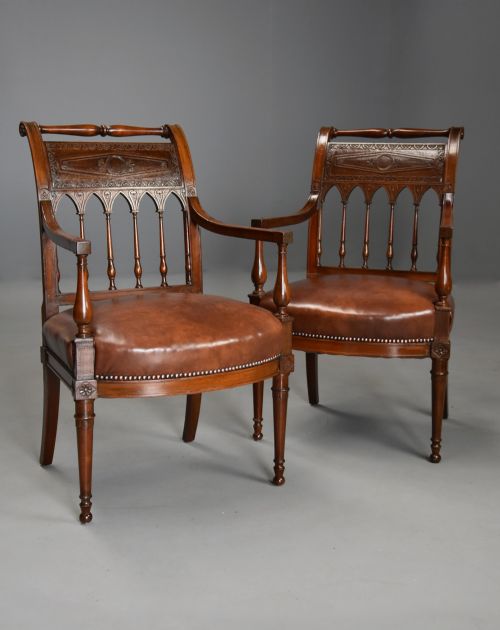
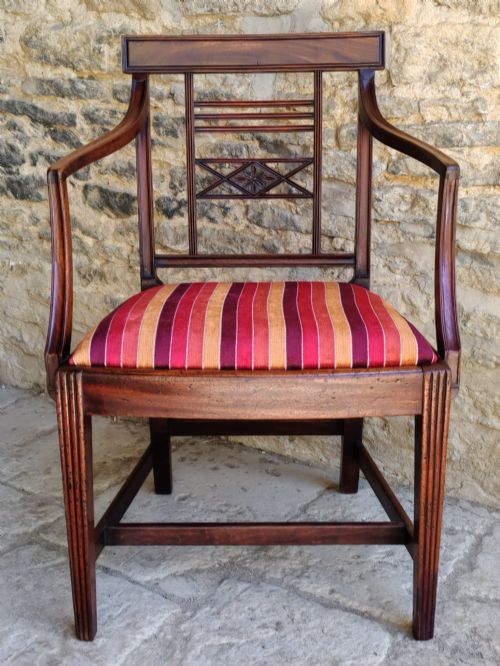
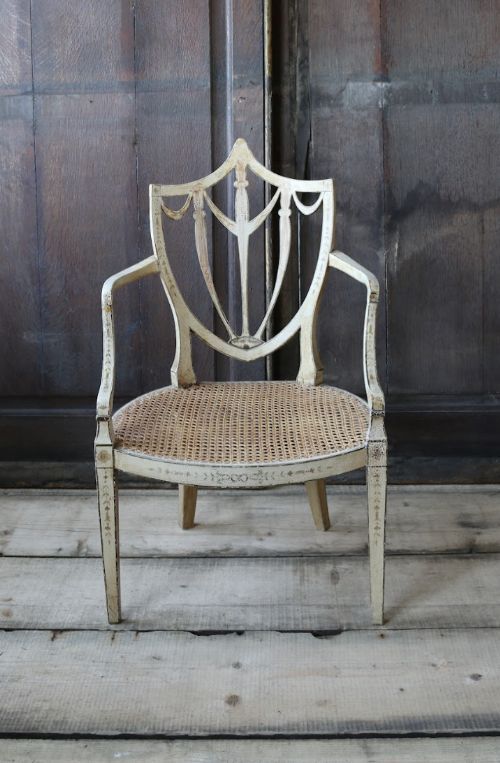
The version most commonly met on this page is the mahogany George III dining carver or open armchair, often reflecting Sheraton or Hepplewhite design influences. Alongside these formal pieces, provincial examples in oak, elm, walnut, and fruitwood appear frequently, demonstrating regional British and continental cabinet-making traditions.
How they were made
Cabinet-makers and chair-wrights utilised dense native and imported timbers such as mahogany, oak, walnut, elm, beech, and fruitwood to construct these frames. Joinery relied on traditional mortise and tenon joints, hand-carved details, and turned components.
Upholstery techniques involved traditional stuffing secured over webbing or canvas, finished with silk, fabric, leather, needlework, or Aubusson covers. Painted, parcel gilt, and marquetry decorations surface across French and Dutch examples.
Some chairs spent centuries observing family arguments through multiple reigns while quietly holding together with nothing more than pegged oak joints.
What varies in quality
The caliber of a late 18th century armchair depends primarily on the crispness of the hand-carving and the integrity of the original timber frame. Superior pieces retain their structural rigidity without excessive timber replacement or unsympathetic repairs.
Refinement in proportion, the choice of figured wood veneers, and the survival of original decorative surfaces or period upholstery schemes elevate certain examples well above standard utility seating.
Gillows
The Late 18th Century Armchair Glossary
- Carver
- An armchair designed to match a set of dining chairs, typically featuring open arms and a wider seat. These pieces sat at the head of the dining table.
- Windsor chair
- A wooden chair constructed with a solid sculpted seat into which the legs and back spindles are wedged. Regional variations include comb backs, low backs, and rocking formats.
- George III
- The stylistic period spanning the reign of King George III from 1760 to 1820. Furniture from this era encompasses neoclassical lines, shield backs, and refined mahogany frames.
- Corner chair
- A square-seated chair designed to fit into the corner of a room, featuring a diagonal seat orientation and a curved back rail supported by turned columns.
- Marquetry
- The art of applying pieces of veneer to a structure to form decorative patterns and pictures. Dutch workshops frequently employed this technique on walnut frames.
- Aubusson
- A traditional tapestry weave used for upholstery and wall hangings, named after the French town of production. These covers bring intricate floral or pictorial designs to French seating.
Late 18th Century Armchair: Frequently Asked Questions
What is a late 18th century armchair?
A late 18th century armchair is a piece of seating furniture produced roughly between 1780 and 1800, spanning the Georgian era and continental periods like French Directoire and Louis XV style.
These chairs include formal mahogany library and dining carvers, painted French open armchairs, and sturdy wooden Windsor chairs made in English regional workshops.
How were porters chairs used?
Porters chairs featured high hooded backs designed to shield the occupant from drafts in grand entrance halls.
Servants or hall porters sat in them to monitor visitors arriving at large country houses or urban residences.
How do I identify a George III armchair?
George III armchairs typically display characteristic mahogany construction, straight or square tapered legs, and carved backrest designs associated with Sheraton or Hepplewhite styles.
Many incorporate decorative elements such as pierced splats, shield backs, or upholstered panels reflecting the neoclassical tastes of the late 1800s.
Where were Windsor armchairs made?
Windsor armchairs were produced predominantly in English regional centres, notably the Thames Valley and the West Country.
Chair-wrights utilised local woods like elm, ash, oak, and beech to build these distinctive stick-backed seating options.