



Painted French Country Table
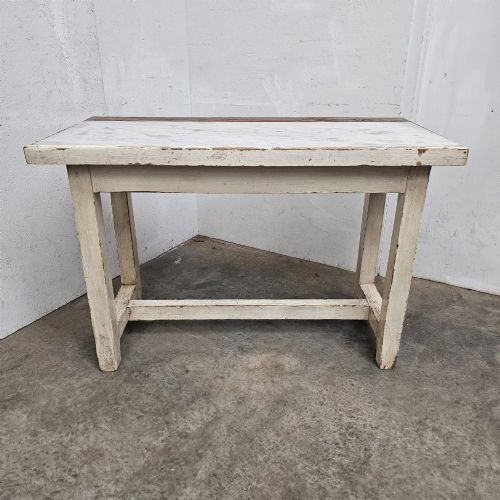
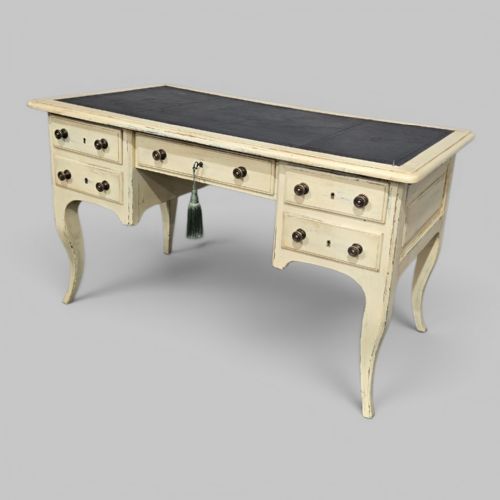
A painted french country table brings practical surface space and a softened, aged character into a room.
Painted French Country Table
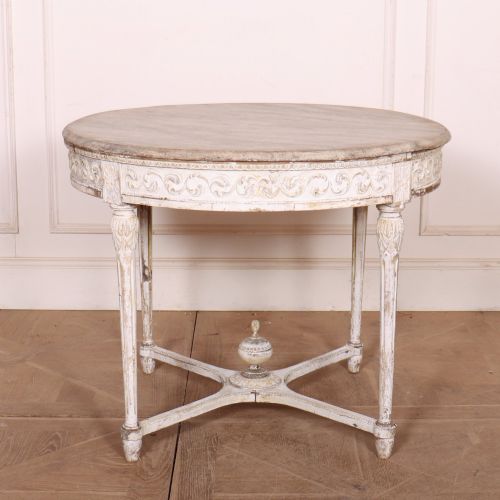
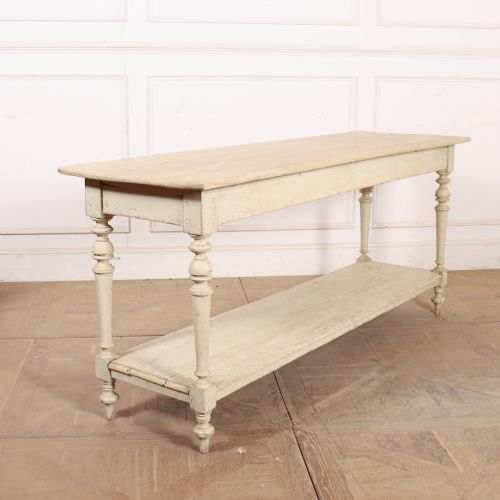
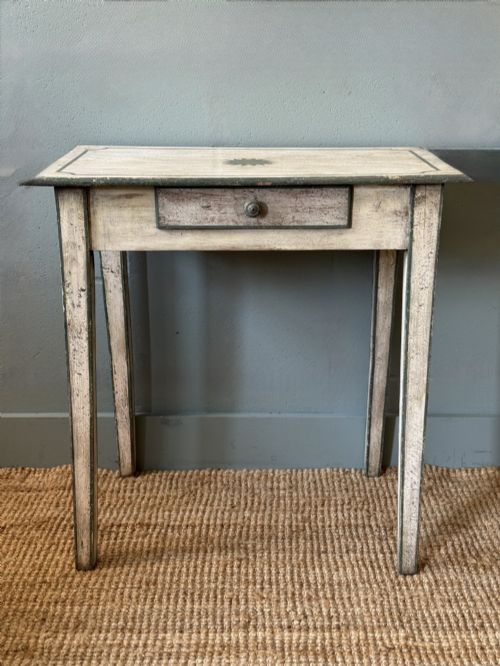
When searching for a painted french country table, buyers encounter a diverse selection of practical domestic furniture spanning the nineteenth and early twentieth centuries. Side tables, console tables, prep tables, and dining tables dominate the selection, often carrying the hallmarks of provincial utility.
The aesthetic leans heavily toward the rustic and the provincial, drawing on periods from the nineteenth century through the Edwardian era. Pieces frequently showcase regional French styles, alongside related Gustavian and Louis XVI influences that bring refined proportions to everyday forms.
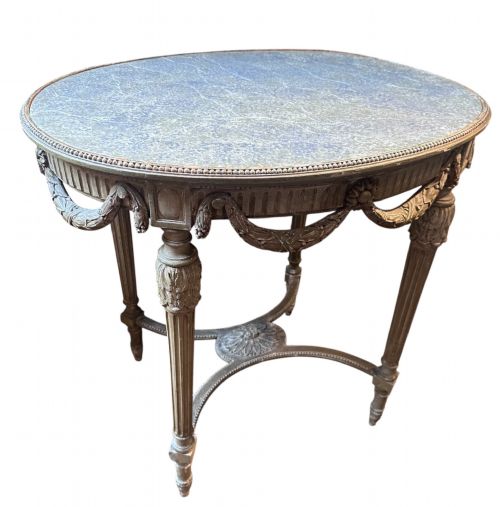
Pine and painted timber form the bedrock of these domestic objects, alongside fruitwood and occasional metal or marble surfaces. These tables served working kitchens, hallways, and living spaces, retaining their utilitarian function while offering decorative painted finishes.
How they were made
Makers utilised solid pine and painted timber to construct robust frames intended for daily domestic tasks in kitchens and rural homes. Joinery relied on traditional carpentry methods suitable for heavy use, incorporating drawers and shelves where required.
Surfaces received layers of paint, often accumulating wear over decades of use, while select pieces featured contrasting marble, fruitwood, or verdigris copper tops. Brass hardware occasionally provided functional accents on drawers and cupboards.
Listings feature pine, painted timber, fruitwood, brass, and marble across nineteenth-century and early twentieth-century periods.
What varies in quality
The distinction between ordinary utility items and superior examples lies in the integrity of the original construction and the preservation of authentic surface paint. Tables retaining untouched, layered paint finishes command greater interest than those stripped down or heavily reworked.
Proportion and detailing separate basic provincial pieces from refined examples influenced by Louis XVI styles or Gustavian restraint. Heavier timber framing and superior top materials, such as marble or fruitwood, elevate the standing of a table.
Melissa White
The Painted French Country Table Glossary
- Console table
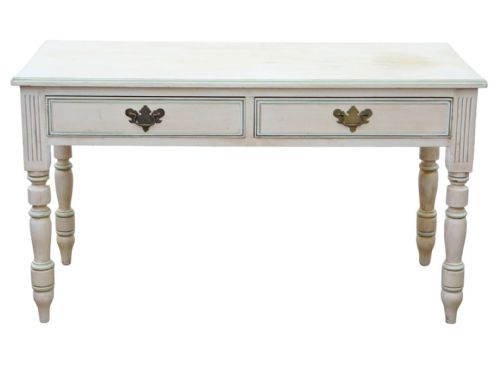
- A table designed to stand against a wall, frequently long and narrow in proportion. These pieces often feature drawers and served hallways or reception rooms.
- Drapers table
- A long, sturdy table originally utilised in cloth merchandising and cutting. Their generous proportions make them popular for modern kitchens and dining spaces.
- Scrub-top
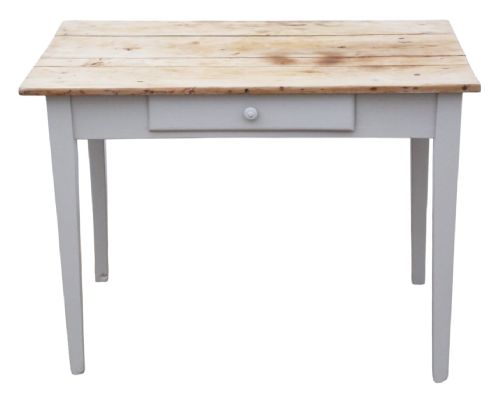
- A plain wooden tabletop left unpainted to permit vigorous cleaning with soap and water. This surface contrasts with the painted aprons and legs typical of country furniture.
- Pot-shelf
- A lower shelf integrated beneath a table or serving surface to hold pots, pans, and kitchen utensils. This feature provides both structural stability and extra storage.
- Gustavian
- The Swedish interpretation of French neoclassical design, characterised by pale painted finishes and restrained ornamentation. It shares the light elegance often sought in country interiors.
Painted French Country Table: Frequently Asked Questions
What rooms suit a painted french country table?
These tables adapt easily to kitchens, hallways, and living areas where surface space and a softened aesthetic are desired. Smaller versions function well as bedside tables or lamp tables.
Larger dining and prep tables anchor a room, offering practical workspace while introducing historic character through their painted surfaces and timber construction.
How were scrub-top tables used historically?
Scrub-top tables provided robust, washable surfaces for food preparation and domestic chores in nineteenth-century kitchens. Staff scrubbed the bare wood regularly to maintain hygiene.
The unpainted top contrasted directly with the painted base, a practical division of labour in busy rural households.
Are marble tops original to these tables?
Marble tops frequently appear on preparation tables, washstands, and serving surfaces from the nineteenth and early twentieth centuries. They provided a cool, hygienic workspace for baking and food storage.
Such tops remain securely integrated into the design of specific utilitarian forms rather than appearing across every category.
How do I distinguish Gustavian from French styles?
Gustavian pieces reflect Swedish adaptations of French neoclassical design, usually featuring cooler grey or white painted finishes and simpler geometric carving. French provincial furniture tends toward warmer tones and softer organic curves.
Both styles embrace painted timber and restrained ornamentation, fitting comfortably within similar interior schemes.