

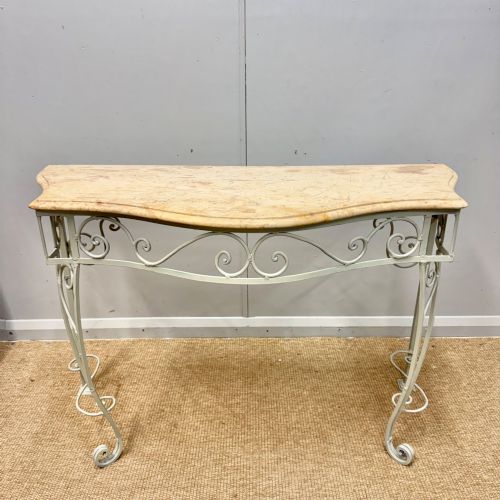

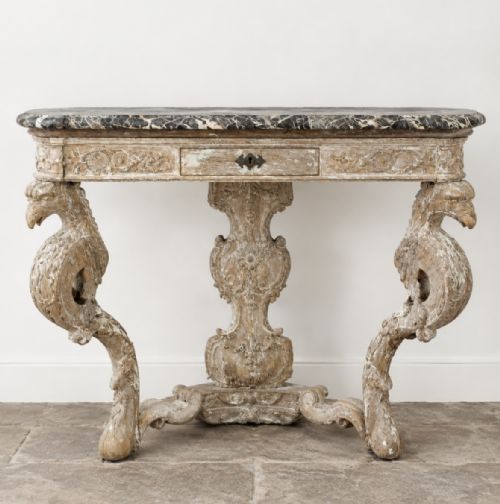
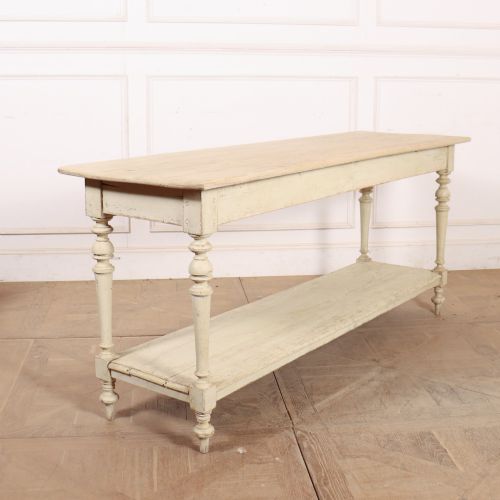
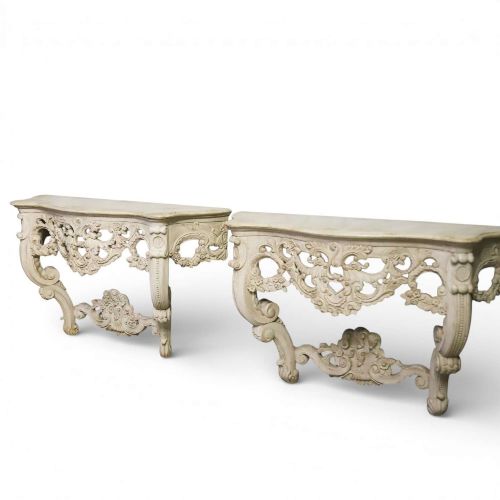


Painted French Console Table
A painted french console table brings architectural elegance and useful surface space to a hallway, drawing room, or kitchen.
Painted French Console Table
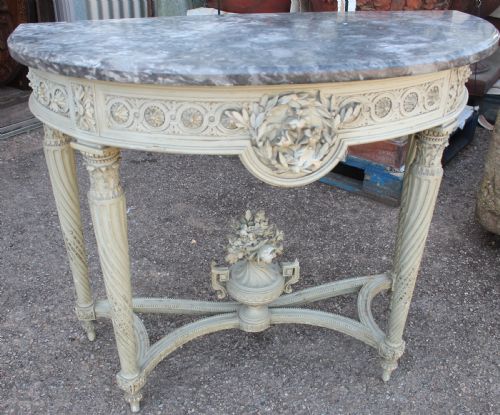
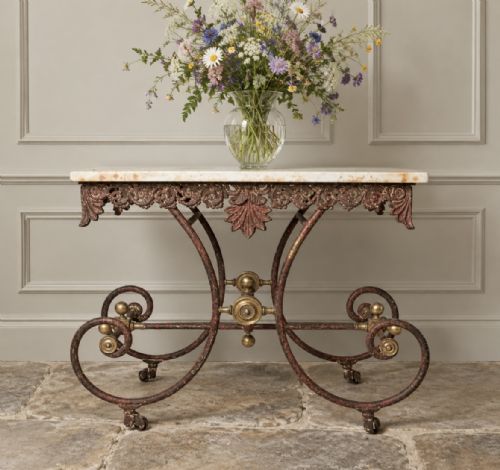
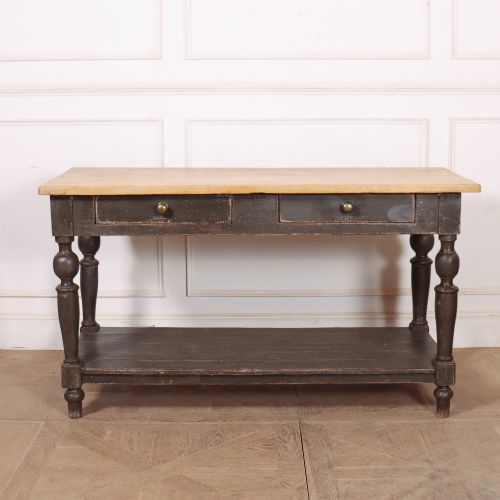
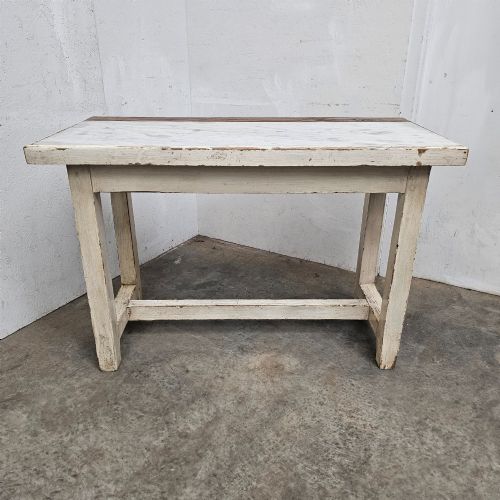
A painted french console table serves primarily as a decorative yet practical wall-abutting surface, historically designed for display in grand salons or utilitarian use in domestic working spaces. The selection ranges from formal Louis XVI and Rococo gilt-accented showpieces to rustic provincial drapers and charcuterie prep tables.
Buyers will frequently encounter nineteenth-century pine and oak examples featuring original painted finishes, alongside early twentieth-century demi-lune variations. Forms extend beyond standard console tables to include serving tables, side tables, and potting shed benches adapted for interior placement.
Materials and construction methods
Construction relies heavily on native timbers such as pine, oak, and satinwood, frequently shaped through hand-carving and joined with traditional cabinetmaking techniques. Carved wood details, parcel gilt highlights, and decorative mouldings define the more ornate items.
Surface treatments combine multiple layers of traditional paint, often distressed through age, alongside applied gilding. Many variations pair wooden bases with heavy stone surfaces, utilising Carrara, Sienna, or rouge marble slabs, as well as alternative tops in wrought iron, zinc, brass, and inset suede.
Painted French Console Table Retail Price Guide 2026
Typical asking prices for painted french console table among the pieces listed under this phrase on Sellingantiques today, from the lower quarter to the upper quarter. They describe what is for sale here now, not the wider market.
Object forms recorded in the inventory include charcuterie prep tables, florists work tables, drapers tables, and demi-lune console variants.
Assessing craftsmanship and finish
Quality depends heavily on the integrity of the original paint surface and the subtlety of hand-carved ornamentation. Finer examples display crisp detail in the woodwork and harmonious proportions, whereas utilitarian work tables derive their merit from honest wear and structural robustness.
The integration of materials dictates distinction, particularly in how securely a heavy marble or stone top rests upon the wooden framework. Superior tables maintain original patination on both the painted timber and any applied parcel gilt, reflecting period workshops rather than later decoration.
The Painted French Console Table Glossary
- Demi-lune
- A half-moon shape used for tables designed to sit flush against a wall. This curving profile is frequently seen on eighteenth and nineteenth-century side and console furniture.
- Cabriole leg
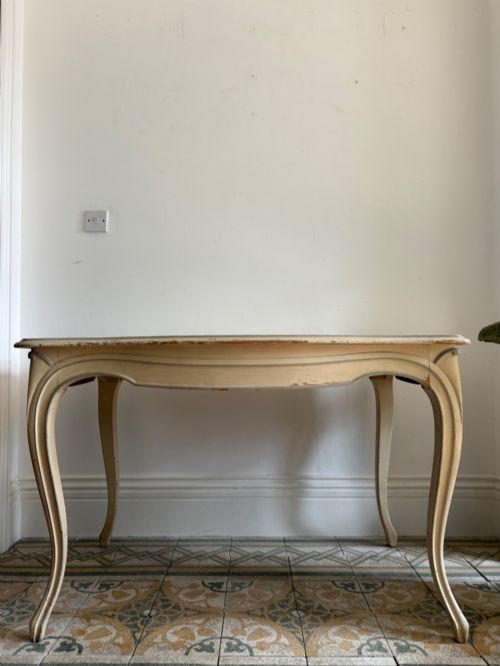
- A furniture leg that curves outward in a convex arc and then bends inward in a concave arc, terminating in a pad or foot. The design mimics animal limbs and appears widely on French provincial and neoclassical tables.
- Trumeau
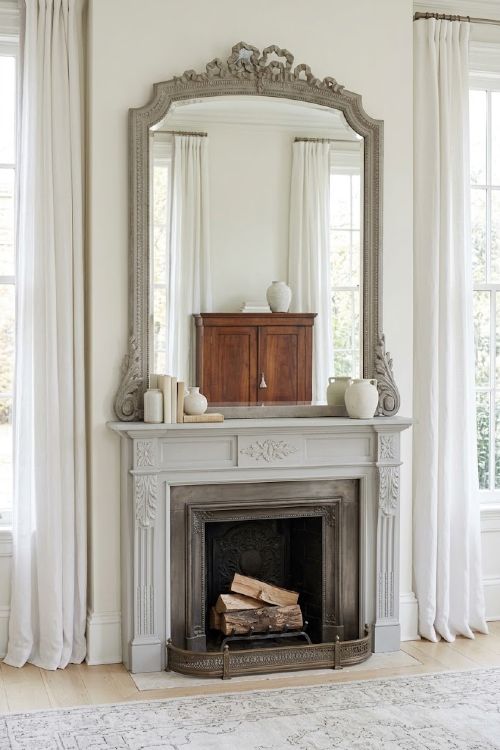
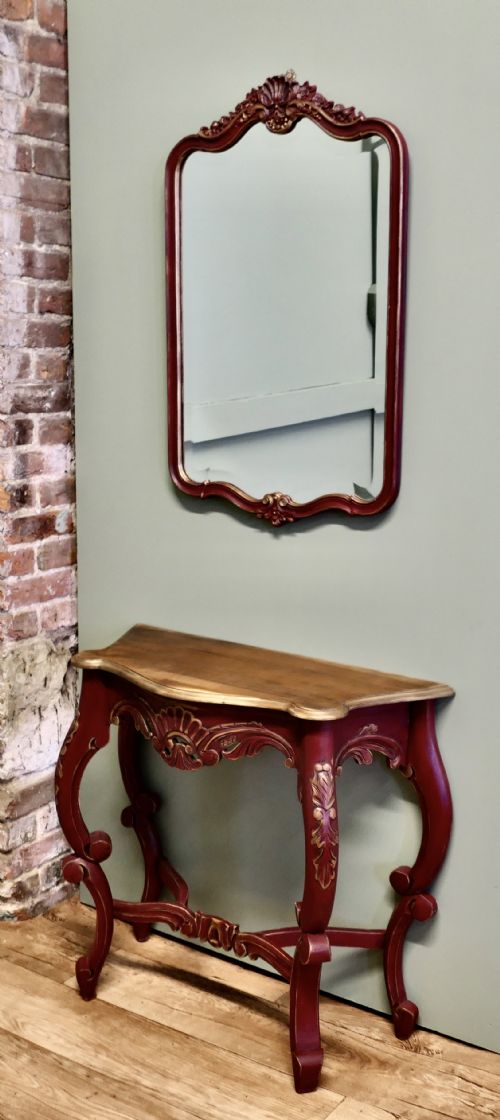
- An architectural mirror or panel placed above a mantelpiece or console table. These mirrors often feature painted or carved wooden frames matching the table beneath.
- Parcel gilt
- A decorative technique where selected portions of an object are covered in thin gold leaf while the rest remains painted. This method highlights carved wooden details and mouldings.
- Drapers table
- A long, sturdy utilitarian table historically utilised in textile trade or domestic preparation. These pieces form a distinct category of rustic french console furniture.
Painted French Console Table: Frequently Asked Questions
Where should I place a console table?
These tables sit naturally against walls in hallways, entranceways, and living rooms where floor space is limited. Their shallow depth allows them to provide surface area without obstructing movement.
More rustic or marble-topped variants also function effectively as kitchen prep surfaces or sideboards in dining areas.
How do I identify the period of a table?
Dating relies on examining construction marks, timber types, and stylistic vocabulary such as carved motifs and leg shapes. Eighteenth and nineteenth-century pieces typically show hand-cut joinery and aged patination on the timber.
Twentieth-century iterations often adopt earlier styles like Louis XVI while exhibiting slightly different tool marks and paint layering.
Are marble tops original to these tables?
Many formal and utilitarian tables incorporate marble, slate, or stone inserts designed to handle heavy domestic or culinary tasks. Carrara and rouge marble were standard on grander salon tables, while working prep tables utilised thick stone for durability.
Inspect the seating rebate to ensure the stone sits naturally within the wooden frame.
How do I care for painted wooden surfaces?
Preserving historic paint requires avoiding harsh chemical cleaners and excessive moisture. Dusting with a dry, soft cloth prevents particle buildup without harming the underlying finish.
Wax can be applied sparingly to unpainted wooden sections, but original distressed paint is best left untouched to maintain its character.