



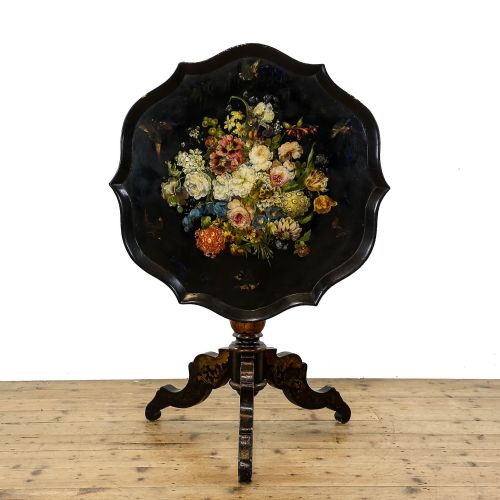

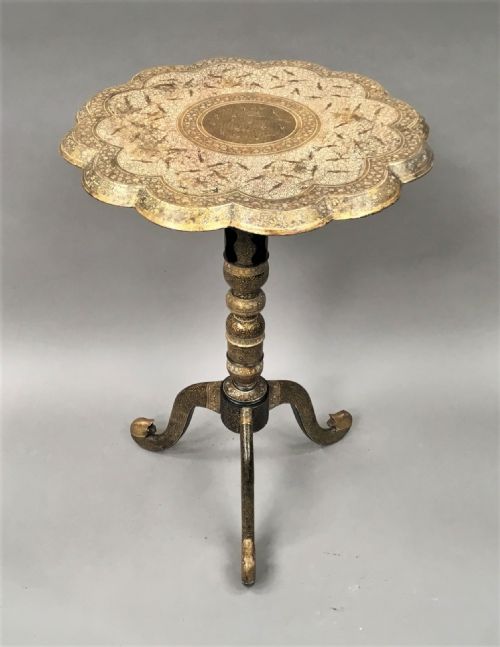


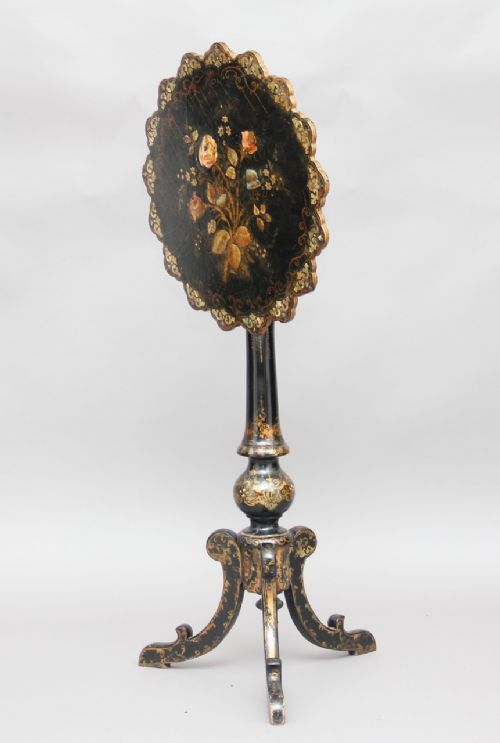
Painted Floral Wine Table
A painted floral wine table brings botanical brushwork and timber to a corner, offering a small surface for a glass or lamp.
Painted Floral Wine Table
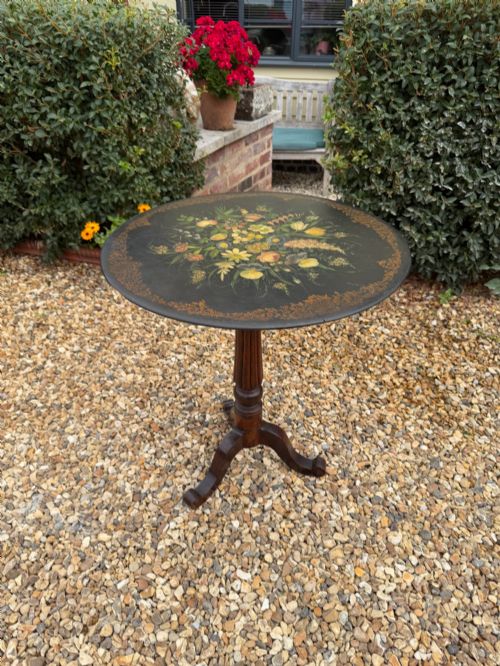
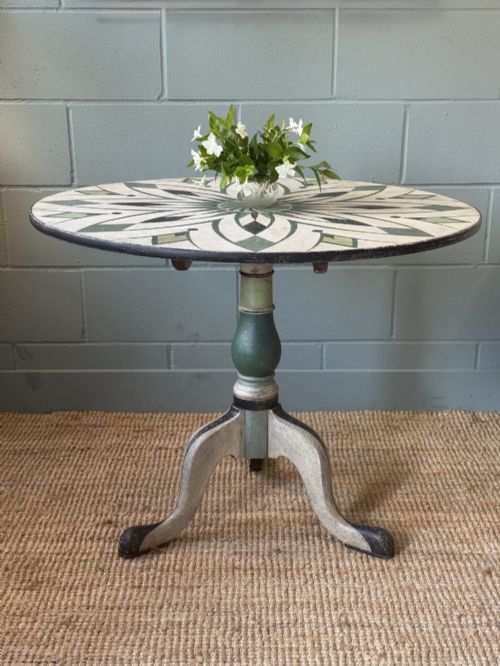
A painted floral wine table is an occasional piece designed for a glass or candle, appearing in various forms across the nineteenth century and the Edwardian era. Buyers searching this phrase encounter small side tables, occasional stands, and tilt-top designs featuring floral decoration on timber, papier-mâché, or lacquer.
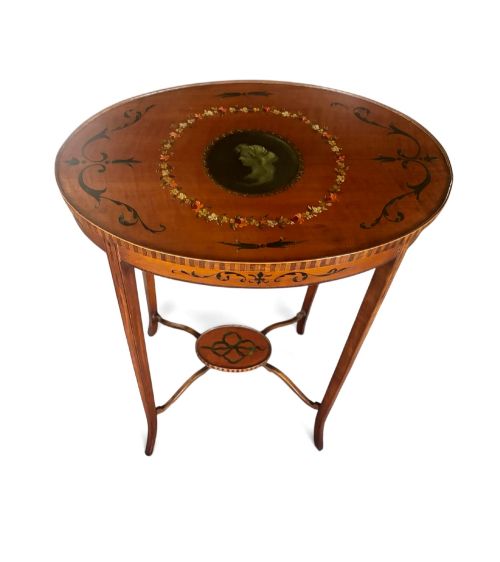
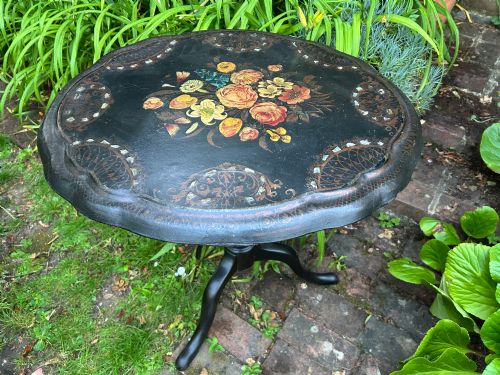
The selection ranges from Regency satinwood tilt-top tables to Victorian papier-mâché examples and Edwardian Sheraton Revival pieces. Italian polychrome and Kashmir tables also appear, showing how makers across different regions applied floral paintwork to domestic furniture.
How they were made
Wood forms the primary structure of these tables, utilising timber such as mahogany and satinwood alongside papier-mâché and lacquer surfaces. Brass details occasionally appear on these constructions.
Makers applied paint, gilt, and polychrome decoration directly to the timber or prepared surfaces, creating detailed botanical designs that characterise the finished piece.
Painted Floral Wine Table Retail Price Guide 2026
Typical asking prices for painted floral wine table among the pieces listed under this phrase on Sellingantiques today, from the lower quarter to the upper quarter. They describe what is for sale here now, not the wider market.
Painted floral decoration appears across diverse forms, including occasional tables, side tables, Kashmir pieces, and Italian polychrome stands.
What varies in quality
The refinement of the painted floral detail sets one piece apart from another, distinguishing standard decorative work from more elaborate artistic execution. The handling of the brushwork and the preservation of the original pigment dictate the visual strength of the top.
The choice of foundation material, whether finely figured satinwood, papier-mâché, or solid mahogany, influences the integrity and weight of the table. Original surfaces hold more interest for collectors than later embellishments applied to older timber.
The Painted Floral Wine Table Glossary
- Tilt top
- A table top hinged to allow the surface to pivot vertically when not in use. This mechanism saved space in domestic interiors.
- Satinwood
- A fine hardwood native to Ceylon and India with a lustrous yellowish grain. Furniture makers prized it for decorative veneer and painted surfaces.
- Papier-mâché
- A composite material made from paper pulp or layers of paper mixed with glue and resin. Pressed into moulds, it provided a smooth base for lacquer and paint.
- Sheraton Revival
- A late nineteenth and early twentieth century design movement drawing on the lightness and classical motifs of George Sheraton. These pieces often incorporate satinwood and painted details.
Painted Floral Wine Table: Frequently Asked Questions
What is a wine table?
A wine table is a small occasional table historically used for holding a glass of wine or a candle. Their compact proportions made them easy to move beside a chair or sofa.
They appear in various heights and top shapes, including round, oval, and tilt-top formats designed for flexible placement in a room.
Are tilt top tables stable?
Tilt top tables rely on a central pillar and tripod base to support the pivoting surface. The mechanism allows the top to lock flat for use or tilt upright against the pedestal.
While functional, the catch mechanism requires proper alignment to ensure the surface remains steady during everyday use.
How do I care for painted wood?
Painted and lacquered surfaces require protection from direct sunlight and excessive moisture to preserve the pigment and finish. Dusting with a dry, soft cloth maintains the surface without abrasive wear.
Avoiding chemical polishes ensures the original decorative paintwork remains stable and unaltered over time.
How do I identify Edwardian satinwood?
Edwardian satinwood furniture often displays lighter timber tones and Sheraton Revival influences, such as delicate floral painted decoration and inlaid borders. This period produced refined occasional and lamp tables around the turn of the twentieth century.
Comparing the construction methods and the style of the painted motifs helps distinguish Edwardian revival pieces from earlier nineteenth-century originals.