




Painted Fire Screens
Painted fire screens are decorative domestic shields that block the radiant heat of an open grate while adding colour and artwork to a room.
Painted Fire Screens
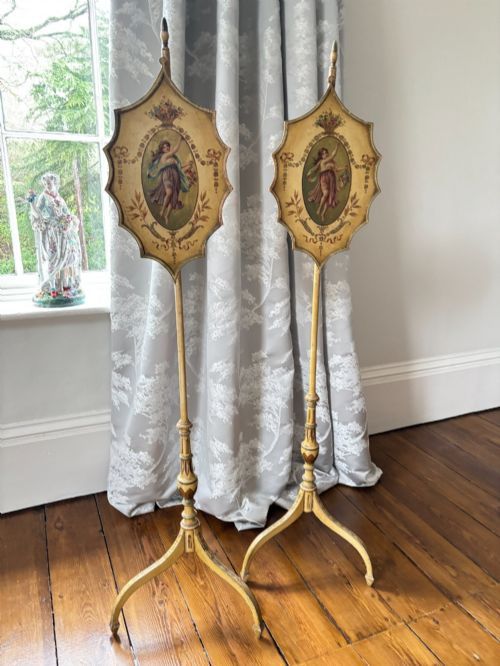
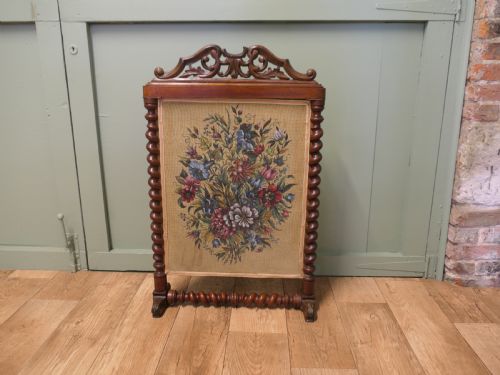
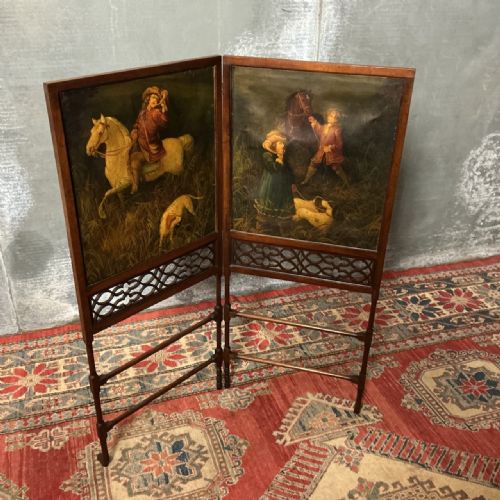
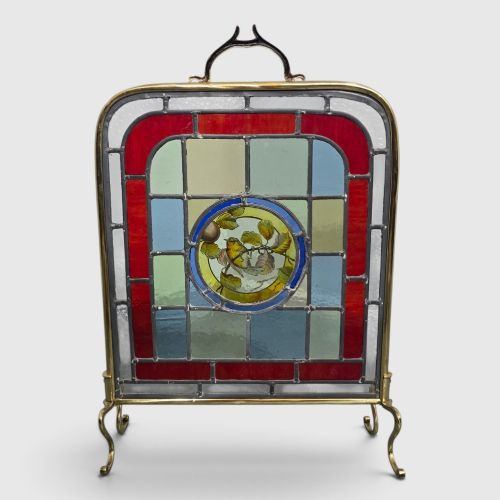
Painted fire screens encompass various forms designed to shield inhabitants from hearth flames, ranging from floor-standing folding panels and heavy brass guards to adjustable pole screens and life-size dummy boards. The pieces available here cross multiple periods, including the eighteenth century, the nineteenth century, and the Edwardian era, showing both freestanding and pole-mounted designs.
Makers produced these items in diverse styles such as Victorian, Edwardian, Chinoiserie, Arts and Crafts, Hepplewhite, Rococo Revival, Regency, and the Aesthetic Movement. Materials span oil paint, brass, mahogany, canvas, wood, lacquer, stained glass, and lead, alongside papier-mâché face screens and panels depicting floral motifs or Welsh scenes.
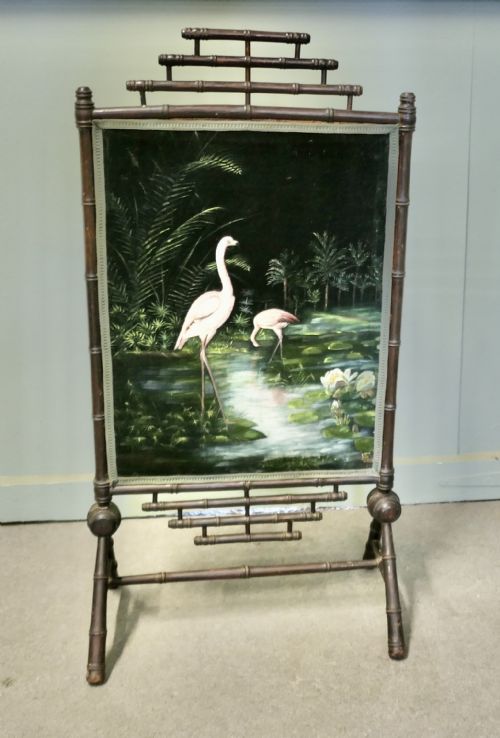
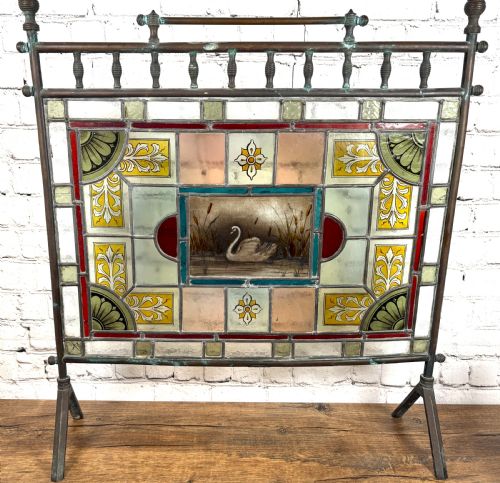
Among the variations, buyers encounter specific formats like black lacquer oriental screens painted with flamingos, stained glass fireguards, and unusual three-fold gilt fire screens. Alongside standard fireplace screens sit smaller handheld face screens and illusionistic dummy boards, such as a figure of a gentleman with a monkey.
How they were made
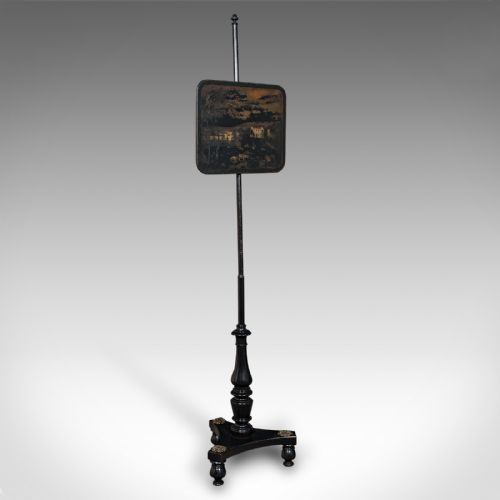
Makers constructed the primary structures from timbers such as mahogany and wood, alongside brass frameworks and papier-mâché bases. Pole screens frequently incorporate height-adjustable mechanisms mounted on tripod or spade-foot supports.
Artists applied oil paint directly onto canvas, wood, or paper panels to create floral compositions, topographical views, and exotic birds. Specialised techniques also included black lacquer work, gilding, and the soldering of stained glass and lead panels.
Painted Fire Screens Retail Price Guide 2026
Typical asking prices for painted fire screens among the pieces listed under this phrase on Sellingantiques today, from the lower quarter to the upper quarter. They describe what is for sale here now, not the wider market.
The current selection includes pieces spanning the 18th Century through to the Edwardian era, utilising materials such as oil paint, brass, mahogany, canvas, lacquer, stained glass, and lead.
What varies in quality
The standard of artistic execution on the painted surfaces dictates the visual success of each panel, separating simple decorative items from finely detailed works. Hand-painted botanical studies, topographical Welsh scenes, and avian subjects display varying degrees of draughtsmanship and brushwork control.
Structural integrity depends on the selection of primary timbers, the stability of adjustable pole screen fittings, and the preservation of original lacquer, gilding, or glass elements. Pieces retaining their early mounting hardware and undamaged painted canvas or papier-mâché represent the higher end of surviving examples.
The Painted Fire Screens Glossary
- Pole screen
- A vertical decorative screen mounted on a tall wooden pole with a movable collar, allowing the user to slide the panel up and down to block heat from the fire. These typically stand on tripod bases or spade feet.
- Dummy board
- A flat, painted wooden figure cut out to life-size proportions, designed to deceive the eye into thinking a person or animal stands by the hearth. Eighteenth-century examples often depict servants, soldiers, or exotic figures.
- Face screen
- A small handheld screen held before the face to protect complexion and makeup from the intense heat of an open fireplace. They are frequently made of papier-mâché or painted card.
- Spade foot
- A rectangular furniture foot that tapers slightly toward the base, commonly found on Hepplewhite pole screens from the late eighteenth and early nineteenth centuries.
Painted Fire Screens: Frequently Asked Questions
What is a painted fire screen?
Painted fire screens are decorative domestic panels designed to be placed before a fireplace when the hearth is not in use, or adjusted to block radiant heat when a fire is lit. They combine functional heat protection with applied artwork.
Surviving examples range from freestanding folding panels and pole screens to illusionistic dummy boards and stained glass guards, executed in styles spanning the eighteenth to the early twentieth centuries.
How were pole screens used?
Pole screens were positioned near firesides where occupants could slide the central painted panel up or down on its vertical shaft. This allowed people to shield their faces from the direct heat of the flames.
The adjustable height made them adaptable to different seating arrangements in period drawing rooms.
What are dummy boards?
Dummy boards are flat, life-size wooden cutouts painted to represent people, animals, or soldiers standing near a hearth. They were used as humorous or striking optical illusions in large rooms.
Early examples date to the eighteenth century and depict detailed figures like gentlemen and animals.
How do I care for an antique fire screen?
Antique fire screens require careful placement away from direct heat sources and strong sunlight to protect painted surfaces, lacquer, and textiles. Dusting should be done gently with a dry, soft cloth.
Avoid using chemical polishes on painted or lacquered panels to preserve the original finish.