



Painted Entry Table
A painted entry table brings architectural presence and colour to a hallway, offering a surface for lamps and correspondence.
Painted Entry Table
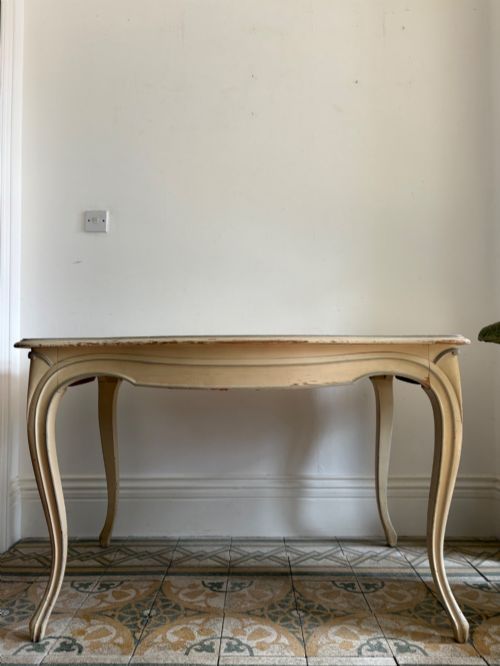
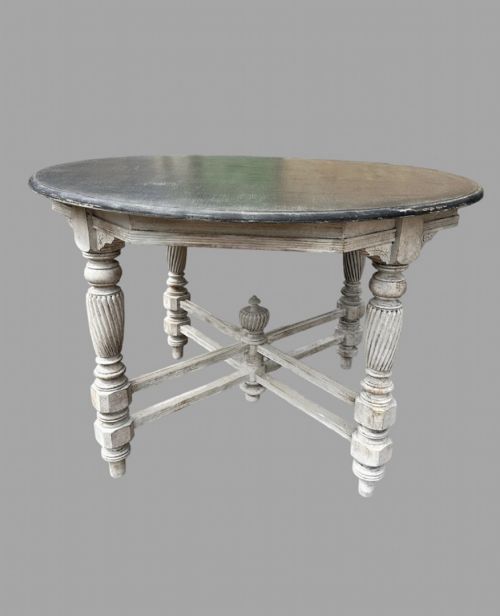
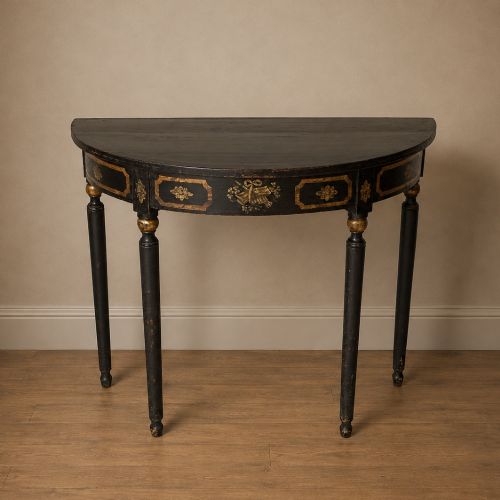
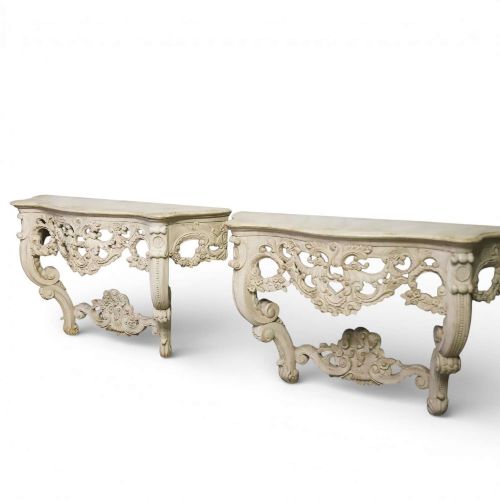
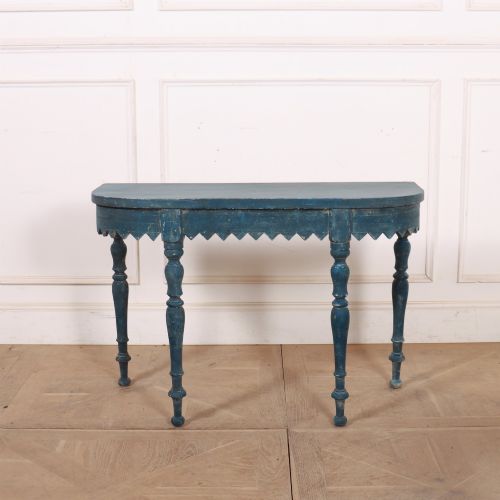
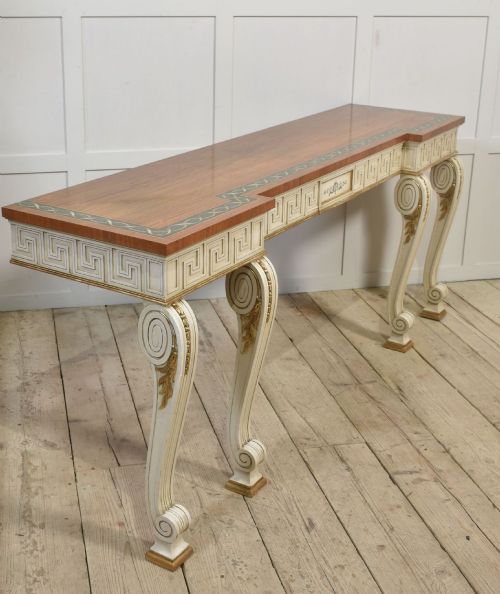
A painted entry table serves as a functional anchor for hallways and reception spaces, appearing across diverse historical periods from the eighteenth century through to the 1930s. These pieces manifest primarily as console tables, centre tables, side tables, and sofa tables designed to sit flush against a wall or occupy the middle of a room.
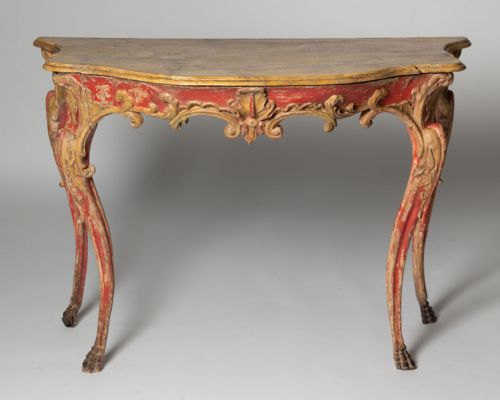
Origins span across England, France, Italy, Germany, China, Scotland, and Spain, demonstrating a global tradition of surface decoration. Pieces range from formal Regency black painted and parcel gilt examples to rustic provincial finishes and Venetian designs.
Materials and Construction
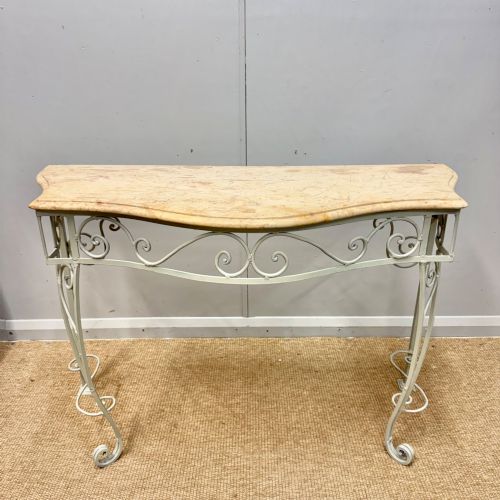
Wood serves as the primary substrate, utilising pine and carved timber enhanced by gesso layers to prepare the surface for paint and gold leaf application. Artisans employed hand-carved details, wrought iron, and brass mounts to structure these tables.
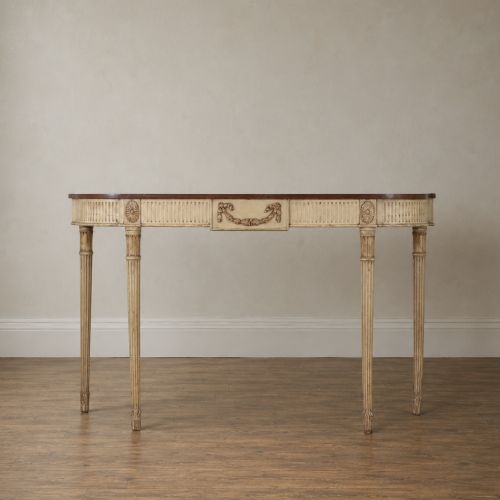
Decorative finishes rely heavily on painted wood, antique white finishes, faux porphyry, and red lacquer, sometimes paired with inset suede tops or contrasting marble surfaces. Craftsmanship involves traditional joinery combined with applied pigments and gilding to achieve distinct regional patinas.
Several tables arrive with stories written in their red lacquer, whispering of trade routes that linked European drawing rooms with distant eastern workshops.
Assessing Quality and Execution
The distinction between tiers rests upon the harmony of proportions, the integrity of the underlying woodwork, and the depth of the decorative scheme. Superior examples display refined hand-carving and sophisticated application of paint, gesso, or parcel gilt rather than simplistic surface treatment.
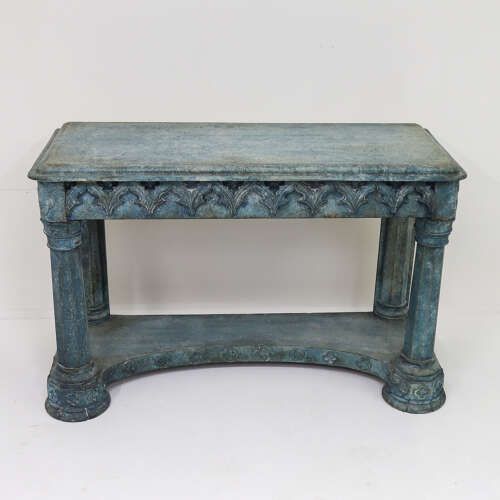
Materials dictate upper levels of execution, particularly where heavy Siena or decorative marbles are integrated into the structure. The sophistication of stylistic intent - such as authentic Italian neoclassical lines or Gothic taste - separates standard utility furniture from masterworks of interior design.
The Painted Entry Table Glossary
- Console table
- A table designed to be fixed against a wall, traditionally supported by brackets or legs at the front. These pieces form the majority of hall furnishings.
- Demi-lune
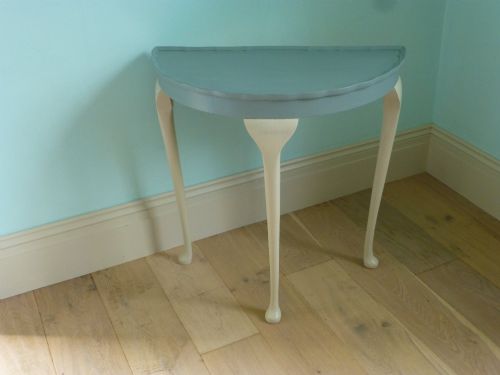
- A half-moon shape used for tables designed to stand flat against a wall. This profile saves floor space in narrow hallways.
- Gesso
- A plaster mixture applied to wood as a base for paint and gilding. It provides a smooth surface for decorative details.
- Parcel gilt
- Portions of an object highlighted with gold leaf over a painted or dark ground. This technique accentuates carved details and mouldings.
- Faux porphyry
- A painted finish imitating the rich purple-red igneous rock prized in antiquity. Artisans used this technique to achieve regal decorative effects.
Painted Entry Table: Frequently Asked Questions
Where should I place a console table?
Console tables suit hallways, entryways, and reception rooms where floor space is limited. Their shallow depth allows them to sit against walls without obstructing movement.
They provide a practical surface for lighting, mirrors, and everyday objects while establishing the decorative tone of an interior.
How do I clean a painted wooden table?
Dust surfaces regularly with a soft, dry cloth to prevent grime accumulation. Avoid abrasive cleaners and excessive moisture that could damage historic paint or gesso.
Wax or specialised polish should be applied sparingly, depending on whether the finish is matte or sealed.
What is the difference between a console and a centre table?
Console tables feature flat backs designed to stand directly against a wall, often supported by wall brackets or front legs. Centre tables are finished on all sides to stand freely in the middle of a room.
Both serve as decorative focal points but occupy different spatial arrangements within a hallway or parlor.
How do I identify the period of a painted table?
Dating relies on stylistic markers such as neoclassical symmetry, Gothic motifs, or provincial hand-carved details. Construction methods, wood types, and the composition of the paint layer also offer clues to age.
Comparing the silhouette and decorative vocabulary to documented examples helps narrow down the century of manufacture.