
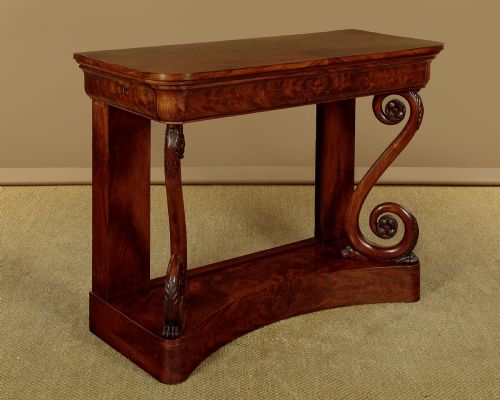
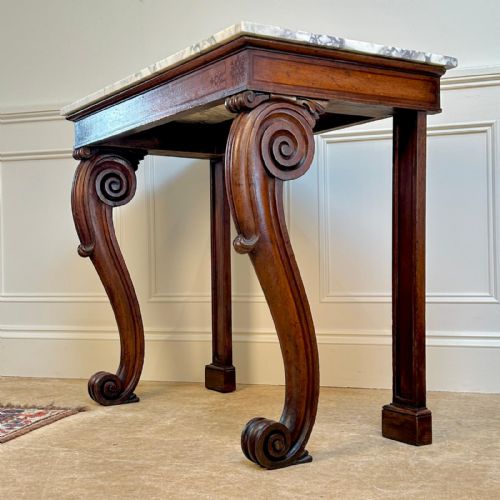
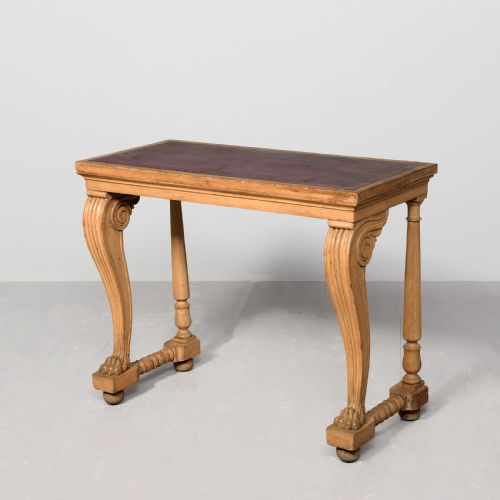
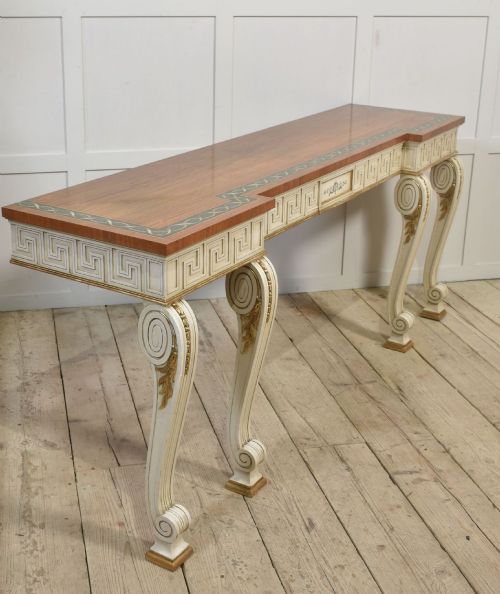
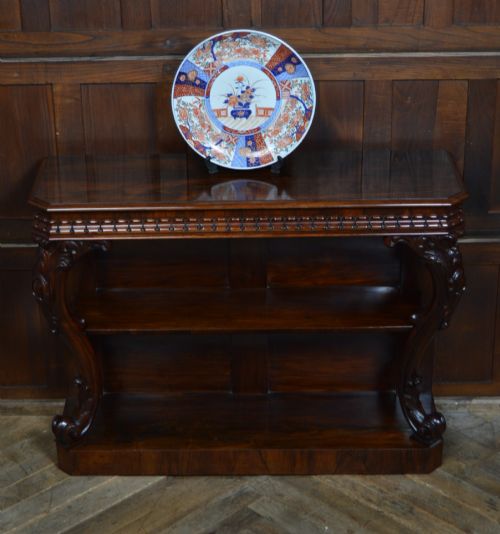

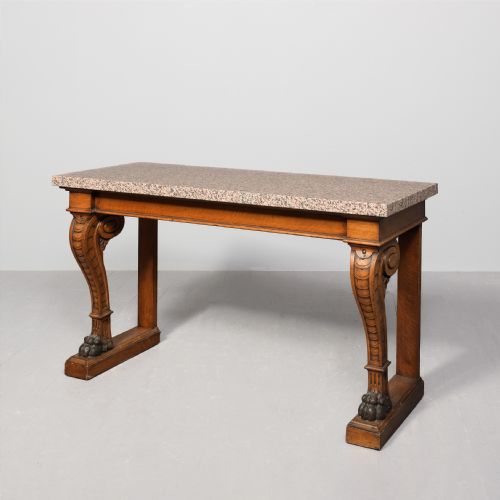
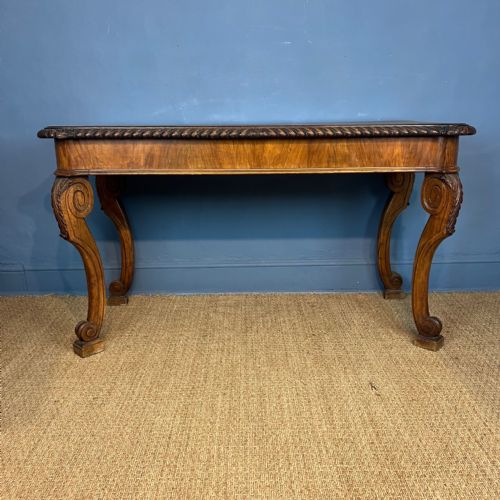


Carved Scroll Hall Table
A carved scroll hall table brings architectural presence and robust timber to an entranceway, offering a surface for correspondence and lamps.
Carved Scroll Hall Table
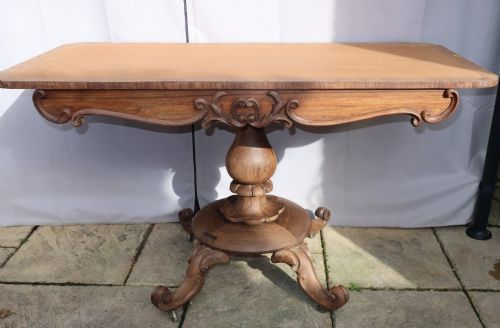
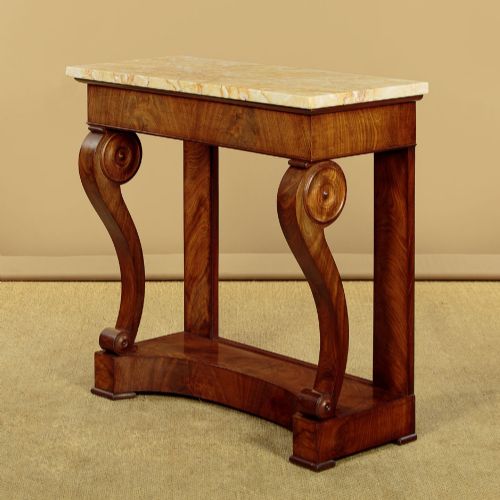
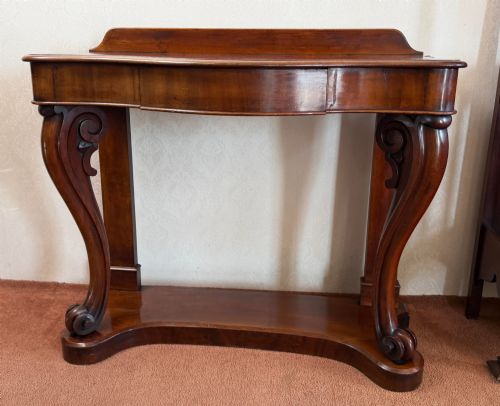
When you search for a carved scroll hall table, you are looking at narrow console, pier, and side tables designed to stand against a wall in a hallway or reception room. These pieces emerge predominantly from nineteenth-century workshops, spanning Victorian, Regency, and William IV periods, alongside later twentieth-century iterations.
The form relies on substantial timber framing, frequently topped with marble, granite, or figured wood. Console and pier tables dominate the selections, alongside occasional centre tables adapted for narrow spaces through their serpentine or rectangular profiles.
Origins vary widely across British, French, Italian, Spanish, and Anglo-Indian traditions. You will encounter painted surfaces, gilded details, and heavy hardwoods such as mahogany, rosewood, and oak.
How they were made
Cabinetmakers utilised dense native and exotic hardwoods, notably mahogany, rosewood, oak, and walnut, often selecting figured veneers like flame mahogany or burr walnut for visual depth. These timbers were joined using traditional framing techniques to support heavy stone surfaces.
Carvers shaped scroll motifs and serpentine edges by hand, integrating neoclassical and revival styles directly into the solid wood structures. Marble and granite slabs were meticulously fitted to the timber bases to create durable, weighted tops for daily use.
One unexpected table travelled all the way from Tibet before joining the nineteenth-century European scrollwork neighbours.
What varies in quality
The distinction between standard examples and superior pieces rests on the crispness of the hand-carved scrollwork and the selection of timber veneers. Master cabinetmakers achieved fluid lines and balanced proportions that elevate simple side tables into sculptural furniture.
The integration of secondary materials, such as heavy marble or granite inset tops and fine brass mounts, separates utilitarian workshop output from high-status commission work. Condition of the timber grain and the integrity of structural joints dictate the long-term standing of each piece.
James Mein of Kelso·Robert Strahan·Alexander McKenzie of Glasgow·Whytock and Reid
The Carved Scroll Hall Table Glossary
- Console table
- A table designed to be fixed against a wall, frequently supported by decorative legs or scroll brackets at the front.
- Pier table
- A low table specifically built to sit beneath a wall pier or mirror between windows in a formal room.
- Serpentine
- A curved furniture front or edge that undulates in a convex-concave-convex wave shape.
- Gueridon
- A small French round table supported by a central pillar or multiple legs, often utilised as a centre table.
- Padouk
- A heavy tropical hardwood known for its deep reddish-brown colour and durability in fine cabinetmaking.
Carved Scroll Hall Table: Frequently Asked Questions
Where should I place a console table?
These narrow tables suit entrance halls, narrow corridors, and reception rooms where floor space is limited. Their shallow depth allows them to sit flush against walls without obstructing pathways.
They function well beneath mirrors or paintings, providing a stable surface for lighting, trays, and daily items.
How do I care for a marble top?
Stone tops require regular dusting with a soft cloth and immediate wiping of acidic liquids like wine or citrus. Avoid abrasive cleaners that can dull the polished surface.
Applying a specialist stone sealer periodically helps protect the natural material from staining.
What is the difference between a console and a centre table?
Console tables are built to stand flat against a wall, often featuring finished fronts and plain backs. Centre tables are freestanding pieces designed to be viewed from all four sides.
While some centre tables find places in hallways, true console tables remain anchored to vertical surfaces.
How do I identify a Victorian piece?
Victorian furniture typically displays heavier proportions, dark mahogany or walnut timbers, and deep scroll carvings. Stylistic revivals such as Rococo and Renaissance influences frequently appear.
Construction methods transition during this era from hand-cut joinery to early machine assistance.