

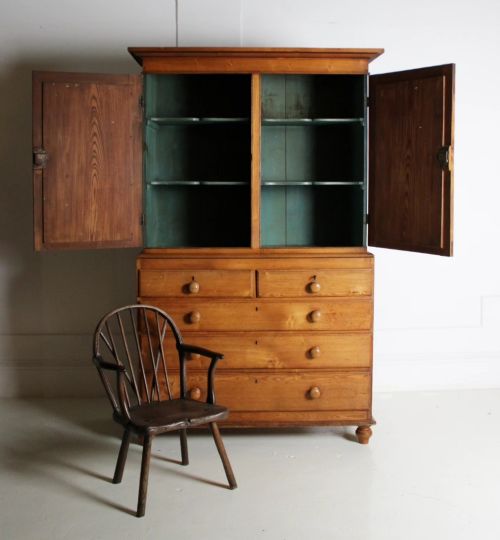
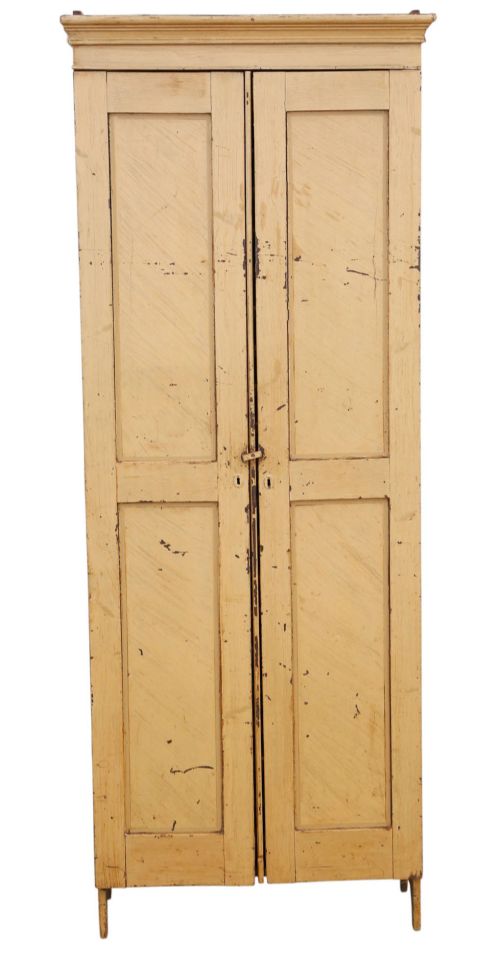
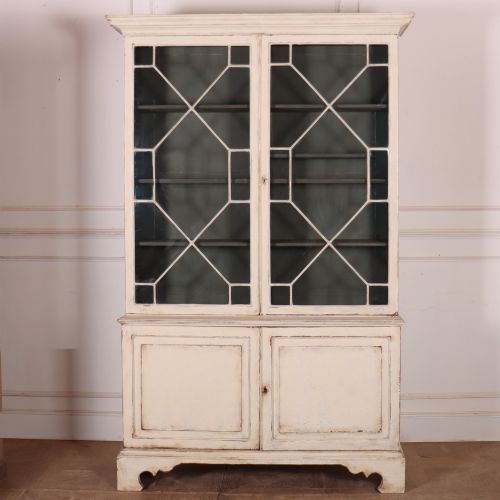
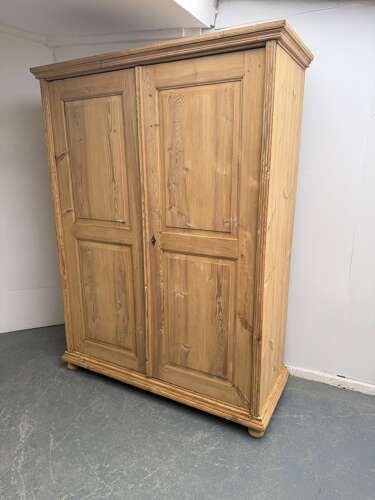
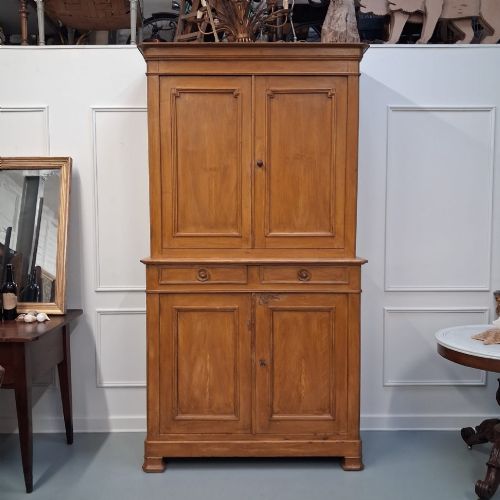
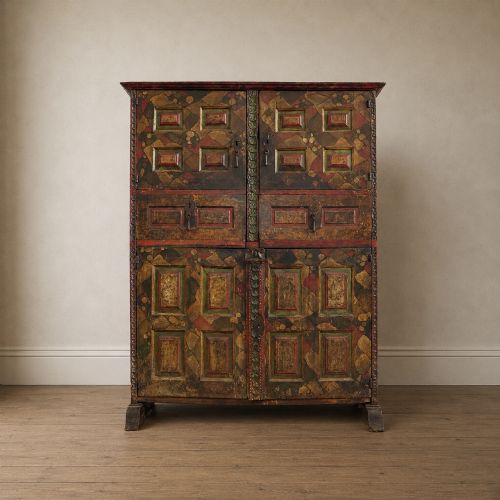
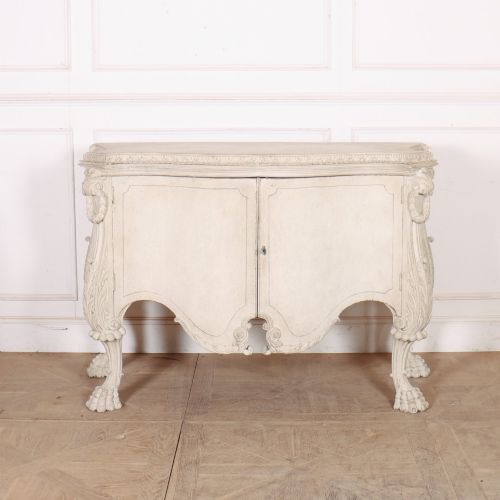
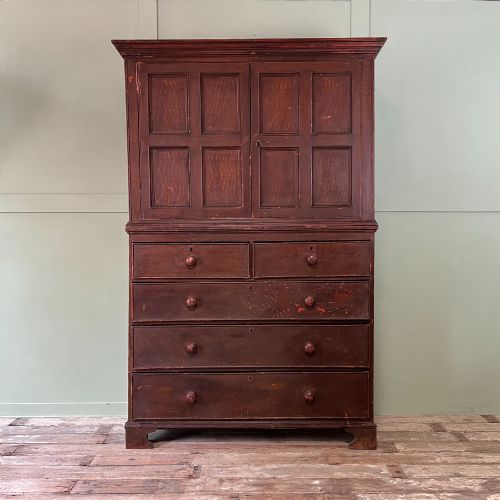
Painted Country Linen Press
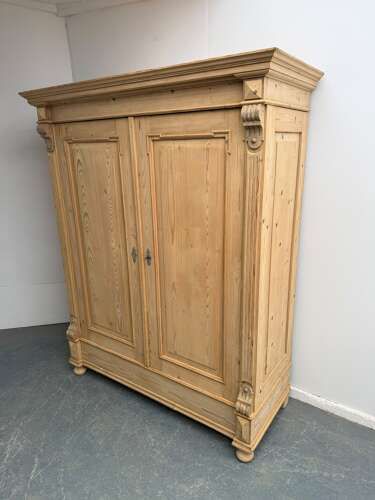
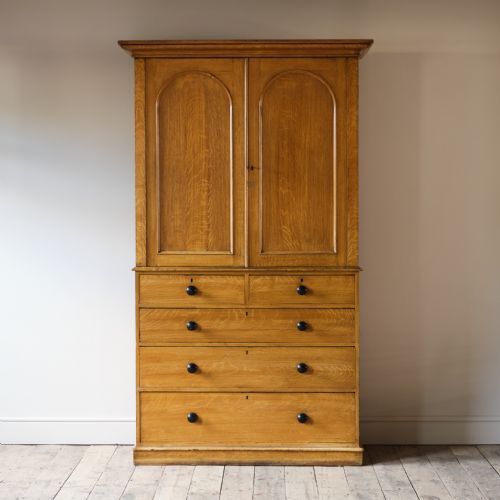
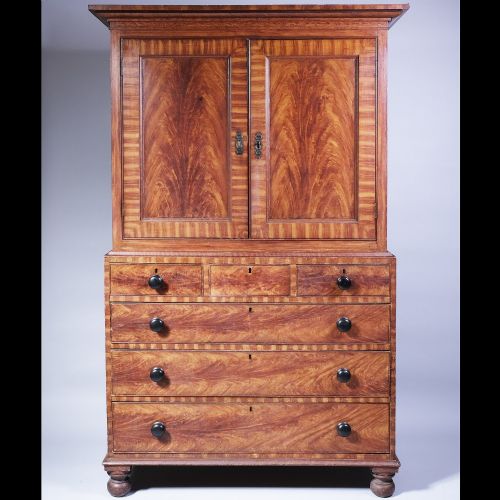
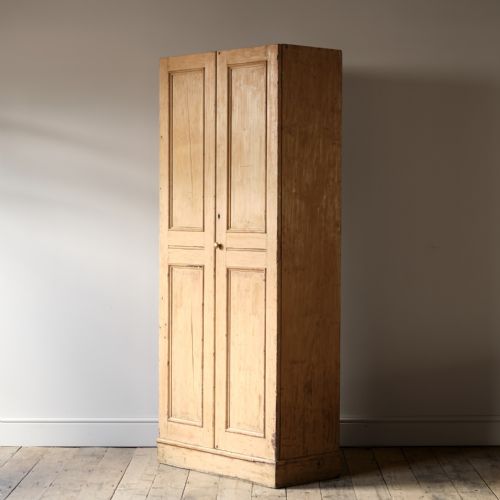
A painted country linen press brings robust utility and characterful colour to a bedroom, offering deep storage within a timeworn silhouette.
Painted Country Linen Press
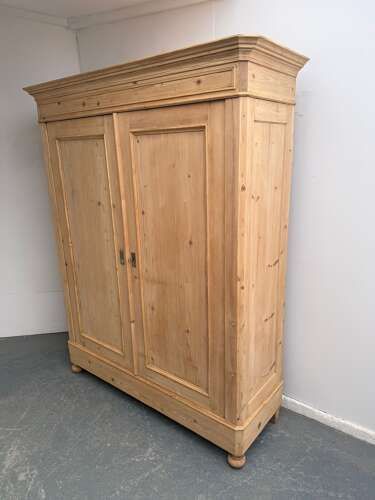
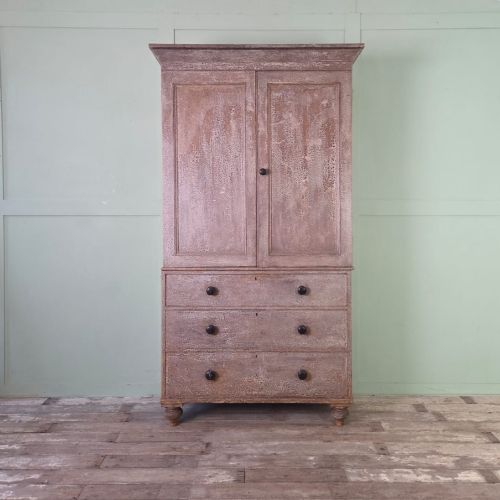
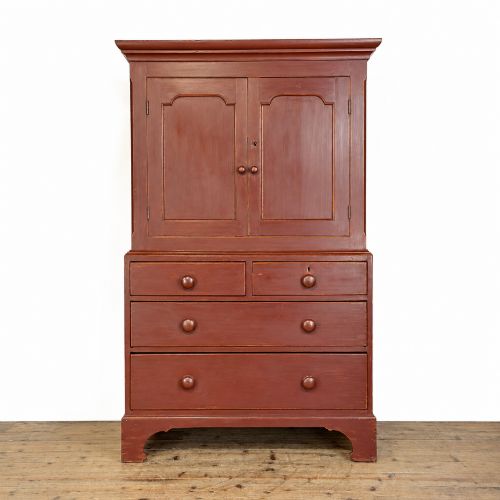
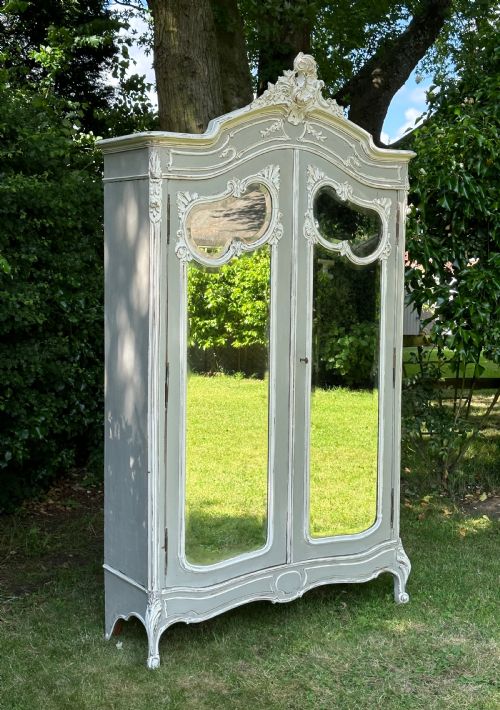
A painted country linen press provides substantial storage for household textiles and garments, merging practical shelving with panelled or glazed upper and lower sections. When searching for a painted country linen press, buyers encounter vernacular furniture spanning the seventeenth century through to the Victorian era, originating from English, French, Italian, Spanish, and Scandinavian workshops.
The pieces on this page lean heavily towards nineteenth-century and Victorian pine examples alongside Georgian and eighteenth-century forms. Wardrobes, armoires, and housekeeper cupboards frequently share these listings, reflecting the overlapping utility of large domestic storage furniture.
Regional variations appear distinctly, from English pine press cupboards to French armoires and Italian polychrome side cabinets. Many items arrive in original paint, scumble glaze, or historic finishes, while others present historic softwood ready for decorative treatment.
Materials and construction methods
Makers relied primarily on pine, ash, and structural hardwoods, constructing carcasses with pegged joints, panelled doors, and robust backboards. Knockdown designs permitted large wardrobes to be disassembled for transport between rooms, utilising wooden pegs and wedges rather than modern fixings.
Surfaces received layers of lead-based or oil paints, sometimes finished with scumble glazes to imitate richer timbers or decorated with polychrome details. Iron and brass hinges, latches, and locks secure the heavy doors, while glass panels appear on glazed bookcases and display cabinets.
Painted Country Linen Press Retail Price Guide 2026
Typical asking prices for painted country linen press among the pieces listed under this phrase on Sellingantiques today, from the lower quarter to the upper quarter. They describe what is for sale here now, not the wider market.
The listings span the 17th century to the Victorian era, utilising pine, ash, iron, and brass across various country styles.
Distinguishing quality in vernacular storage
Quality rests in the integrity of the structural joinery, the proportion of the carcass, and the survival of authentic surface finishes. Superior examples retain their original backboards, working locks, and untouched historic paint layers rather than later decorative overhauls.
Proportion and scale dictate the visual success of a piece, separating heavy, utilitarian workshop output from more refined vernacular cabinet work. Well-balanced cornices, fielded panels, and harmonious drawer configurations elevate a simple domestic press into a piece of notable presence.
The Painted Country Linen Press Glossary
- Linen press
- A tall cupboard traditionally used for storing folded linen and bedding on interior sliding trays or shelves. Upper sections often housed trays while lower sections contained drawers.
- Knockdown wardrobe
- A large piece of furniture engineered to be easily dismantled into panels, cornices, and bases for moving between rooms. This method used wooden pegs and slots instead of permanent fixings.
- Scumble paint
- A decorative technique involving translucent glaze dragged or brushed over a lighter base coat to simulate wood grain or create mottled texture. It was widely used on nineteenth-century country furniture.
- Housekeeper cupboard
- A large multi-door storage cabinet used in large domestic kitchens or corridors for provisions, linen, and china. These pieces often feature ample internal shelving.
- Polychrome
- Decorated in multiple colours, frequently seen on continental European painted furniture from Spain, Italy, and Scandinavia. This finish often incorporates floral or geometric motifs.
Painted Country Linen Press: Frequently Asked Questions
How do I assemble a knockdown wardrobe?
Knockdown wardrobes utilise interlocking panels, wooden pegs, and wedges to secure the sides, top, and base without complex tools. Two people are typically required to steady the heavy pine sections while aligning the joints.
Once the main carcass stands square, the doors hang on their original iron or brass hinges, and the heavy moulded cornice drops onto the top.
Where should I place a large linen press?
These tall cupboards demand generous wall space and low humidity to protect historic wood and paint surfaces from warping. Bedrooms and dressing rooms provide natural homes for storing folded garments and bedding.
Ensure you measure ceiling height as well as floor space, particularly for eighteenth and nineteenth-century pieces featuring heavy architectural cornices.
How do I care for original painted surfaces?
Historic paint finishes require gentle dusting with a dry microfibre cloth and protection from direct sunlight and moisture. Avoid modern chemical cleaners, silicone polishes, or abrasive pads that lift fragile historic pigments.
Wax can be applied sparingly to unpainted pine sections, but consult a conservator before treating flaking or delicate polychrome surfaces.
What is the difference between an armoire and a linen press?
An armoire is a tall wardrobe primarily designed with hanging space for garments behind large front doors. A traditional linen press historically contains internal sliding trays or shelves specifically for folded textiles.
Over centuries of use, many pieces have had their internal trays removed and replaced with hanging rails to suit modern clothing requirements.