



Swedish Country Painted Armoire
A swedish country painted armoire brings rustic Scandinavian warmth and functional storage to any room.
Swedish Country Painted Armoire
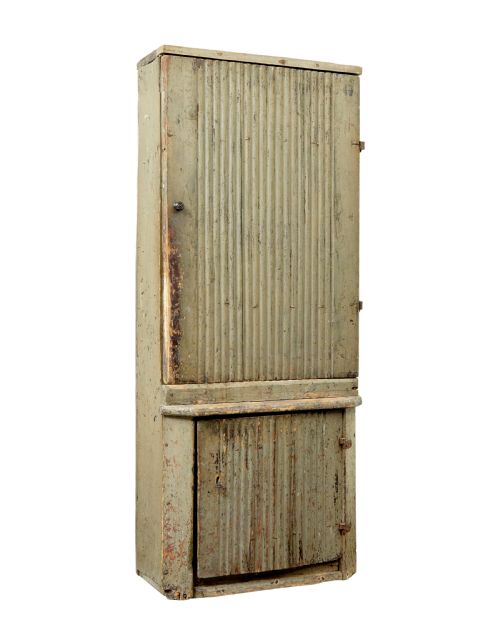
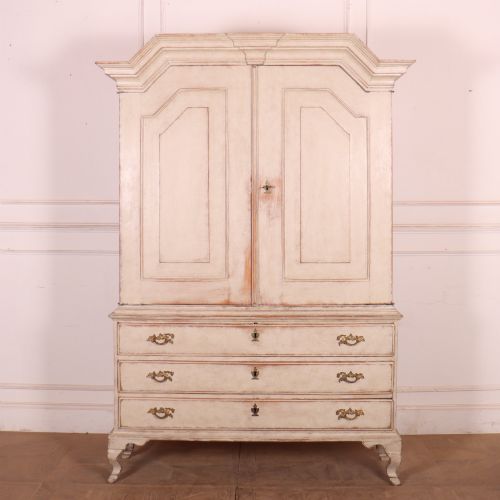
A swedish country painted armoire and related cupboards offer substantial storage built for Scandinavian homes. These pieces primarily date from the 18th century and the 19th century, reflecting long-standing rural traditions.
Buyers frequently encounter pine cupboards and linen cupboards designed with utilitarian grace. The selection spans styles from Scandinavian country and folk art to Gustavian forms.
Forms range from floor-standing linen cupboards to cabinets on stands and corner cupboards. Each piece provides a tangible connection to traditional Scandinavian domestic interiors.
How they were made
Carpenters constructed these cupboards using native pine as the primary timber. Joinery relied on traditional methods suited to softwood construction and rural workshops.
Surfaces received layers of paint, mineral paint, or ragwork finishes applied over the bare wood. Iron and brass fittings such as hinges and locks completed the functional hardware.
Swedish Country Painted Armoire Retail Price Guide 2026
Typical asking prices for swedish country painted armoire among the pieces listed under this phrase on Sellingantiques today, from the lower quarter to the upper quarter. They describe what is for sale here now, not the wider market.
Traditional ragwork paint finishes let rural painters turn simple pine into marble with a handful of cloth.
What varies in quality
Quality rests in the integrity of the original pine structure and the character of the painted surface. Pieces retaining early or original paint schemes demonstrate greater authenticity.
The sophistication of the decoration distinguishes standard utility pieces from finer folk art and Gustavian examples. Proportion and restraint in the carving further separate the levels of craftsmanship.
The Swedish Country Painted Armoire Glossary
- Gustavian
- The Swedish interpretation of neoclassical style named after King Gustav III. It is characterised by lighter proportions and restrained classical detailing.
- Ragwork
- A decorative painting technique using rags or cloths to apply colour and create textured patterns on the surface. This method was common in traditional Scandinavian interiors.
- Pine
- A softwood commonly used throughout Scandinavia for furniture construction due to its availability. It provides a stable base for painted finishes.
- Mineral paint
- A type of paint bound with mineral ingredients that produces a durable, matte finish. It adheres well to porous timber surfaces.
Swedish Country Painted Armoire: Frequently Asked Questions
What is a swedish country painted armoire used for?
These cupboards were traditionally built to store household textiles, clothing, and daily provisions in rural homes. Today they function effectively as standalone wardrobes, linen presses, or general living room storage.
The deep shelves and hanging spaces accommodate modern storage needs while introducing period character to an interior.
How do I date a swedish painted cupboard?
Dating relies on observing construction methods, timber characteristics, and the style of the painted decoration. Eighteenth-century examples often display simpler joinery combined with early pigment layers.
Nineteenth-century pieces frequently incorporate more varied folk art patterns, ragwork finishes, or transitional Gustavian design elements.
Are these cupboards made of solid wood?
Yes, traditional Scandinavian cupboards of this type utilise solid pine throughout their construction. Carpenters relied on local softwood timbers for both the structural frames and internal shelving.
This consistent use of pine gives the pieces their characteristic weight and stability.
What is the difference between folk art and Gustavian pieces?
Gustavian pieces reflect refined neoclassical tastes with symmetrical lines and subtle classical motifs. They often feature lighter, sophisticated colour palettes.
Scandinavian folk art cupboards display bolder, regional decorative painting traditions with distinct local motifs and textures like ragwork.