
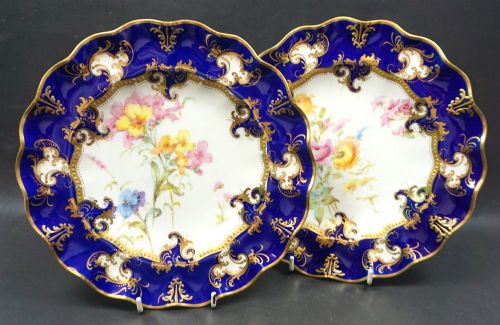
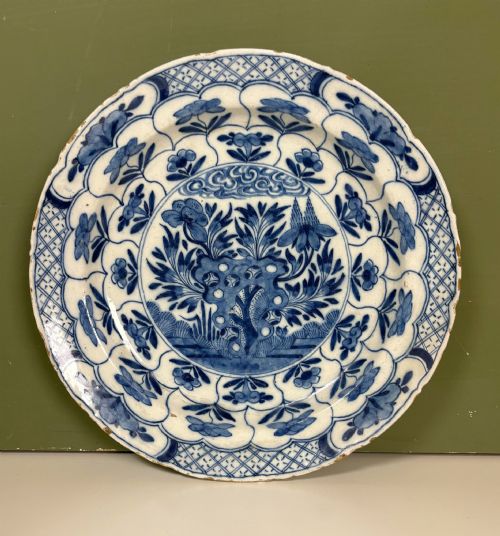
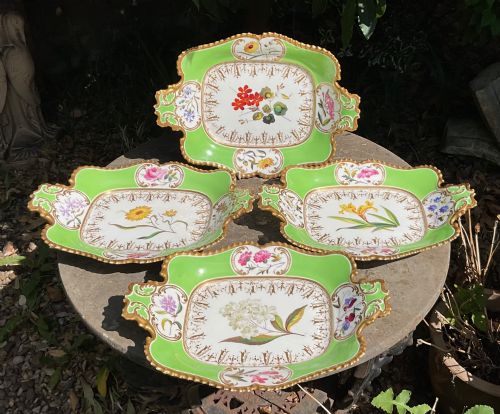
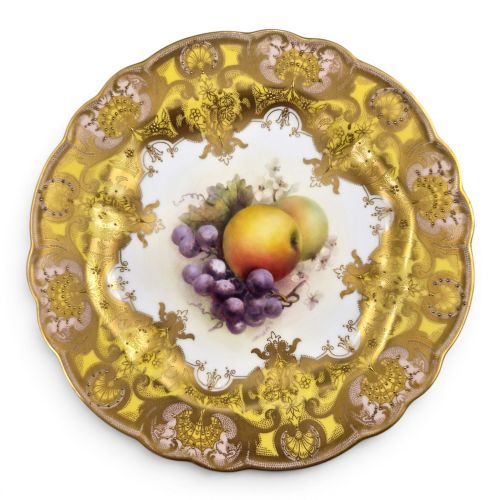
Painted China Plates
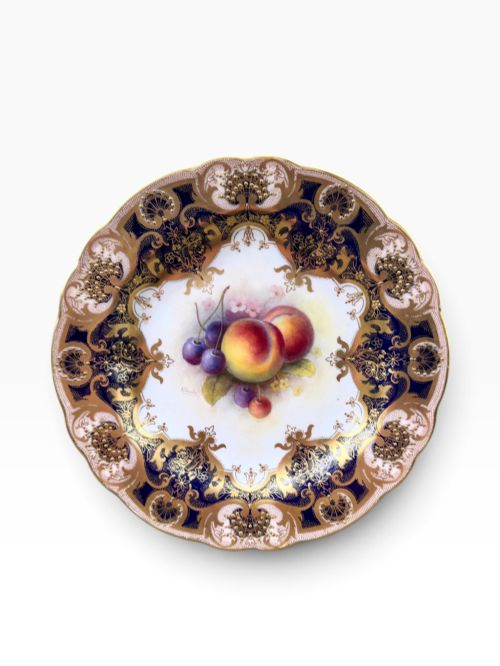
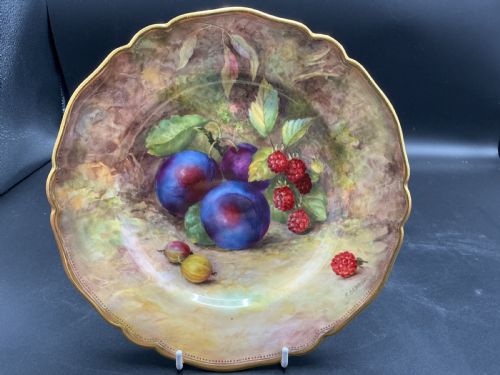
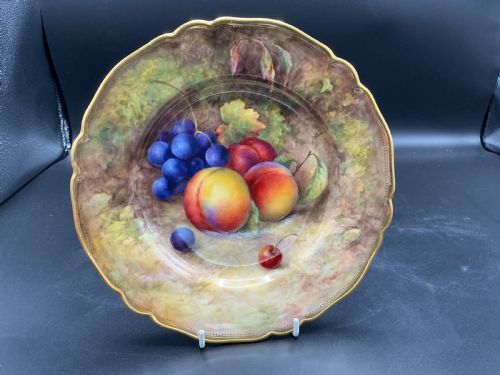
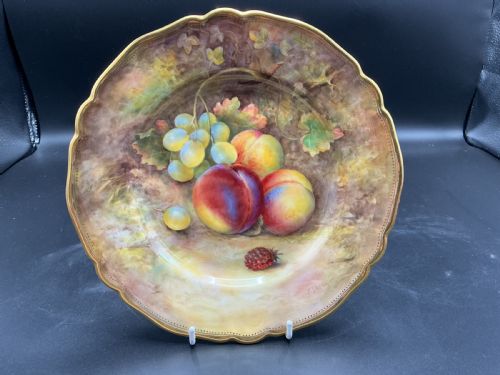
These painted china plates bring together centuries of botanical, avian and landscape painting on porcelain.
Painted China Plates
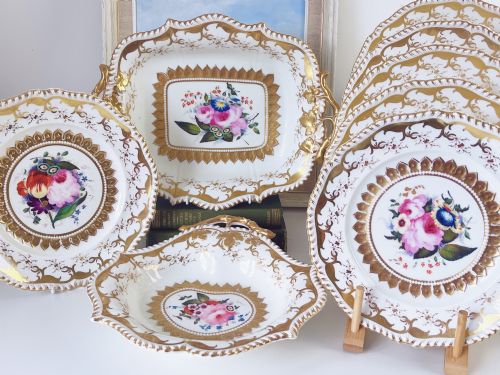
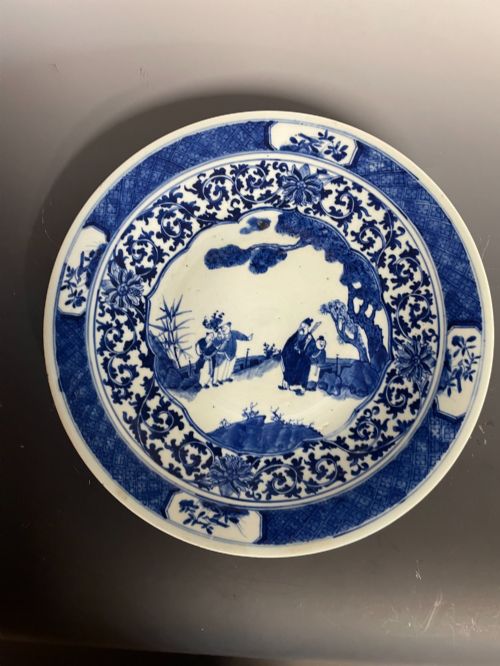
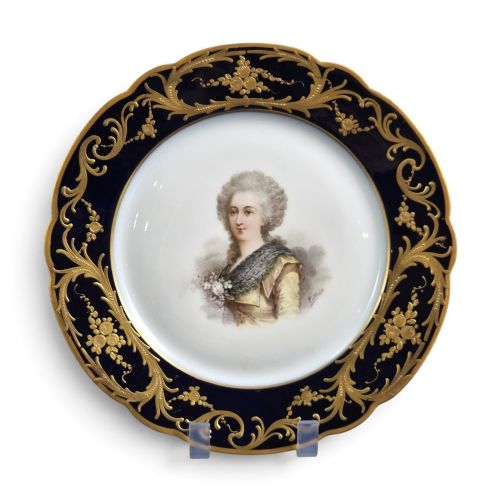
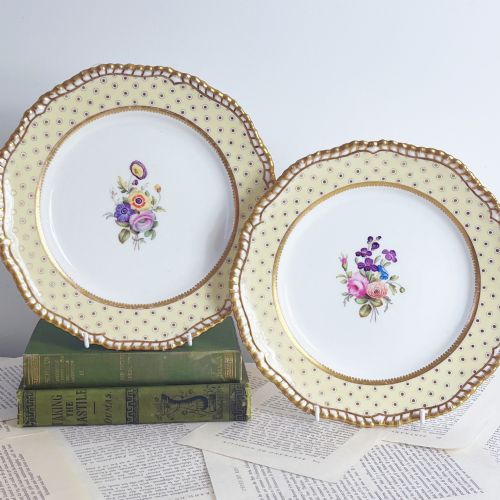
When you search for painted china plates, you encounter a diverse range of porcelain and ceramic tableware created for display and formal dining. The selection spans cabinet plates, dessert services, and decorative dishes originating from English factories and continental makers.
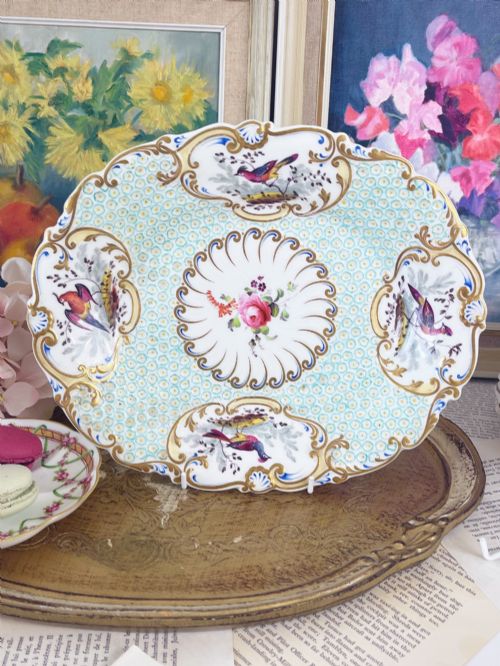
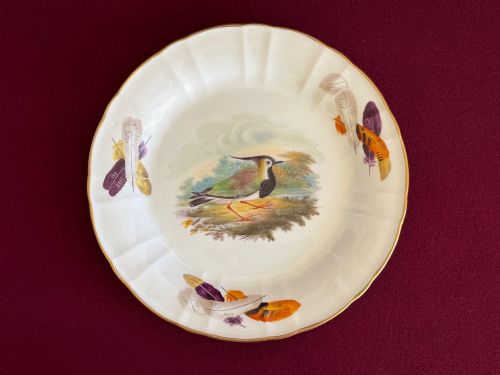
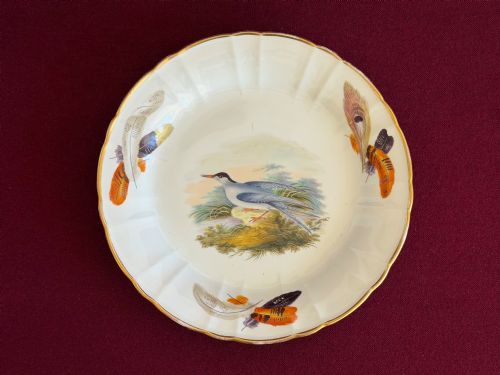
The most common examples on this page date from the nineteenth and early twentieth centuries, particularly pieces from periods such as the Georgian, Regency, and Edwardian eras. These range from single cabinet plates adorned with fruit and birds to matched sets of dessert dishes intended for formal dining tables.
Materials and Techniques
Makers utilised fine porcelain, bone china, and ironstone as the primary white bodies for these pieces. Potters shaped these materials into plates, comports, and serving dishes before applying glazes and underglaze colours.
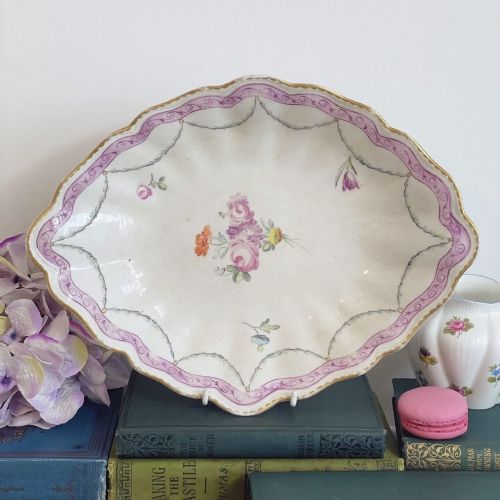
Artisans applied handpainted floral, avian, and fruit motifs, often enhanced with gold leaf, gilt, and gilding. Enamel colours were fired onto the ceramic body to achieve lasting vibrancy.
Listings feature porcelain, bone china, and ironstone from the eighteenth, nineteenth, and twentieth centuries.
Quality Variations
The skill of the handpainter dictates much of the distinction at the upper end of the range, where signed artist work and detailed naturalistic studies of fruit or birds elevate a piece. Factory provenance also plays a part, with established names commanding attention through finer porcelain bodies and more complex gilt work.
Subtleties in the weight of the ceramic, the crispness of moulded borders, and the preservation of the enamel and gold leaf separate standard decorative wares from exceptional cabinet pieces.
Royal Worcester·Spode·Wedgwood·Derby·Minton
The Painted China Plates Glossary
- Cabinet Plate
- A decorative plate intended for display in a cabinet rather than for everyday dining. These pieces usually feature elaborate handpainted scenes or botanical studies.
- Comport
- A raised serving dish or pedestal bowl used traditionally for serving fruit or desserts. They often match the design of surrounding dessert plates.
- Bone China
- A type of porcelain composed of clay mixed with bone ash, producing a strong, milky-white body. It allowed makers to produce thinner, more refined plates.
- Ironstone
- A heavy, durable earthenware developed in the nineteenth century as a robust alternative to porcelain. It frequently carried colourful Imari or Japan patterns.
- Gilding
- The application of gold leaf or gold paint to ceramic surfaces, typically outlining rims and borders. Skilled gilding adds significant decorative depth to cabinet pieces.
Painted China Plates: Frequently Asked Questions
How do I display cabinet plates?
Cabinet plates are best housed in glass-fronted display cabinets to protect their painted surfaces and gilt edges from dust and accidental knocks. Wall mounting is also common using specialised wire hangers designed for porcelain.
Ensure that plates displayed on walls or stands are secure and kept away from direct sunlight to prevent the handpainted enamels from fading over time.
Were these plates used for dining?
Many items categorized as dessert plates or service dishes were originally utilised during the dessert course of formal Georgian and Victorian dinners. These services often included matching comports and platters for fruit and sweetmeats.
Over the decades, many surviving examples transitioned from active dining use to purely decorative cabinet display due to the delicate nature of their handpainted designs.
How do I identify the period?
Dating painted china plates relies heavily on factory backstamps, pattern numbers, and specific ceramic bodies such as bone china or ironstone. Stylistic cues like Rococo revival scrolls or Aesthetic movement motifs also point to specific decades.
Consulting manufacturer marks and comparing painted styles with documented examples helps narrow down the exact decade of manufacture.
Can I clean antique porcelain?
Antique porcelain plates require gentle hand washing in lukewarm water with mild soap. Avoid soaking pieces with gilt or enamel decoration, as harsh scrubbing or dishwashers will damage the handpainted details.
Dry the pieces thoroughly with a soft cloth immediately after washing to prevent water spots on the glazed and gilded surfaces.