
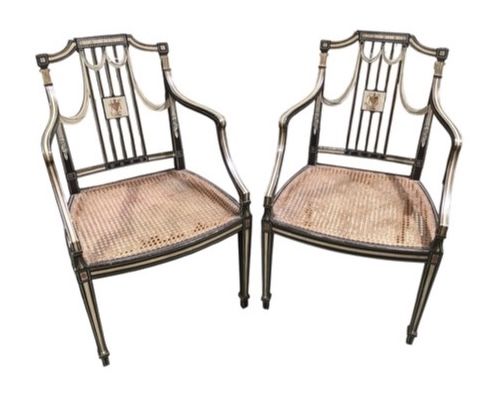
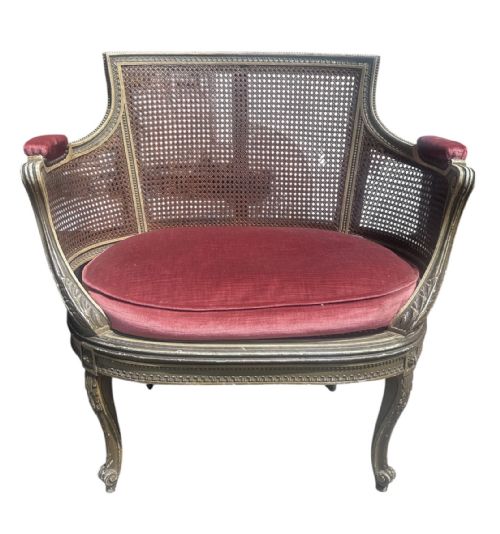
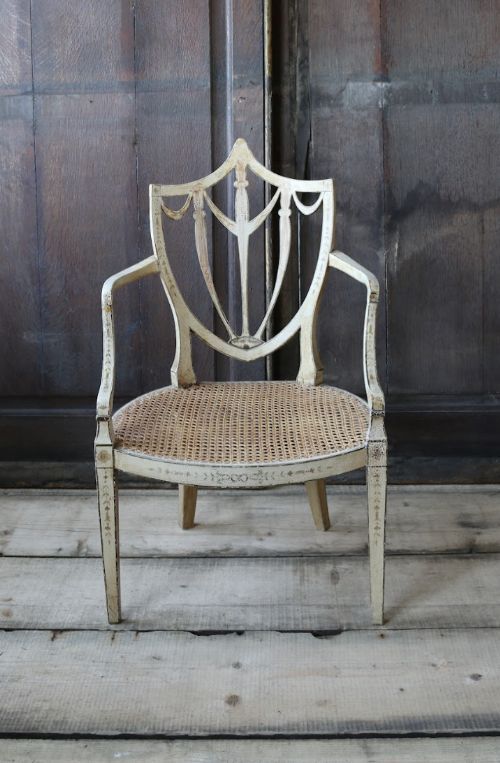
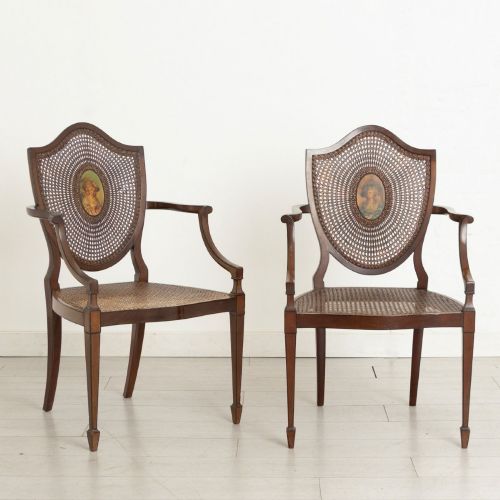
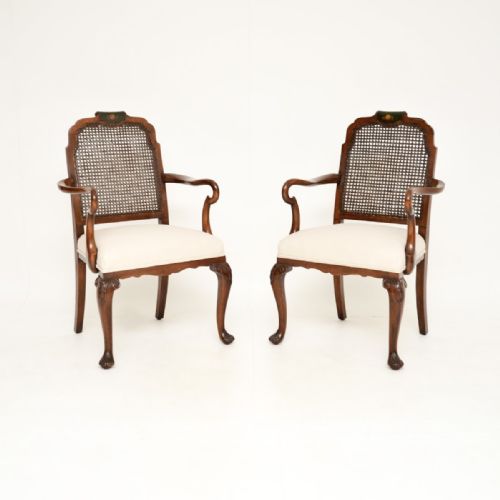


Painted Caned Armchair
A painted caned armchair brings together crisp woodwork, woven seating and decorative surface finishes in one versatile seat.
Painted Caned Armchair
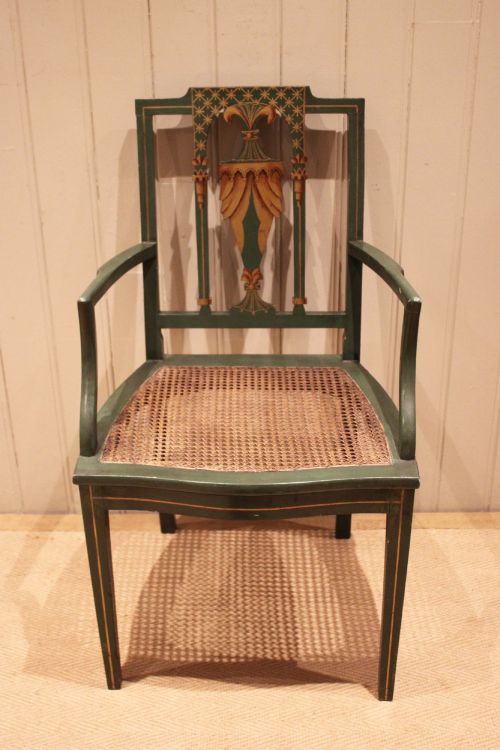
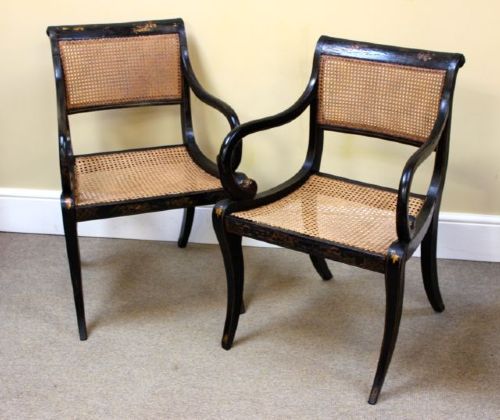
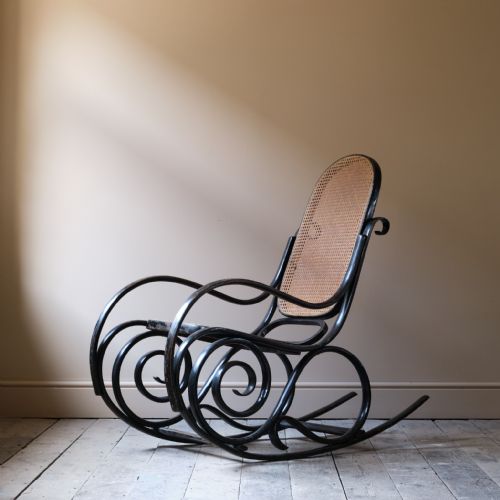
A painted caned armchair is a seated piece combining a wooden frame with a woven cane seat or back panel and an applied surface paint, lacquer or gilt finish. These chairs appear in forms ranging from lightweight elbow seats to robust library bergere models and rocking chairs.
The versions most commonly met on this page span the Regency and Edwardian eras, alongside later revival pieces styled after French Louis models. They often emerge in pairs or small sets rather than as isolated items.
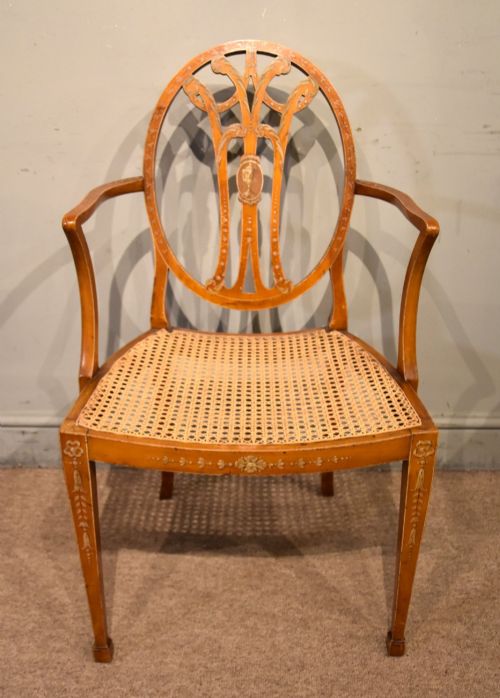
Origins stretch from English workshops to French ateliers, incorporating occasional styles such as Chinoiserie and Hepplewhite shield-backs. Buyers select them to introduce texture, lightness and period character into a room.
How they were made
Frames are constructed from timbers such as beech, walnut and satinwood, shaped into curved armrests, cabriole legs or bamboo-turnings. Woods are selected for their ability to hold structural joins while supporting the tension of woven panels.
Caning employs split rattan threaded through pre-drilled holes in the frame to form a durable, open mesh. Surfaces are then prepared with gesso or primers before receiving layers of paint, ebonising, lacquer or parcel gilt decoration.
Listings feature items spanning the eighteenth century through to the 1920s, with a strong representation of Regency and Edwardian pieces.
What varies in quality
Quality rests in the precision of the frame carving and the tightness of the cane weaving across the seat or back panel. Finer examples display crisp botanical or geometric painting that integrates harmoniously with the underlying timber structure.
The integrity of the original paint layer and the subtlety of decorative details, such as parcel gilding or japanning, distinguish standard production from superior work. Proportion and the elegance of the curved armrests further define the standing of each piece.
Gillows
The Painted Caned Armchair Glossary
- Bergere
- An enclosed upholstered or caned armchair with solid sides, originating in France. These seats typically feature a low, wide seat and a padded backrest.
- Caning
- A method of weaving split rattan or similar plant material into a patterned mesh. It provides a resilient and breathable surface for seats and backs.
- Japanning
- A European imitation of East Asian lacquerwork involving layered varnishes and heat-cured finishes. It frequently incorporates metallic dust and painted motifs.
- Parcel Gilt
- A decorative technique where specific carved details or highlights on a wooden frame are partially covered in gold leaf. This creates contrast against a painted or polished ground.
- Shield-Back
- A chair back shaped in the outline of a heraldic shield, popularised in the eighteenth century by makers such as Hepplewhite. The design often encloses open splats or caned panels.
Painted Caned Armchair: Frequently Asked Questions
How do I care for cane seats?
Cane requires moderate humidity to remain flexible and prevent snapping under pressure. Light dusting and occasional damp sponging on the underside help maintain the material.
Avoid placing these chairs directly beside heat sources or in harsh sunlight, which dries out the natural fibres over time.
Are painted chairs durable for daily use?
Most frames utilise sturdy hardwoods like beech or walnut underneath the decorative surface. This provides adequate structural strength for everyday sitting.
Care should be taken around the painted or lacquered edges to prevent chipping against hard surfaces or tables.
How do I spot a revival piece?
Revival chairs often copy earlier French or English aesthetics using twentieth-century timber construction techniques and standardised machine-woven cane. Examining the tool marks and the composition of the paint layers reveals the age of the frame.
Proportions and wood density also offer clues to whether a piece originates in the Regency period or a later twentieth-century revival.
Where were bergere chairs used?
Bergere chairs were designed as comfortable lounging seats for drawing rooms, libraries and bedrooms. Their enclosed sides provided shelter from drafts in large period interiors.
They function today as accent seating in living spaces where their decorative painted frames can be appreciated.