

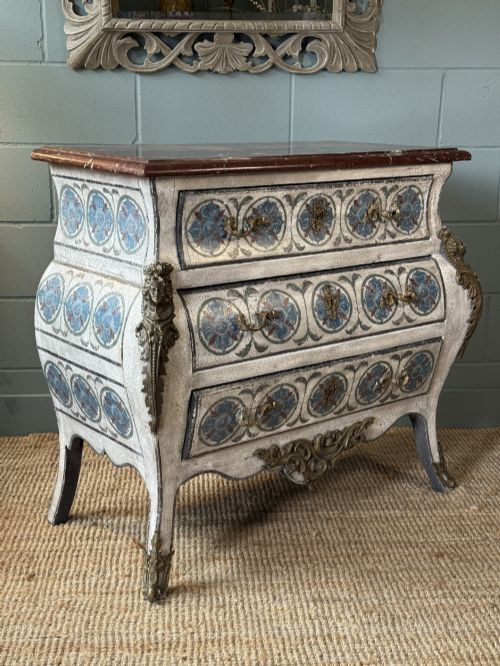


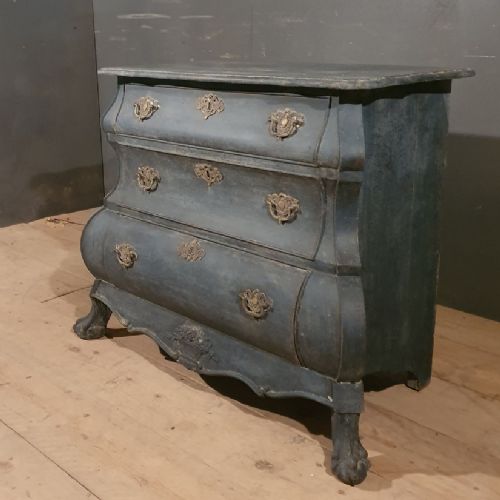

Painted Bombe Chest
A painted bombe chest brings swelling, curvaceous proportions and artistic surface decoration into a room, offering both dramatic presence and deep storage.
Painted Bombe Chest
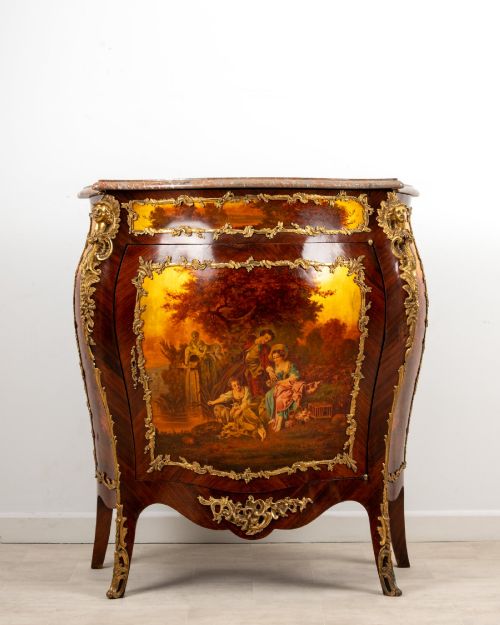
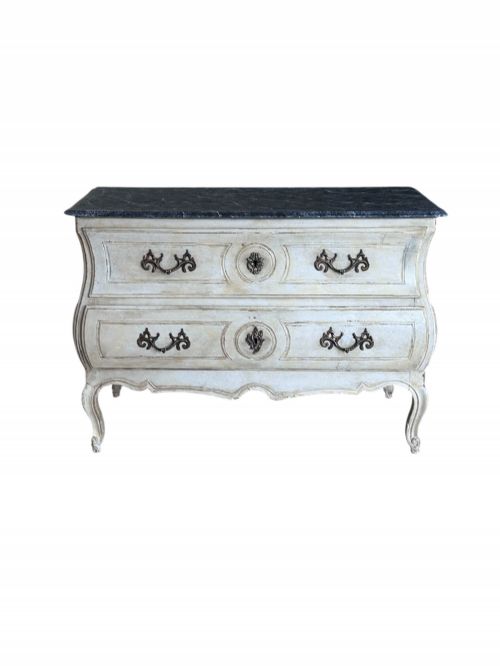
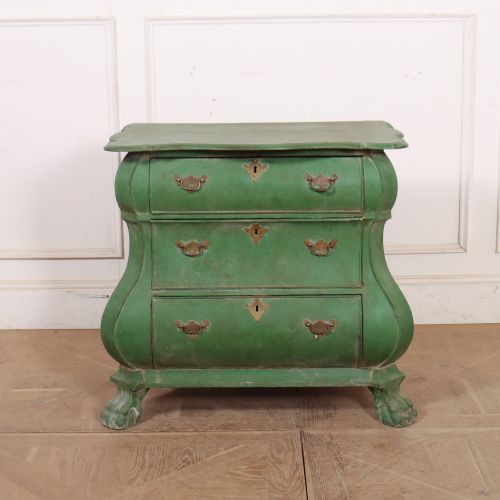
A painted bombe chest presents an outward-sweeping, undulating profile across the front and sides, frequently described as a commode or chest of drawers in the evidence. These pieces span periods from the eighteenth century to the early twentieth century, originating primarily from Dutch, French, and Italian workshops.
Buyers encountering this selection will most often meet nineteenth-century examples, alongside select eighteenth-century items and later revival pieces. The forms range from grand marble-topped commodes to smaller cabinets and cupboards, all sharing the characteristic swelling silhouette.
Surface finishes define these items, with painted wood, lacquer, and decorative scenes appearing alongside gilded bronze mounts. The combination of structural curves and applied painted artistry marks the distinct character of every piece in this category.
Materials and construction
Makers shaped these carcasses from wood, occasionally employing kingwood beneath decorative surface treatments, then applied specialised paint layers, lacquer, and detailed artistic scenes. The construction requires precise joinery to maintain the outward curve without compromising structural stability.
Heavy cast metal elements, including ormolu and gilt bronze mounts, accent the corners, handles, and apron, while thick slabs of marble frequently top the larger commodes. These contrasting materials work together to frame the painted body and reinforce points of wear.
Painted Bombe Chest Retail Price Guide 2026
Typical asking prices for painted bombe chest among the pieces listed under this phrase on Sellingantiques today, from the lower quarter to the upper quarter. They describe what is for sale here now, not the wider market.
Listings feature pieces spanning the eighteenth, nineteenth, and early twentieth centuries, constructed from painted wood, kingwood, marble, and ormolu.
Distinctions in quality
The sophistication of the painted surface work dictates much of the distinction across these chests, separating standard decorative finishes from finely detailed figural scenes and intricate lacquer work. Hand-painted Italian Venetian views or delicate French Vernis Martin panels demand superior artistic execution compared to simpler, uniform painted coats.
The integration of the mounts and the quality of the cabinetry shape the overall success of the piece, where crisply chased ormolu or gilt bronze fittings sit flush against the curved woodwork. Furthermore, the integrity of the structural bombe shape and the harmonious proportion of the drawers reflect the skill of the original workshop.
The Painted Bombe Chest Glossary
- Bombe
- A swelling, outward-curving profile characteristic of furniture fronts and sides. This bulging contour creates a pronounced, sculptural silhouette.
- Commode
- A low chest of drawers or cabinet designed for domestic storage. These pieces often feature prominent decorative mounts and stone tops.
- Ormolu
- Gilded bronze used for decorative mounts and furniture hardware. The technique involves applying a gold amalgam to a bronze base.
- Vernis Martin
- A type of simulated Japanese lacquer developed in France during the eighteenth century. Artisans used successive layers of varnish to create translucent, highly polished decorative surfaces.
- Kingwood
- A dense, richly figured tropical timber utilised in fine cabinetmaking. Its distinct grain patterns provide a luxurious foundation for decorative furniture.
Painted Bombe Chest: Frequently Asked Questions
What rooms suit a painted bombe chest?
These pieces function well as statement items in living rooms, hallways, or bedrooms where their curved profile can be appreciated from multiple angles. Their substantial proportions also provide useful surface space for lamps or decorative objects.
Because of their distinct visual weight, they anchor a room effectively when given enough surrounding space to display their painted details and swelling form.
How do I care for the painted surface?
Dust the surfaces gently with a soft, dry cloth to prevent accumulation without abrasive contact. Avoid chemical cleaners or excessive moisture, which can damage aged paint and delicate lacquer.
Keep the chest away from direct sunlight and strong heat sources to protect the painted pigments and underlying wood from fading or splitting over time.
How do I distinguish eighteenth-century from later pieces?
Eighteenth-century examples typically display hand-forged joinery, aged timber characteristics, and period-specific pigments that show natural wear patterns. Revival pieces from the nineteenth and twentieth centuries often employ machine-cut elements or later surface applications.
Examining the interior drawer construction and the style of the bronze or brass mounts helps clarify the manufacturing era.
What is the function of the marble top?
Marble tops provided a durable, stain-resistant surface for serving or display, particularly on French commodes. They also added stabilizing weight to the substantial wooden carcass.
These stone slabs were typically selected to complement the tones of the painted woodwork and metal mounts below.