
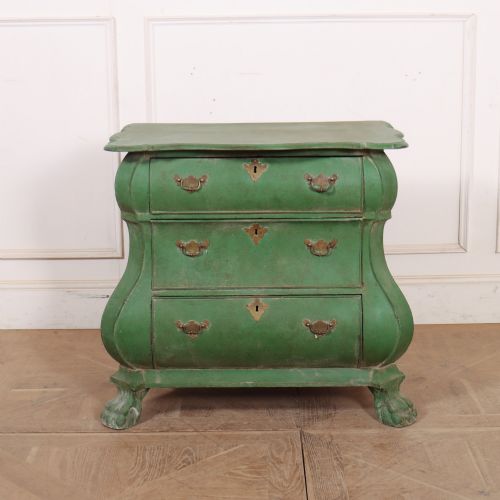


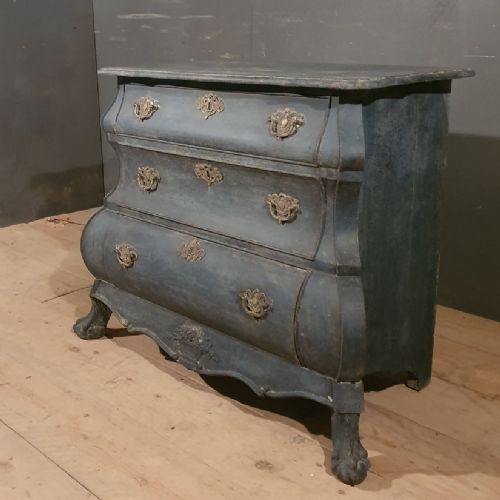


Vintage Dutch Commode
A vintage dutch commode brings robust continental storage and striking bombe or shaped profiles into a room, offering both practical drawers and distinct period character.
Vintage Dutch Commode
When searching for a vintage dutch commode, buyers encounter case furniture spanning multiple centuries, from seventeenth-century walnut pieces to nineteenth-century painted and marquetry examples. These storage items primarily take the form of chests of drawers, shaped-front chests, and bombe commodes.
The selection on this page shows strong representation from eighteenth-century and nineteenth-century periods, alongside earlier seventeenth-century work and twentieth-century variations. Alongside traditional chests of drawers, listings include related storage forms such as cupboards and walnut chests.
Materials and construction
Cabinet makers utilised a rich palette of woods, incorporating oak, walnut, mahogany, fruitwood, boxwood, and burr elm across various pieces. Painted wood and distinct paint finishes also appear alongside natural timber surfaces.
Decorative techniques rely heavily on intricate marquetry and shaped fronts, often paired with brass hardware. Construction methods produce the characteristic bombe curves and serpentine profiles associated with the regional aesthetic.
Listings demonstrate a broad span of periods, ranging from the 17th century through the 18th and 19th centuries up to 1910.
Judging quality and execution
Quality rests in the precision of the marquetry work and the handling of the timber grain, particularly on burr elm and walnut surfaces. Superior pieces display harmonious proportions across their shaped and bombe contours.
The integration of brass hardware and the crispness of painted finishes or carved details distinguish finer examples from simpler vernacular pieces.
The Vintage Dutch Commode Glossary
- Bombe
- A bulging, outward-curving chest or commode profile characteristic of continental furniture. This sweeping contour requires advanced cabinet making skill to execute successfully.
- Marquetry
- Inlaid wood veneers arranged in decorative patterns or pictures across the surface of the furniture. Craftsmen utilise contrasting timbers like boxwood and fruitwood to create tonal depth.
- Burr elm
- A highly figured timber prized for its swirling grain patterns and rich texture. It appears on select drawer fronts and surfaces to create visual movement.
- Neoclassical
- A decorative style drawing on classical antiquity, reflected in the cleaner architectural lines of certain pieces. This aesthetic contrasts with the more exuberant curves of rococo designs.
Vintage Dutch Commode: Frequently Asked Questions
What is a bombe commode?
A bombe commode is a chest of drawers featuring distinctive convex, swelling sides and front profiles. This sweeping contour defines many continental storage pieces from the period.
Craftsmen shaped the timber to create this voluminous silhouette, often pairing the form with decorative marquetry or painted finishes.
How do I date a wooden chest?
Dating relies on examining the timber species used, construction methods, and stylistic markers such as rococo or neoclassical influences. Periods span from the seventeenth century through to the early twentieth century.
Examining the secondary woods and the style of the brass hardware provides further clues to the manufacturing era.
Where were these chests made?
These pieces originate from the Netherlands, reflecting regional cabinet making traditions from various historical eras. Related colonial pieces, such as Cape Dutch examples, also feature in the broader stylistic family.
Workshops utilised local and imported hardwoods to construct these substantial storage items.
How do I care for antique marquetry?
Maintain marquetry surfaces by keeping them away from direct sunlight and sudden temperature fluctuations that affect veneers. Regular, gentle dusting preserves the contrasting wood inlays without harming the finish.
Avoid excessive moisture and consult a professional conservator for any structural or surface maintenance.