



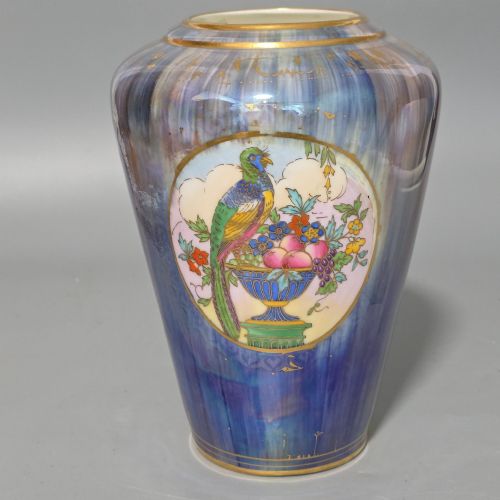

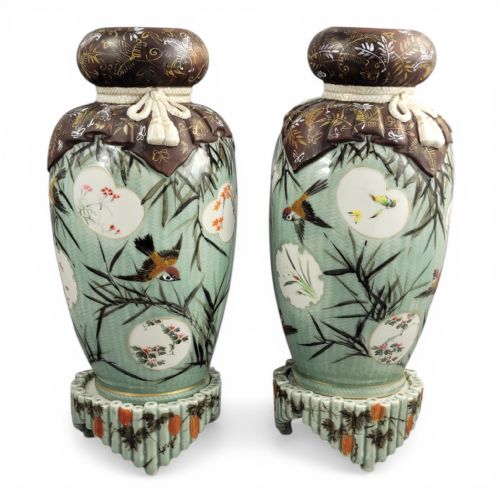


Painted Bird Porcelain Urn
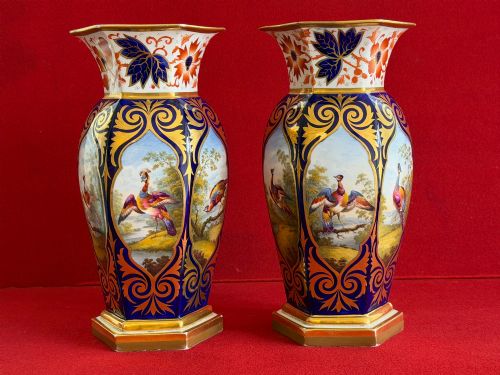
A painted bird porcelain urn brings delicate avian subjects into a room, shaped through diverse international traditions.
Painted Bird Porcelain Urn
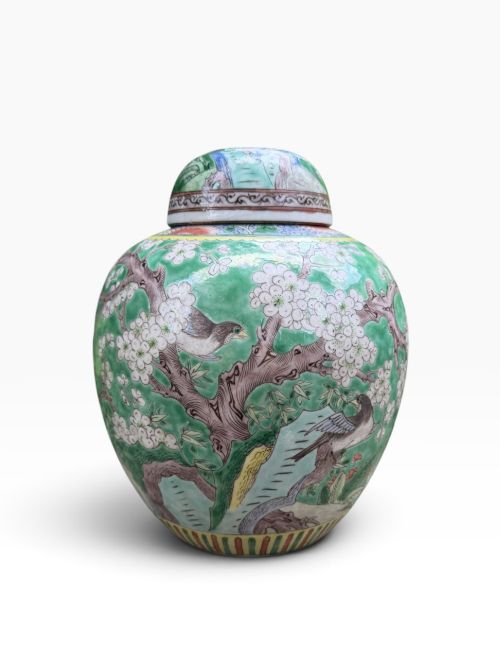
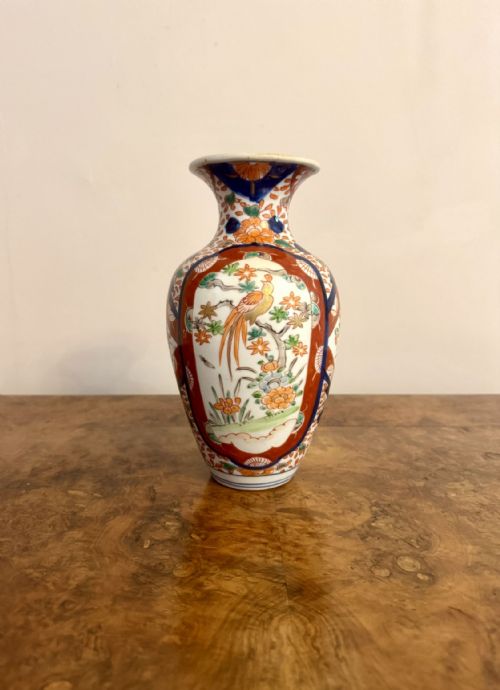
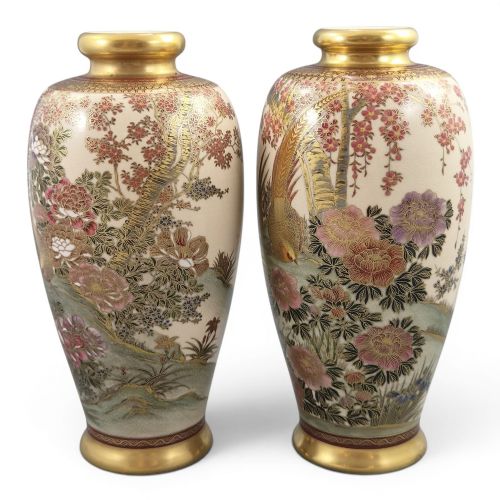
When searching for a painted bird porcelain urn, collectors encounter forms ranging from ginger jars and jardinieres to monumental pedestal vessels and lidded vases. These objects cross numerous origins, spanning English factories like Worcester alongside Chinese export wares and Japanese Satsuma production.
The pieces appearing in this selection traverse several centuries, with particular strength in nineteenth-century examples and productions from the early decades of the twentieth century. Forms take shape as bulbous display vessels, lidded jars, and slender cabinet vases intended for decorative interiors.
Materials and Construction
Makers utilised ceramic bodies formed from porcelain, earthenware, and fine pottery, frequently finished with rich glaze layers and glossy enamel pigments. Hand painting remains central to these works, bringing birds and botanical scenes to life with meticulous brushwork.
Gilding, gold leaf, and gilt accents frequently highlight the rims, handles, and panel borders of the vessels. Certain Japanese and European works incorporate distinct lacquer finishes or specialised lustre glazes alongside traditional pigment application.
Some storks and pheasants stare out from these porcelain surfaces with an intensity that suggests they know they are being watched.
Assessing Distinction
The standard of a painted bird porcelain urn rests upon the precision of the hand-painted brushwork and the naturalism of the avian subject. Master painters achieve feather detail and tonal gradation that elevate a standard floral vessel into a notable work of art.
Provenance and factory marks significantly influence the standing of an object, particularly when signed by known ceramic artists. The integration of matching covers, original porcelain stands, and well-preserved gilding further distinguishes finer examples from simpler production pieces.
Flight Barr And Barr·Barr Flight And Barr·Royal Worcester·Royal Crown Derby·Rozenburg·Falcon Ware
The Painted Bird Porcelain Urn Glossary
- Satsuma
- A type of Japanese earthenware featuring a crackled ivory glaze and elaborate polychrome enamel decoration. These pieces frequently incorporate raised gold detailing.
- Jardiniere
- A large decorative ceramic pot or urn designed to hold growing plants or floral arrangements. They often sit on matching bases or pedestals.
- Gilding
- The application of gold leaf or powdered gold paint to the surface of ceramics. This technique highlights rims, handles, and decorative borders.
- Ginger Jar
- A high-shouldered ceramic vessel with a domed lid, originally manufactured in China for the storage of spices. Later European and Asian factories adopted the form purely for decoration.
Painted Bird Porcelain Urn: Frequently Asked Questions
What periods do these painted bird porcelain urns date from?
The available selection spans from the eighteenth century through the Georgian and Regency eras, extending into the Victorian period and early twentieth century. Art Deco and Edwardian examples also appear alongside nineteenth-century Asian works.
Specific decades represented include the 1880s, 1890s, and the early decades of the 1900s up to the 1930s.
How were these painted ceramic vessels used originally?
Many vessels served as decorative ornaments displayed on mantelpieces, pedestals, or centre tables in formal rooms. Lidded pieces functioned as ginger jars or potpourri containers holding dried botanical mixtures.
Some larger forms operated as jardinieres for indoor plants or were later adapted into functional lamp bases.
Which ceramic traditions are represented here?
The listings incorporate traditional English porcelain factories alongside continental European makers and Dutch Delftware. Asian traditions are strongly represented through Chinese export porcelain and Japanese Satsuma, Seto, and Imari wares.
Distinct regional styles range from Chinese Qing dynasty pieces to Japanese Meiji period productions.
How can I identify individual artists on these pieces?
Several pieces feature hand-painted signatures or monograms belonging to specific ceramic painters who worked for major factories. Factory marks stamped or painted on the base help determine the origin and approximate production window.
Exhibition marks and monograms provide additional context for high-quality nineteenth and twentieth-century items.