






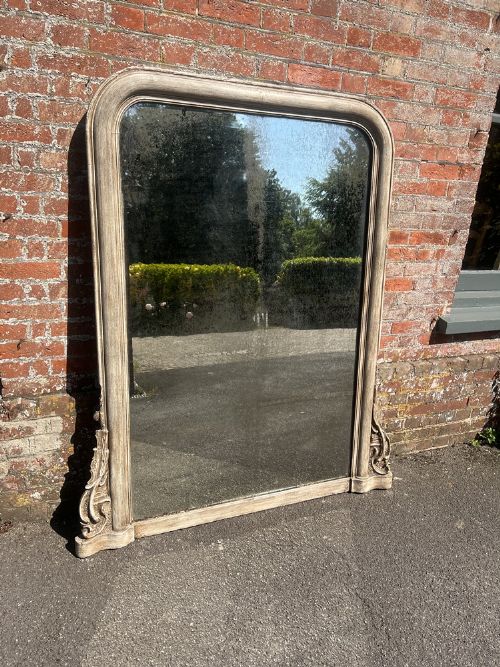


Painted Arched Mantel Mirror
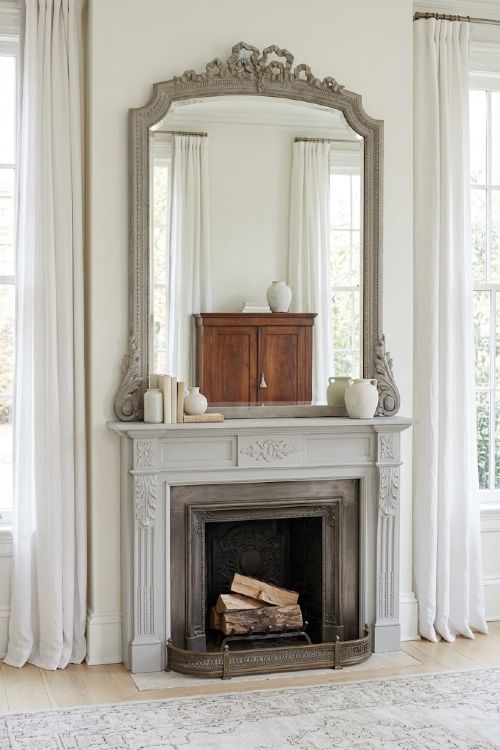
A painted arched mantel mirror brings height and a reflective surface to a fireplace, grounding a room with 19th-century proportion.
Painted Arched Mantel Mirror
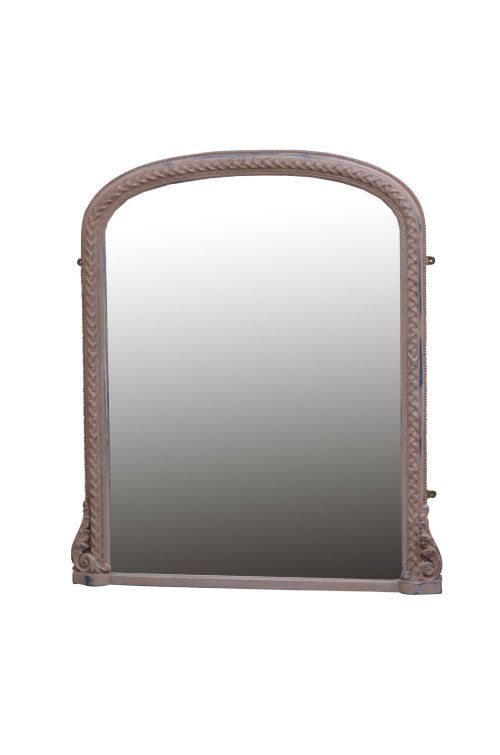
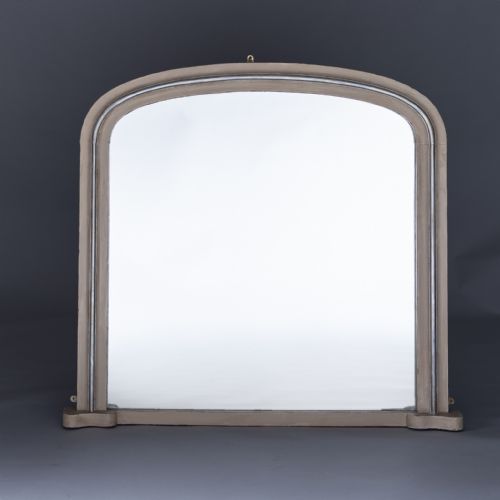
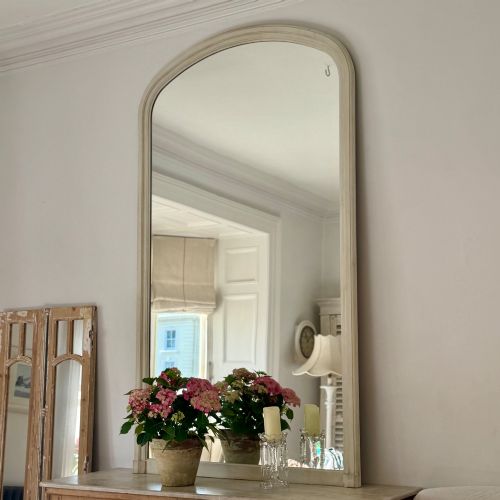
A painted arched mantel mirror sits above a fireplace, anchoring the chimney breast with its curved top and substantial scale. You meet these pieces mostly in nineteenth-century forms, spanning English and French country house and provincial styles.
The evidence shows these designs appearing through the Victorian era and into the early twentieth century, around eighteen ten. They function as overmantel mirrors or wall mirrors, designed to bounce light across a drawing room or parlour.
Most examples combine an arched wooden frame with applied gesso and painted surfaces. They range from plain cream and black ebonised finishes to layered lilac and ink blue palettes.
How they were made
Carpenters built the primary frames from carved wood, shaping the distinctive archtop by hand or utilising built-up wooden sections. Over this timber foundation, artisans applied layers of gesso to build up crisp mouldings, ribbons, and ornate decorative borders.
Painters finished the pieces using various palettes, including parcel-silvered details, monochrome ebonisation, or layered heritage colours. Mirror glass was then set into the rebate behind the frame, held securely by wooden backing boards.
Painted Arched Mantel Mirror Retail Price Guide 2026
Typical asking prices for painted arched mantel mirror among the pieces listed under this phrase on Sellingantiques today, from the lower quarter to the upper quarter. They describe what is for sale here now, not the wider market.
Some frames wear their history quietly in layers of lilac and ink blue paint, having survived generations of parlour conversations.
What varies in quality
Quality rests upon the crispness of the carved wood and the depth of the gesso mouldings beneath the paint layers. Finer pieces display sharply defined scrolls and arches that retain their structural integrity without heavy distortion.
The treatment of the painted surface also dictates the character of the piece, from simple plain paint to complex layered colour palettes and parcel-silvered highlights. The weight and proportion of the frame relative to the mirror glass determine its visual balance on a mantelpiece.
The Painted Arched Mantel Mirror Glossary
- Archtop
- A frame shape featuring a rounded or curved upper section. This curved profile softens the linear geometry of a traditional fireplace surround.
- Overmantel mirror
- A large wall glass specifically proportioned to hang on the chimney breast above a mantelpiece. These pieces often stretch horizontally or vertically to fill the wall space.
- Gesso
- A plaster-like mixture applied to wood frames to create a smooth surface for painting or gilding. Artisans carve and mould this material to add relief decoration.
- Parcel-silvered
- A decorative finish where metallic silver leaf is applied to specific raised portions of a carved frame. It provides a subtle contrast against the main painted body.
- Ebonised
- Wood treated with a chemical stain or dark pigment to resemble ebony. This finish creates a stark, formal appearance popular during the Victorian period.
Painted Arched Mantel Mirror: Frequently Asked Questions
How do I hang a heavy overmantel mirror?
These large nineteenth-century frames require sturdy fixings screwed directly into the wall studs or masonry behind the plaster. Because the combined weight of the wood, gesso, and glass is substantial, professional installation using heavy-duty mirror plates is essential.
Position the glass at a height that reflects eye level when seated in the room. This ensures the mirror balances the visual weight of the fireplace below it.
Are these mirrors suitable for bedrooms?
While originally designed for the chimney breast of a reception room, these large arched frames adapt well to bedroom walls. Their vertical proportions help elongate the room and distribute natural daylight.
Ensure the wall construction supports the scale of the frame before mounting. A bedroom mantel or a low dressing chest provides a suitable grounding surface if not hung directly.
What is the difference between English and French styles?
English examples tend to follow Victorian or traditional country house aesthetics, often featuring ebonised finishes, parcel-silvering, or sturdy carved wood frames. They lean towards formal structure and restrained ornamentation.
French pieces from periods like Louis Philippe or provincial workshops frequently utilise softer colour palettes, such as lilac and ink blue, alongside more flowing, organic curves.
How do I clean the painted frame?
Dust the carved gesso and painted wood gently with a dry, soft microfibre cloth. Avoid household detergents or excessive moisture, which can soften the historic gesso beneath the paint layer.
For the mirror glass, apply a small amount of glass cleaner to a cloth rather than spraying directly onto the surface. This prevents liquid from seeping behind the frame and damaging the historic backing.
Can I place these mirrors directly on a mantelpiece?
Many of these pieces are built to rest directly on the mantel shelf while being secured to the wall with safety brackets. This method replicates the traditional nineteenth-century placement where the weight of the mirror anchors it against the chimney breast.
Check that the mantel shelf depth accommodates the base of the frame securely. Using discreet wall anchors prevents the tall arched structure from tipping forward.