


Padded Music Stool
A padded music stool offers proper support and period character at the keyboard, ranging from simple mahogany seats to elaborate revolving designs.
Padded Music Stool
A padded music stool serves the pianist by providing a comfortable seat at the right height during practice or performance. When looking for a padded music stool, buyers frequently encounter Edwardian and Victorian examples designed for domestic parlours and music rooms.
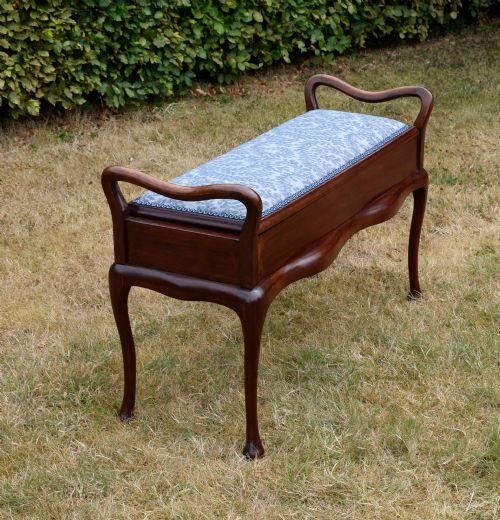
The selection includes standard piano stools, wider duet stools for two players, and specialist forms featuring revolving tops or hinged seats. Mahogany and walnut appear most often as the primary timbers used in their construction.
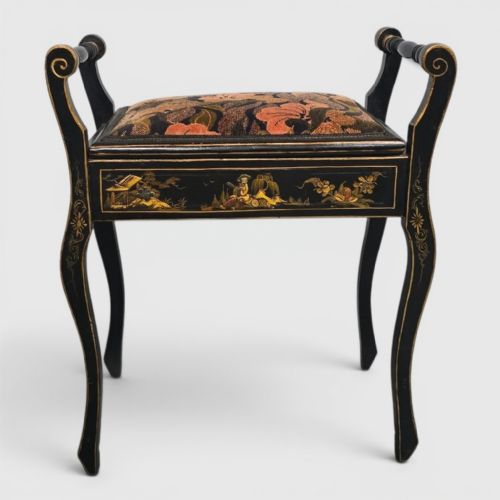
Period variations span from mid-nineteenth century walnut designs to early twentieth century arts and crafts oak models and Chinoiserie interpretations. Each type reflects the interior tastes and musical habits of its original era.
How they were made
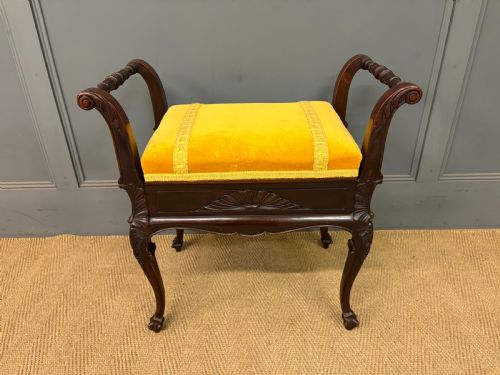
Cabinet makers constructed these seats using solid hardwoods such as mahogany, walnut, and oak, frequently incorporating decorative inlays or carved details. Timber selection dictated the structural integrity needed to support adjustable mechanisms and frequent movement.
Upholstery techniques combined traditional stuffing with fabrics like velvet, leather, and textured textiles to create the padded top. Brass hardware was utilised for hinges, screw mechanisms, and adjusting screws on rising seats.
Some Victorian players enjoyed spinning so vigorously on screw top stools that makers added brass locks to stop them unscrewing entirely.
What varies in quality
Quality rests in the precision of the woodwork, the stability of the adjusting or revolving mechanism, and the integrity of the original timber. Superior examples display refined carving, careful inlay work, and robust joints that withstand daily adjustment.
The sophistication of the seat mechanism, whether a screw top, rising seat, or hinged fall front, distinguishes standard utility pieces from finer cabinet work. Original upholstery and high grade covering materials further elevate the standing of a piece.
Jas Shoolbred·James Shoolbred
The Padded Music Stool Glossary
- Duet stool
- A wider seat designed to accommodate two pianists playing together on the same instrument. These longer forms often feature hinged lids for sheet music storage.
- Revolving piano stool
- A seat with a screw mechanism allowing the player to adjust the height by turning the top. This design became popular during the nineteenth century for effortless height alteration.
- Canterbury stool
- A music seat incorporating vertical partitions beneath the cushion for storing folios and sheet music. It combines the functions of a seat and a small cabinet.
- Fall front
- A hinged front panel that drops forward to reveal interior shelves or compartments for music storage. This mechanism is frequently found on Victorian walnut piano stools.
Padded Music Stool: Frequently Asked Questions
How do I adjust the height?
Many period examples utilise a central screw mechanism beneath the cushion, allowing the player to rotate the seat clockwise or anticlockwise to reach the desired playing height.
Other variants employ a side handle or internal ratchets to raise and lower the padded top smoothly.
Can I store music inside?
Certain forms, including duet stools and fall front designs, feature built-in compartments or hinged seats specifically intended for holding sheet music and folios.
Standard revolving or single pedestal models generally provide no internal storage space.
How do I date a music stool?
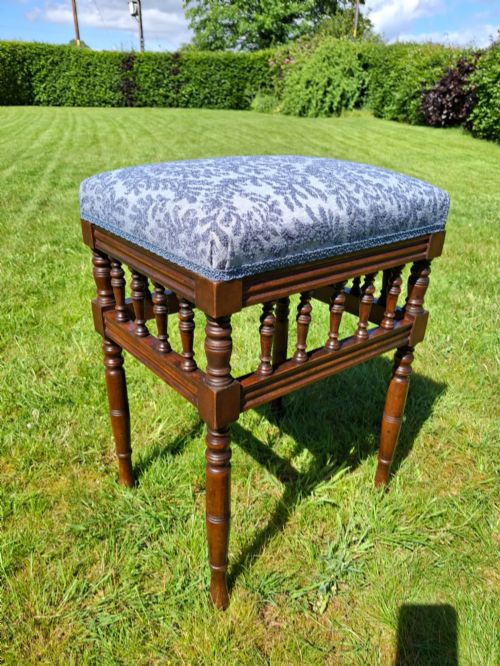
Dating relies on timber choices, leg styles, and mechanical hardware, with Victorian pieces often showing rich walnut and heavy turnings while Edwardian versions favour lighter mahogany and subtle inlays.
Maker stamps and patent marks can also provide precise chronological markers.
Are they suitable for daily use?
Solid hardwood construction and durable traditional upholstery make these period seats well suited for regular placement at modern pianos or dressing tables.
Care should be taken not to force vintage adjusting screws beyond their natural limits.