

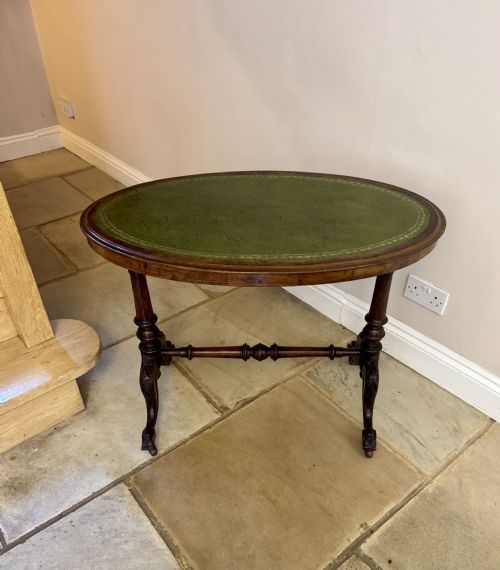
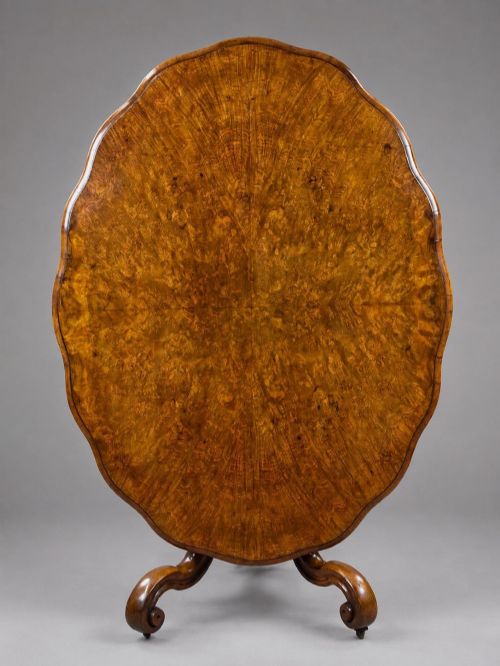
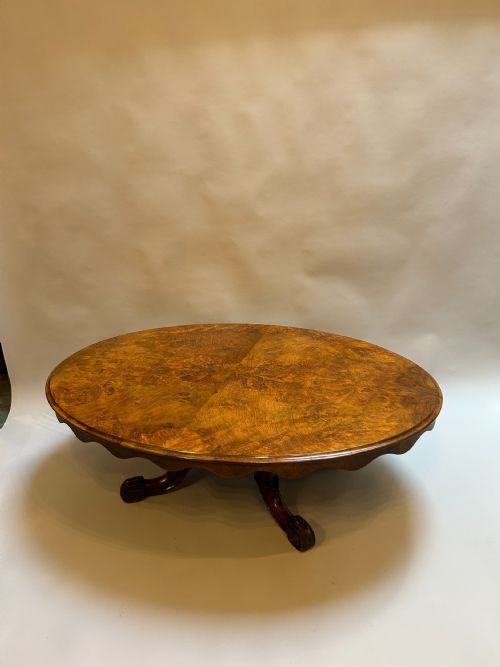
Oval Walnut Centre Table
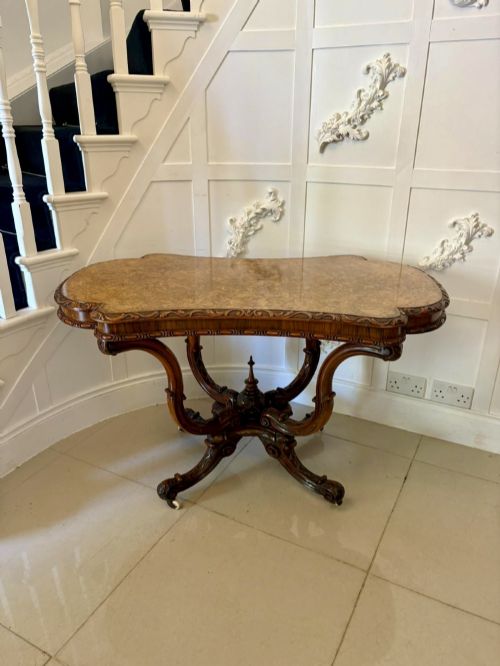
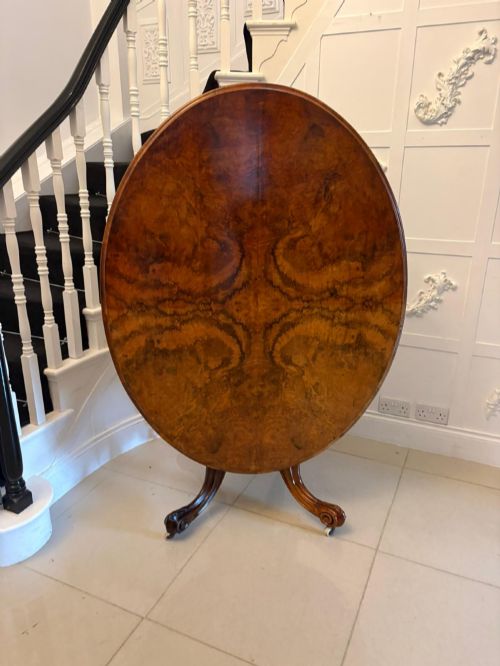
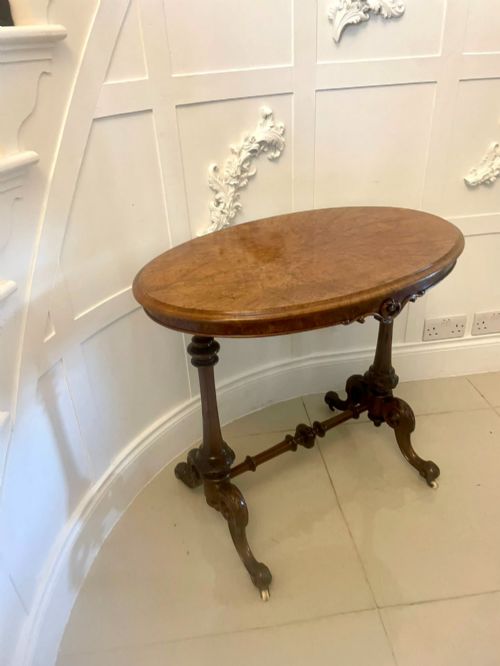
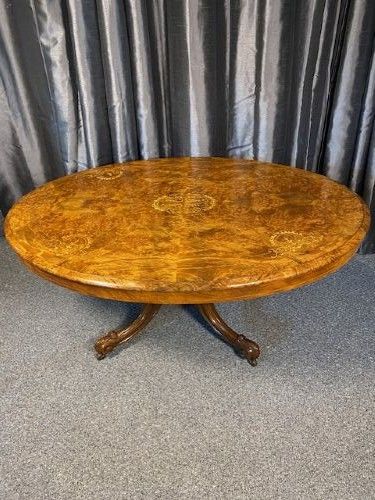
An oval walnut centre table brings rich wood grain and generous proportions to the middle of a room.
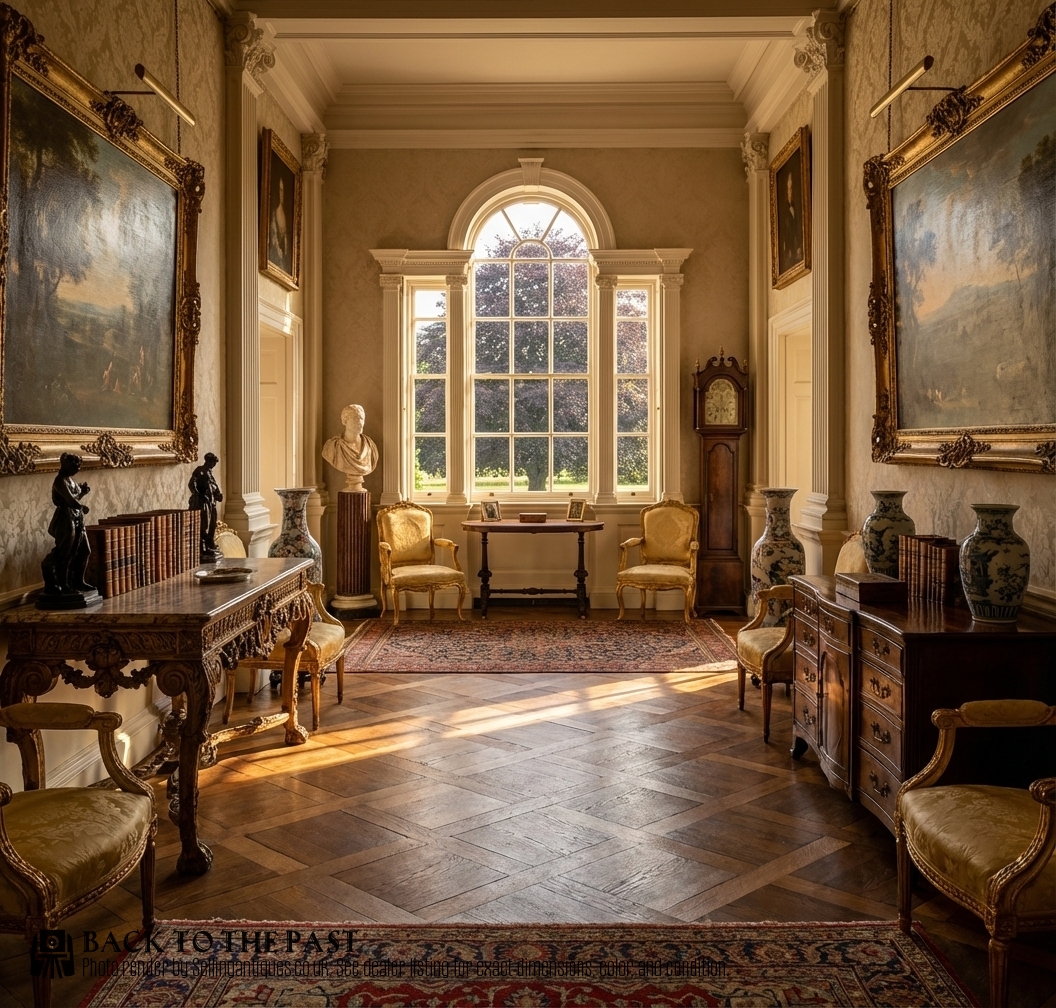
Oval Walnut Centre Table
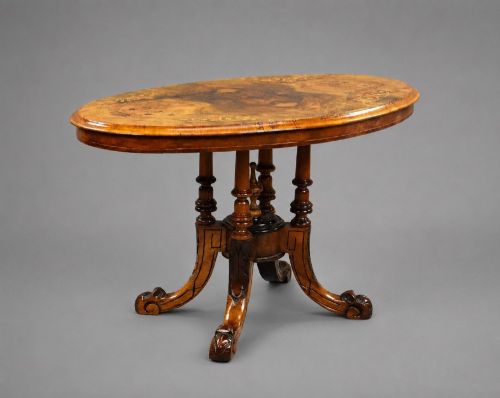
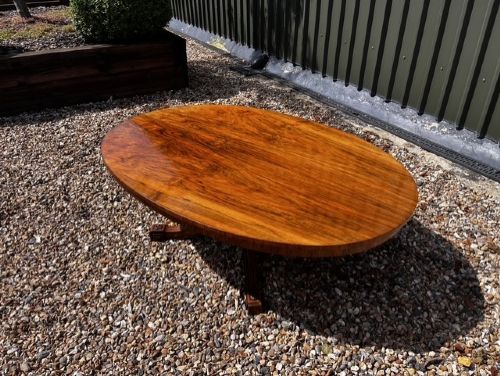
An oval walnut centre table is a freestanding piece designed to sit in the middle of a room rather than against a wall. The selections available here are dominated by Victorian examples, alongside occasional pieces from the eighteenth and early twentieth centuries.
Makers and manufacturers produced these tables in various formats, including larger dining and breakfast versions alongside smaller occasional, lamp and coffee tables. Many retain tilt-top or snap-top mechanisms that allowed the top to fold away when not in use.
How they were made
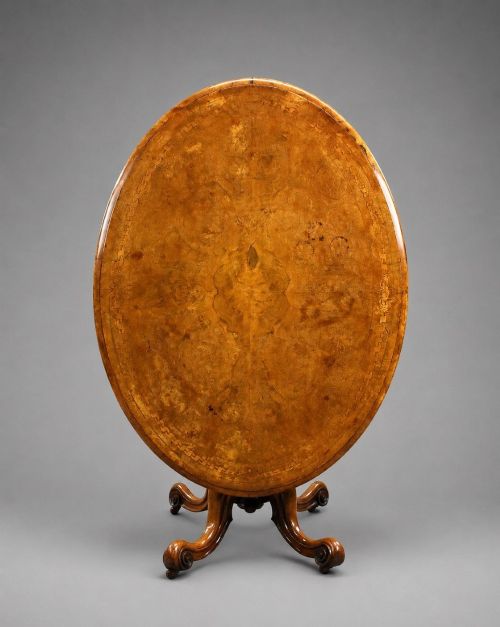
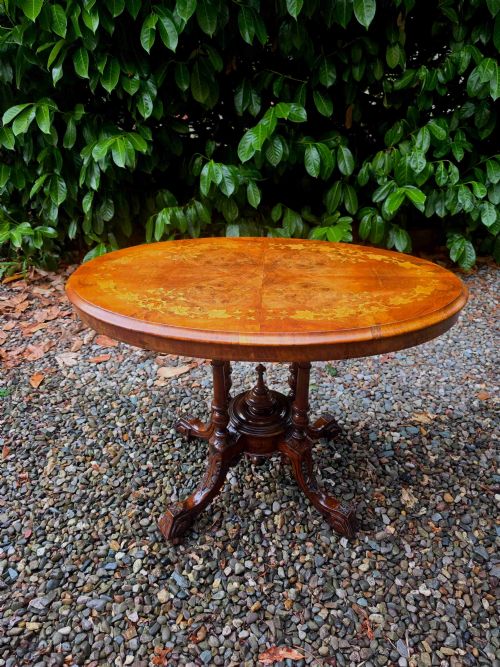
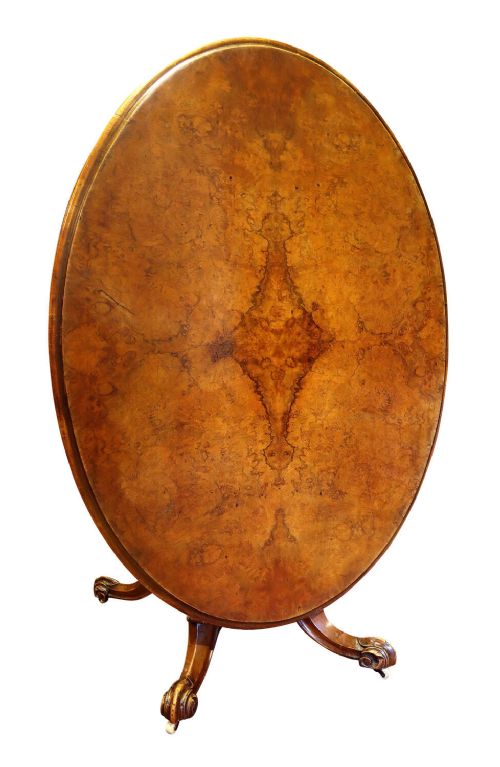
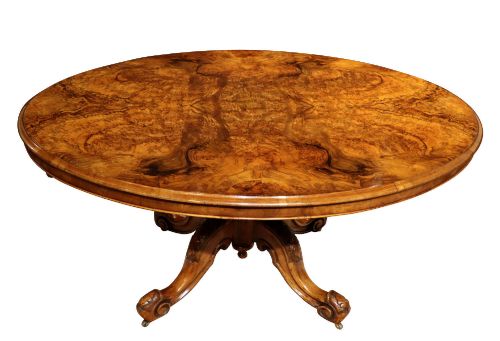
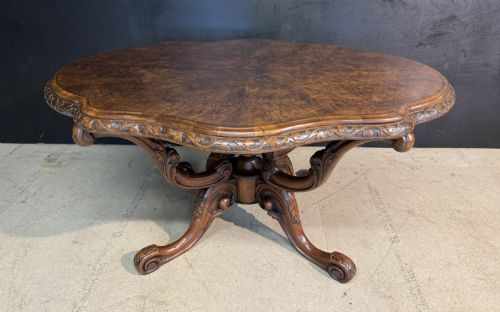
Craftsmen built these tables using solid walnut and burr walnut veneer, applying the figured veneer over secondary woods to showcase rich patterns on the tabletop. Cabinet makers then enhanced these surfaces with boxwood inlay, marquetry, and hand-carved wooden bases.
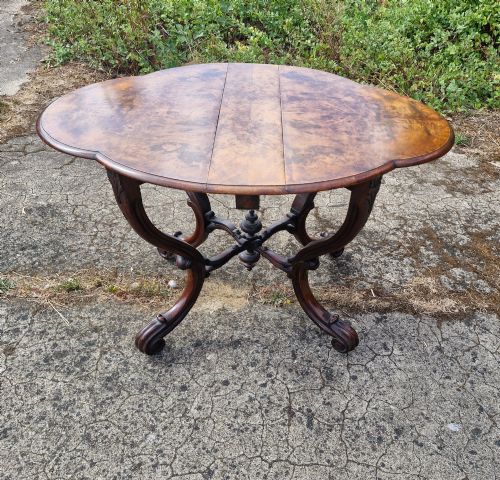
Structural support often relied on solid walnut pedestals, quadrapod bases, or scissor actions. Brass fittings and leather inserts also appear on writing and occasional variants within the collection.
Oval Walnut Centre Table Retail Price Guide 2026
Typical asking prices for oval walnut centre table among the pieces listed under this phrase on Sellingantiques today, from the lower quarter to the upper quarter. They describe what is for sale here now, not the wider market.
Several tables feature built-in chess boards on their tops, ready for an impromptu match of Victorian board games.
What varies in quality
Quality reveals itself in the depth and figuring of the burr walnut veneer selected for the top, as well as the precision of the marquetry and boxwood inlay. Finer examples display meticulous hand-carving on the pedestals and bases rather than simpler, machine-produced details.
The integrity of the timber and the smoothness of operating mechanisms, such as tilt-tops and scissor actions, further distinguish workshop standards. Tables attributed to documented makers like Holland & Sons carry a distinct level of finish.
Holland & Sons Of London
The Oval Walnut Centre Table Glossary
- Burr walnut
- A prized timber veneer taken from the growth excrescences of walnut trees, noted for its swirling, highly figured grain patterns. It forms the primary decorative surface on most Victorian examples.
- Loo table
- A large Victorian card and parlour game table designed to sit in the centre of a room. These tables typically feature tilt-top mechanisms for easy storage.
- Tilt-top
- A hinged tabletop mechanism allowing the surface to rotate and lock into a vertical position. This design saved space when the table was not in active use.
- Marquetry
- The art of applying decorative pieces of veneer to a structure to form intricate pictorial designs. Craftsmen utilised contrasting woods like boxwood for this inlay work.
- Quadrapod base
- A heavy central pedestal supported by four distinct carved legs or feet. This configuration provided stability for larger dining and breakfast tables.
Oval Walnut Centre Table: Frequently Asked Questions
What is a loo table?
A loo table is a large nineteenth-century parlour table designed for card games and social gatherings.
They usually feature tilt-top mechanisms so the surface can be stowed against a wall when the room is needed for other purposes.
How do you use a tilt-top table?
The hinged top unlocks from its horizontal position and pivots upright on the central pedestal.
This clever engineering allowed Victorian households to reclaim floor space easily in smaller drawing rooms.
What is burr walnut?
Burr walnut is a decorative wood veneer harvested from the knotty growths of walnut trees.
Cabinet makers valued it for its complex, swirling grain patterns that created striking visual interest on tabletops.
Where should a centre table go?
Centre tables are specifically designed to stand freestanding in the middle of a room rather than pushed against a wall.
They serve as visual anchors and display surfaces that can be walked around entirely.
How do I date a walnut table?
Dating relies on stylistic clues such as carved quadrapod bases, inlay techniques, and construction methods.
Victorian examples often feature rich burr veneers, while eighteenth-century pieces display simpler French provincial lines.