




Oval Top Side Table
An oval top side table brings soft curves to a room, offering a compact surface suited for lamps, books, or tea.
Oval Top Side Table
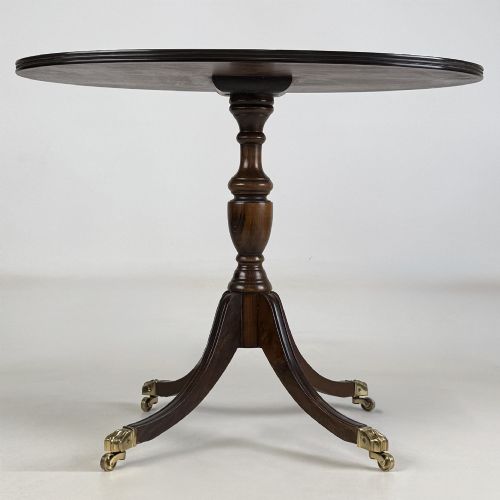
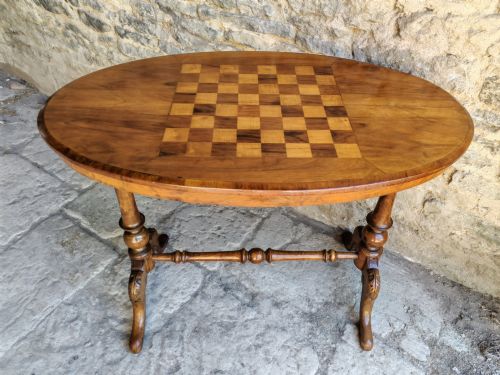
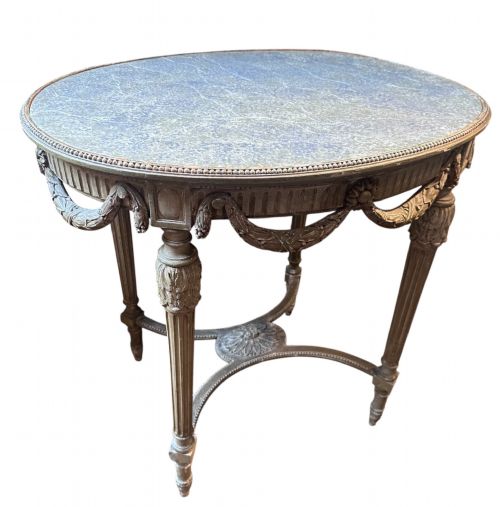
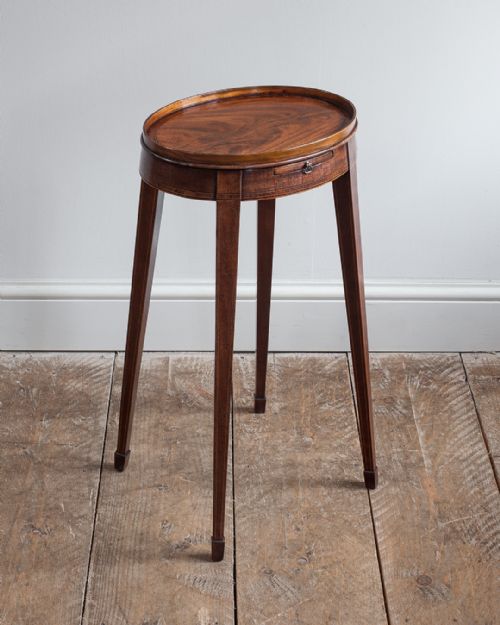
An oval top side table spans centuries of domestic furniture design, appearing across the Georgian, Victorian, and Edwardian periods in various timber and marble configurations. Buyers seeking an oval top side table will encounter occasional tables, wine tables, and bedside cabinets intended for domestic parlours and chambers.
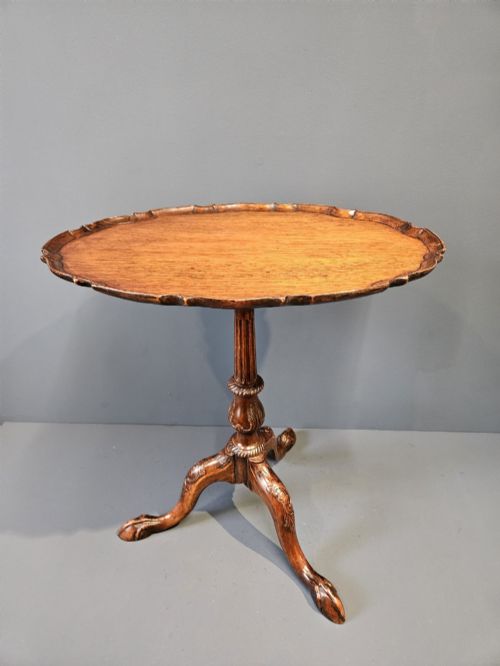
The form stretches from simple tripod tables of the eighteenth century to more elaborate inlaid walnut and mahogany pieces from the nineteenth century. Many examples originate from English workshops or French makers, reflecting regional preferences in turning, carving, and marquetry.
How They Were Made
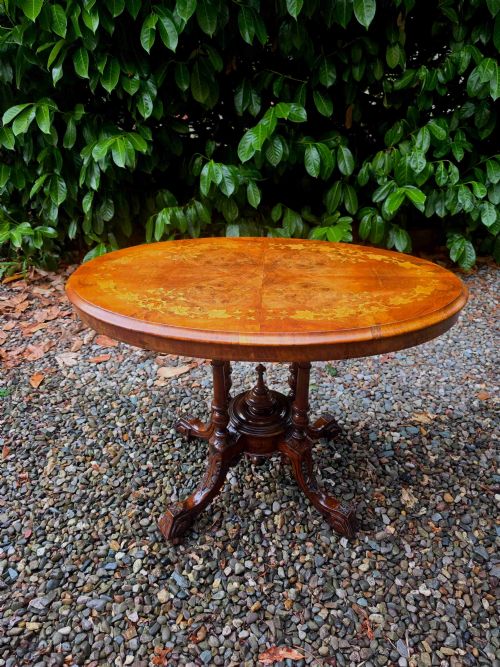
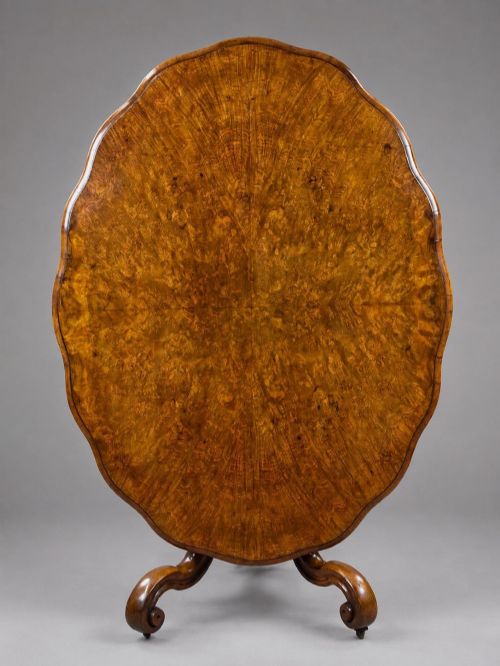
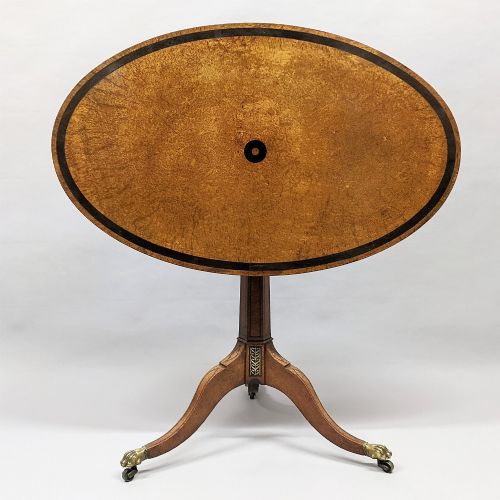
Cabinet makers built these tables using solid and veneered timbers such as mahogany, walnut, oak, and satinwood, frequently employing burr walnut or burr oak for figured top surfaces. Inlaid decoration utilised contrasting woods and brass stringing to accentuate the curved border of the tabletop.
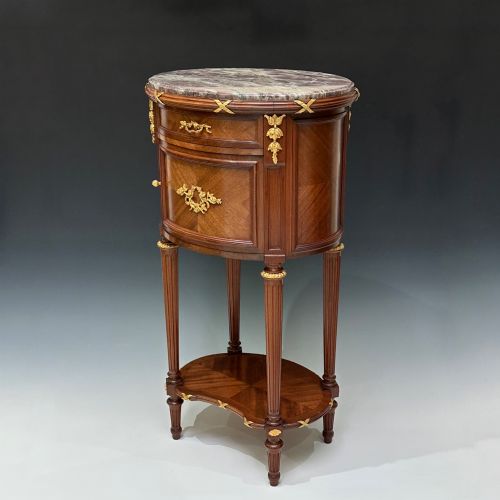
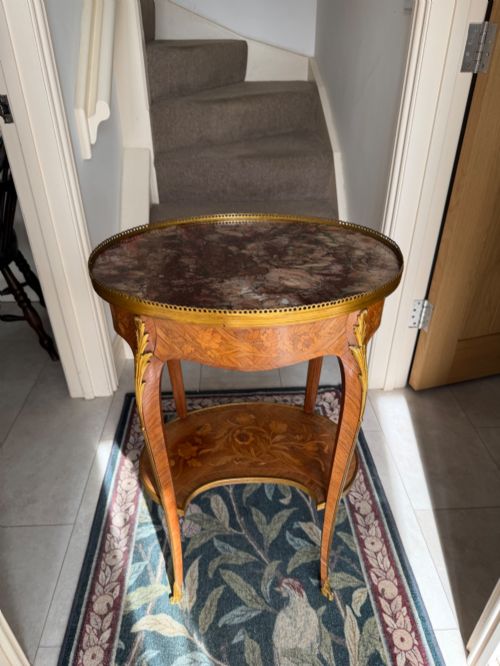
French pieces frequently incorporated marble tops, sometimes paired with gilt bronze mounts,ormolu, or painted finishes. Tripod bases relied on turned pillars and carved cabriole legs, while drop leaf and tilt top mechanisms provided functional versatility for smaller spaces.
What Varies in Quality
The refinement of the timber selection dictates the distinction between standard production and exceptional work, particularly in the figuring of burr walnut, amboyna, or kingwood veneers. Finely executed marquetry inlay and crisp hand-carved foliate details on the rim or legs demonstrate superior workshop proficiency.
Structural stability in the tilt top or tripod mechanism separates better examples from simpler utilitarian tables. The integration of high-grade white marble inserts and precise cast bronze or ormolu mounts further elevates the standing of nineteenth-century French pieces.
François Linke
The Oval Top Side Table Glossary
- Burr walnut
- Timber harvested from walnut tree growths, producing complex swirling grain patterns prized for tabletops.
- Tilt top
- A tabletop hinged to a pillar base, allowing the surface to fold vertically when not in use.
- Ormolu
- Gilt bronze mounts cast and chased to ornament French furniture pieces.
- Marquetry
- Decorative veneer patterns assembled from various coloured woods to create pictorial or geometric designs.
- Tripod base
- A support structure featuring three legs radiating from a central turned column.
Oval Top Side Table: Frequently Asked Questions
Where did people use an oval top side table?
These tables served primarily in drawing rooms, parlours, and bedrooms as convenient surfaces for lighting, reading materials, or decorative objects. Their curved edges made them practical for navigating tighter spaces in Victorian and Edwardian homes.
Smaller variants functioned as wine tables or bedside night stands, while tilt top versions could be folded and placed against a wall when floor space was required.
How do I identify a Georgian oval top side table?
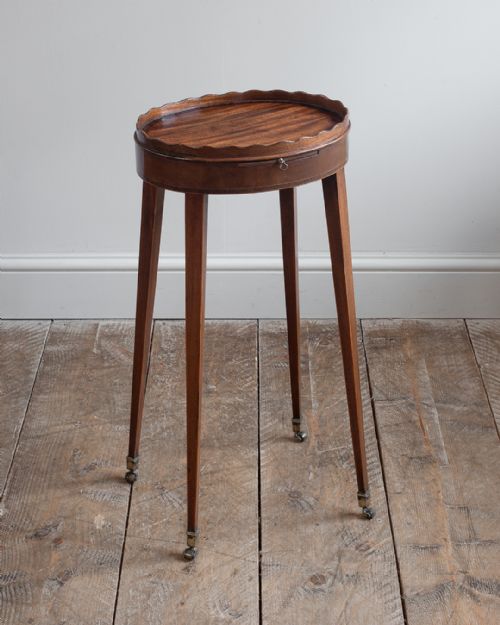
Georgian examples often feature solid mahogany or satinwood construction, sometimes with urn stands, tripod bases, or subtle string inlay. The proportions remain restrained, focusing on timber figure rather than heavy ornamentation.
Tilt top mechanisms from this era rely on simple birdcage or block catches, and the legs typically terminate in pad, spade, or claw and ball feet.
Are French marble top tables different from English ones?
French tables of the nineteenth century frequently pair exotic veneers like kingwood and amboyna with inset marble slabs and gilt bronze mounts. They served as bedside cabinets or lamp tables in formal apartments.
English counterparts generally emphasise timber surfaces such as mahogany or burr walnut, focusing on inlaid marquetry or plain polished grain rather than stone tops.
How should I care for an antique wooden table?
Protect the polished wooden surface by avoiding direct sunlight and maintaining stable room humidity to prevent veneer lifting or timber splitting. Regular dusting with a soft cloth preserves the finish without requiring heavy polishes.
For marble top versions, wipe spills promptly to prevent staining, particularly on older stone surfaces that lack modern sealants.