
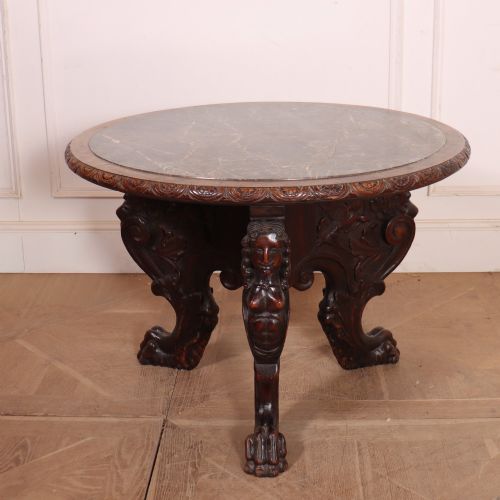

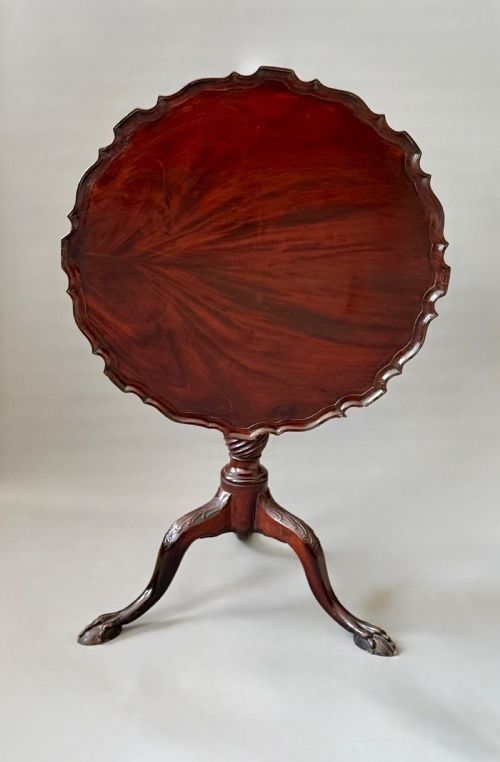
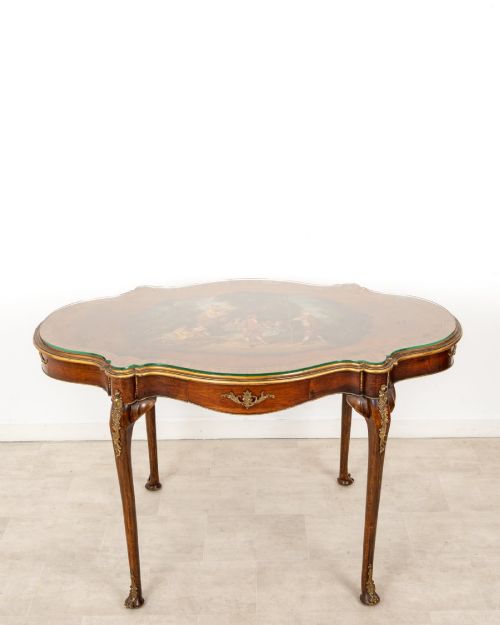
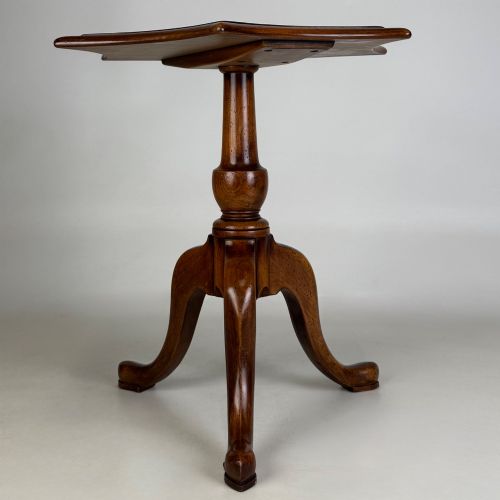
Carved Leg Occasional Table
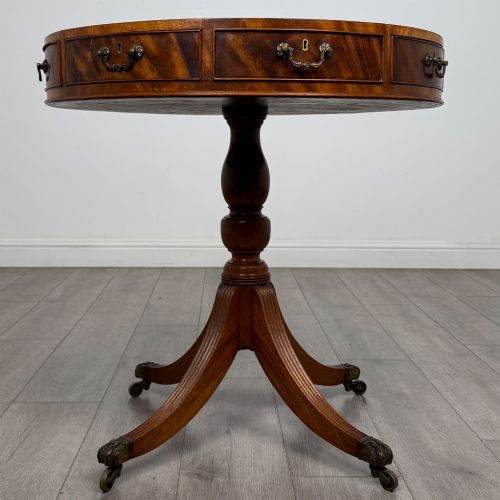
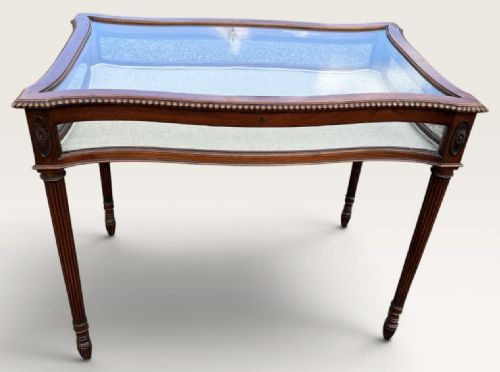
A carved leg occasional table brings dependable utility and decorative timber work to a sitting room, drawing room, or hallway.
Carved Leg Occasional Table
The selection ranges from tripod wine tables and pie crust tables to drop-leaf gateleg formats and small lamp tables. Formats span Georgian, Victorian, and Edwardian periods, with revival styles reflecting earlier centuries.
Origin points include English workshops alongside French and Italian examples, utilising timber turning and hand-carving to ornament the support structures.
How they were made
Cabinetmakers constructed these tables primarily using hardwoods such as mahogany, oak, walnut, and rosewood, frequently incorporating figural grain patterns for decorative effect. Joinery relied on traditional methods like mortise and tenon frames or secured pillar shafts.
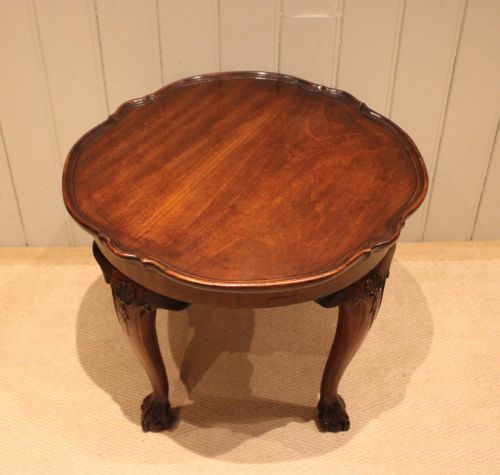
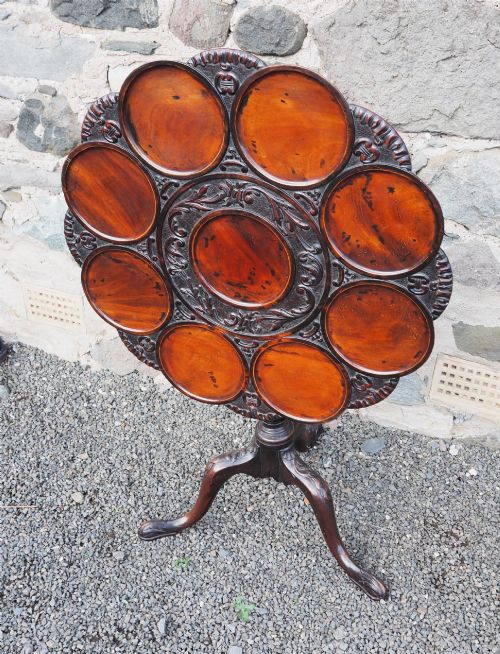
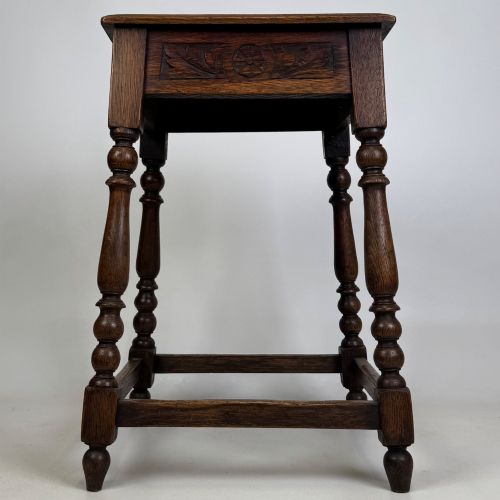
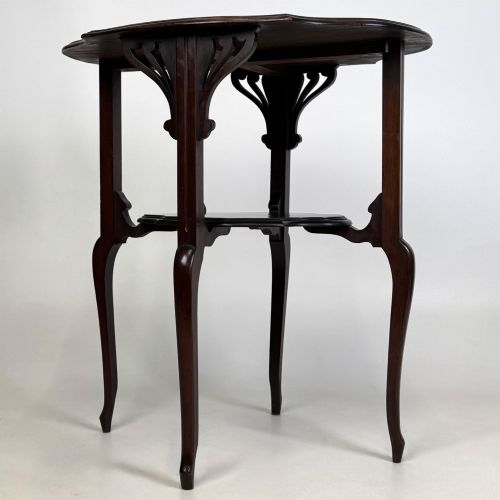
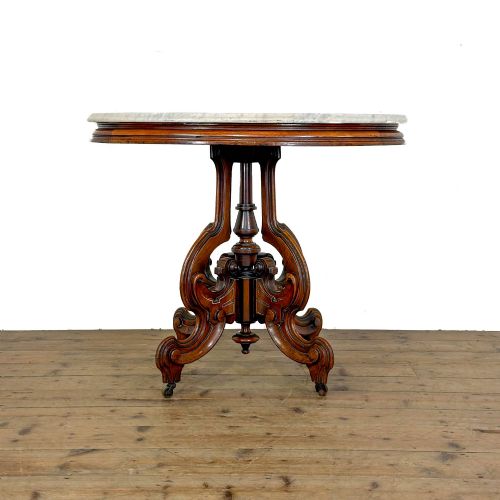
Carving was executed by hand using gouges and chisels to produce motifs including oak leaves, acorns, and scrolling details on legs and edges. Turned elements such as bobbin legs, barley twists, and cabriole shapes provided structural support and visual texture.
Several tables feature hidden drop leaves and pivoting tops designed for Georgian tea drinkers who needed to stow surfaces quickly after dark.
What varies in quality
The distinction between standard domestic production and superior work rests on the crispness of the hand-carving and the selection of timber. Dense, figured walnut or richly grained mahogany indicate a higher grade of material choice.
Stability in the joints and the precise turning of legs or columns demonstrate the competence of the original maker. Finer examples retain integrated proportions where the carved details complement the overall silhouette rather than appearing heavy.
The Carved Leg Occasional Table Glossary
- Tripod table
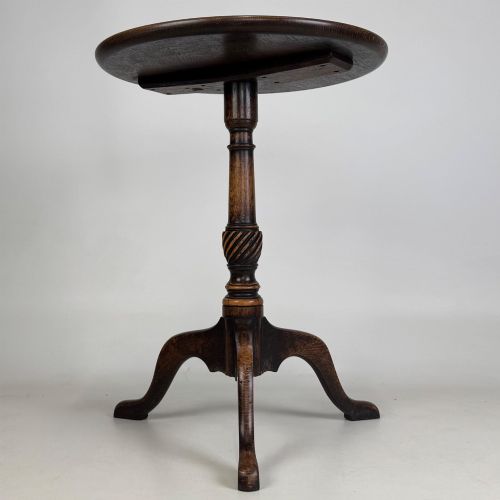
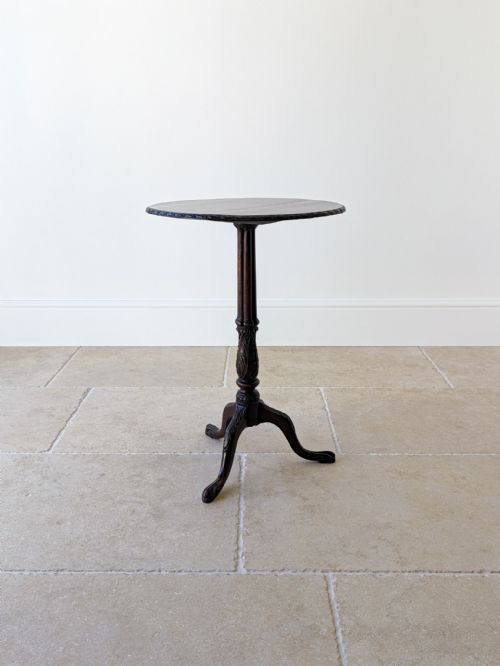
- A small circular table supported by a central pillar above three spreading legs. These legs are frequently carved at the knees or feet.
- Pie crust table
- A small table featuring a raised, carved, and scalloped edge resembling pastry work. This decorative rim is typically worked from a solid timber blank.
- Gateleg table
- A drop-leaf table with hinged flaps supported by legs that swing outward like a gate. This allows the surface area to expand or contract.
- Cabriole leg
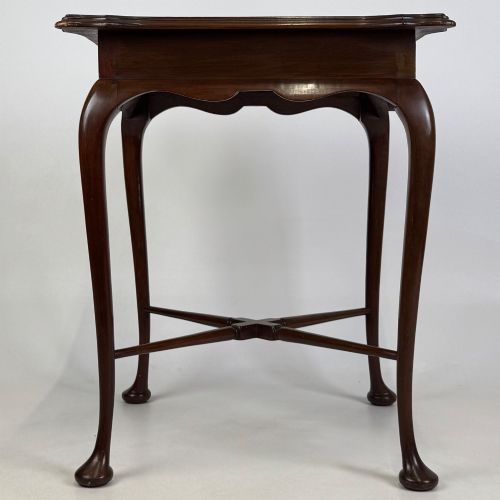
- A furniture leg that curves outward and then tapers inward, inspired by the natural shape of an animal's leg. It often terminates in a pad or claw foot.
- Barley twist
- A type of furniture turning resembling a twisted rope or column. It appears on the legs and supports of oak and walnut tables.
Carved Leg Occasional Table: Frequently Asked Questions
Where should I place an occasional table?
These pieces fit readily beside armchairs, sofas, or empty hallway walls where a compact surface is useful. Their modest footprint allows them to move between rooms as required.
Ensure the height matches nearby seating if the table is intended to hold drinks or reading material within easy reach.
How do I clean wooden surfaces?
Dust the timber regularly with a soft, dry cloth to prevent grit accumulation on carved areas. Avoid silicone polishes that build up a hazy film over time.
Feed the wood periodically with an appropriate wax to maintain the natural lustre and protect the grain.
Can I use these tables daily?
Solid hardwood construction makes these tables suitable for everyday domestic tasks. Use coasters to protect antique polished finishes from moisture and heat rings.
Avoid placing them directly against heat sources or in strong sunlight to prevent timber shrinkage and fading.
What is a tilt-top mechanism?
A tilt-top allows the tabletop to pivot into a vertical position when not in use. This clever design saved floor space in smaller period rooms.
The mechanism relies on a wooden catch or brass latch beneath the surface to secure the top in place.