

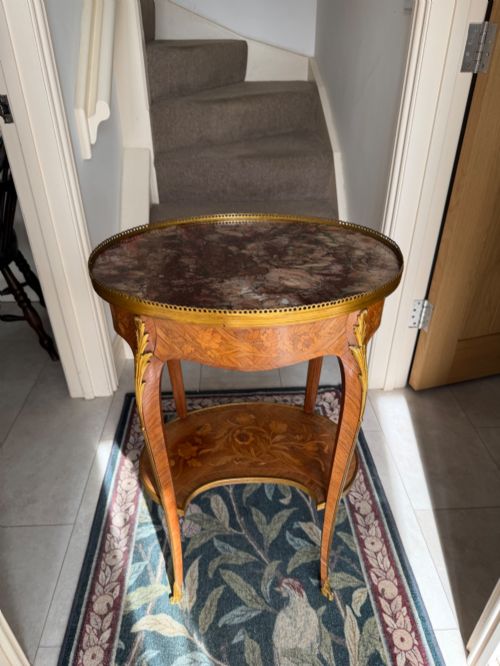


Oval Tiered Accent Table
An oval tiered accent table offers multiple display surfaces with a curved profile, bringing practical elegance and period charm to living spaces.
Oval Tiered Accent Table
An oval tiered accent table combines curved surfaces with stacked platforms, serving as an occasional side table, lamp table, or etagere. These multi-level surfaces provide practical display space without occupying a large footprint in a room.
The pieces available span the Victorian and Edwardian eras, alongside 1920s interwar designs and earlier nineteenth-century examples. Edwardian mahogany and satinwood models frequently feature two tiers and delicate inlay work.
French styles appear regularly, including marquetry-inlaid etageres and brass-mounted pieces from the late nineteenth and early twentieth centuries. Simpler walnut and oak occasional tables from the 1920s also populate the selection.
Materials and Construction
Cabinet makers utilised solid timbers and veneers including mahogany, walnut, satinwood, kingwood, rosewood, and amboyna. Tops often display contrasting marquetry inlay, satinwood banding, or hand-carved foliate details.
Metal mounts in brass and gilt brass appear on French etageres and campaign-influenced pieces, adding structural accents to corners and edges. Joinery techniques from the nineteenth and early twentieth centuries ensure stable tiered platforms supported by slender legs.
Mahogany and walnut predominate among the listed timber materials, frequently accompanied by satinwood inlay and brass mounts.
Design and Execution
The distinction between standard production and superior examples lies in the crispness of the marquetry inlay and the choice of figured timber veneers. Finer pieces display meticulous hand-carved details and balanced proportions across multiple tiers.
Makers who incorporated decorative brass mounts or intricate satinwood banding elevated simple occasional tables into display stands of notable craftsmanship.
Haentgos Freres Paris
The Oval Tiered Accent Table Glossary
- Etagere
- A piece of furniture with a set of open shelves for displaying small objects. These tiered stands frequently feature inlaid marquetry and delicate upright supports.
- Whatnot
- An open set of multi-level shelves designed for ornaments and books. Victorian examples often incorporate carved woodwork and oval top tiers.
- Marquetry
- The art of applying pieces of veneer to a structure to form decorative patterns. Craftsmen utilised various coloured woods to create floral or geometric motifs on table tops.
- Satinwood
- A durable, lustrous timber native to India and Ceylon with a golden yellow sheen. Cabinet makers utilised it extensively for inlay work and decorative banding on mahogany tables.
- Occasional table
- A small, movable table designed for specific, intermittent uses such as holding a lamp or books. These pieces appear frequently in Edwardian and Victorian interiors.
Oval Tiered Accent Table: Frequently Asked Questions
What is an oval tiered accent table used for?
These tables function primarily as side tables or lamp tables, providing extra surfaces on lower tiers for books or small decorative items. Their compact oval footprint allows them to sit beside seating or in corners without crowding a room.
Historically, similar etageres and whatnots served to display ornaments in nineteenth and early twentieth-century drawing rooms. Today, they remain practical for modern living spaces requiring accessible surface area.
How do I distinguish Edwardian from Victorian tables?
Victorian pieces tend to feature heavier proportions, darker timbers like mahogany and amboyna, and more substantial hand-carved details. Inlaid work often appears bolder and more robust on these earlier stands.
Edwardian tables generally display lighter construction, frequently utilising satinwood inlay, mahogany veneers, and slender legs. The overall aesthetic leans towards refined Neo-Classical or Sheraton Revival lightness.
Are French etageres different from English tables?
French etageres from the late nineteenth and early twentieth centuries frequently incorporate intricate marquetry, gilt brass mounts, and Kingwood veneers. They emphasise ornamental display and decorative flair.
English counterparts from the Edwardian and Victorian periods focus more on functional utility combined with restrained string inlay and mahogany or walnut construction.
How do I care for a veneered accent table?
Keep wooden tiered tables away from direct sunlight and heat sources to prevent the veneers and inlaid sections from drying out or lifting. Dust gently with a dry, soft cloth and avoid chemical polishes that can damage antique finishes.
Use coasters under glasses or lamps placed on the top tier to protect the polished surface from moisture and rings.