



Oval Silver Snuff Box
An oval silver snuff box is a pocket-sized container for tobacco, prized for its tactile form and intricate metalwork.
What these pieces are
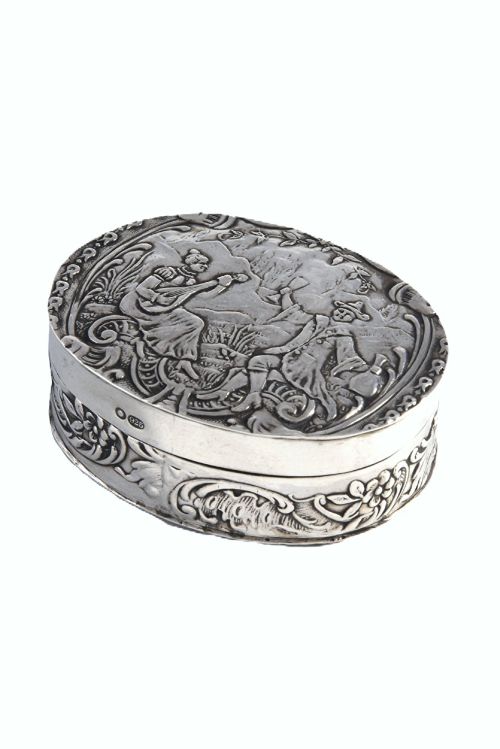
An oval silver snuff box is a small pocket container designed to hold powdered tobacco, typically shaped with curved, symmetrical sides. Buyers searching for an oval silver snuff box encounter portable containers that reflect the personal accessories of past centuries.
The pieces on this page span the Georgian, Victorian, and Edwardian periods, including examples from regional British assay offices such as Edinburgh and Birmingham. Scottish items often feature provincial characteristics, whilst English examples frequently demonstrate formal metropolitan hallmarks.
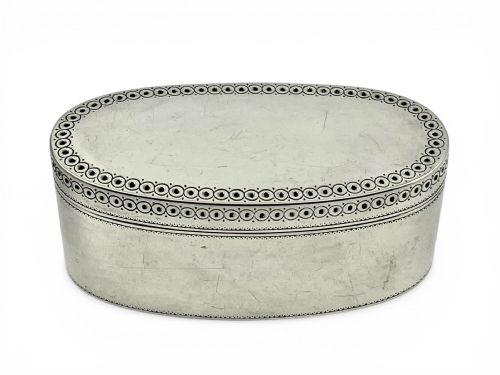
Forms range from plain polished sterling silver to specimens inset with hardstones like agate or mounted with organic materials such as horn and tortoiseshell. Most examples survive from the eighteenth and nineteenth centuries, reflecting the height of snuff-taking social rituals.
How they were made
Silversmiths constructed these boxes using sterling silver sheet, often shaping the body over a wooden or metal stake to achieve the distinct curved profile. Lids and bases were frequently hinged with precision, allowing the cover to snap shut securely against the rim.
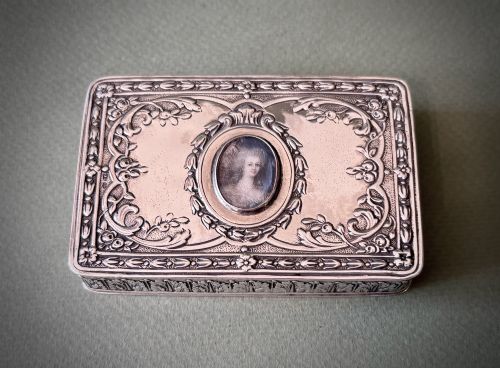
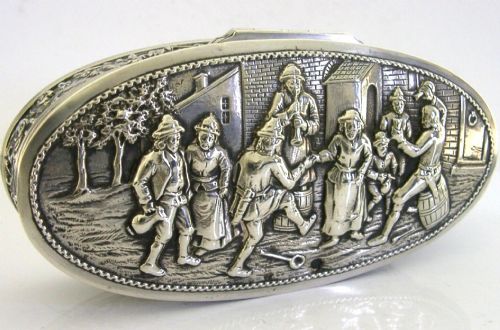
Surface ornamentation involved techniques such as hand engraving, chasing, and repousse work to create floral scenes or geometric borders. Many interiors retain their original gilding, applied to protect the silver from the corrosive properties of tobacco.
Retail Price Guide 2026
Typical UK retail prices for oval silver snuff box, calculated from the Sellingantiques database of over a million retail prices indexed since 2003. This retail price guide relies exclusively on Sellingantiques data; no external sources or auction records are used, so the figures do not describe the wider market.
Some Scottish boxes swapped precious metal entirely for polished horn, yet still fitted a silver thistle cartouche on the lid just to keep up appearances.
What varies in quality
Quality rests in the crispness of the hand engraving and the snugness of the lid closure, where a well-made hinge operates without lateral play. Superior examples display substantial gauge metal that resists flexing in the hand.
The inclusion of decorative panels, such as polished green agate or finely carved tortoiseshell, elevates a piece from a utilitarian pocket item to an object of high craftsmanship. Makers with established workshop reputations also distinguish the upper tier of surviving boxes.
George Unite·Charles Rawlings & William Summers·J. Wilmot·Phipps & Robinson·William Simpson
The Oval Silver Snuff Box Glossary
- Sterling silver
- A standard alloy consisting of 925 parts of silver per thousand, ensuring durability for pocket items.
- Silver gilt
- Silver that has been coated with a thin layer of gold on the interior or exterior surface.
- Hallmark
- A series of official marks stamped on precious metals to indicate the standard of purity, maker, and year of assay.
- Cartouche
- An ornamental frame or panel, often left blank for initials or engraved with crests and thistles.
- Repousse
- A metalworking technique where the design is hammered into relief from the reverse side.
Frequently Asked Questions
How do I date an antique box?
Dating relies primarily on the stamped hallmarks, which reveal the assay office, city, and exact year code corresponding to the silversmith's registration.
Stylistic cues such as Rococo Revival motifs or the choice of inset materials like tortoiseshell and agate also help narrow down the period of production.
Were all boxes made in London?
No, provincial assay offices played a significant role, with notable production occurring in cities like Birmingham and Edinburgh.
Scottish examples often incorporate regional decorative elements, such as thistles on horn bodies or specific provincial maker marks.
Why do some interiors look gold?
The golden appearance inside many boxes is the result of fire gilding, a process where a gold amalgam was applied to the silver surface.
Silversmiths utilised this technique to prevent the acids in tobacco from tarnishing and corroding the sterling silver interior over time.
How should I care for silver snuff?
Living with these pieces involves gentle handling and storing them away from excessive moisture to preserve both the silver and any organic mounts.
Polishing should be kept to a minimum to protect delicate hand engraving and maintain the historic surface patina.