





Oval Silver Plated Tray
An oval silver plated tray brings domestic hospitality from the Victorian and Edwardian eras directly onto a modern table.
Oval Silver Plated Tray
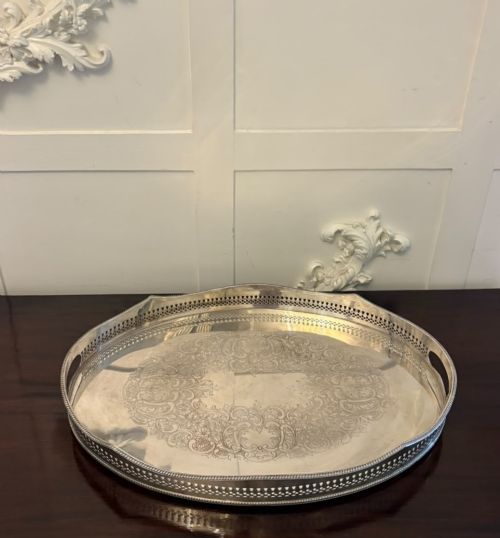
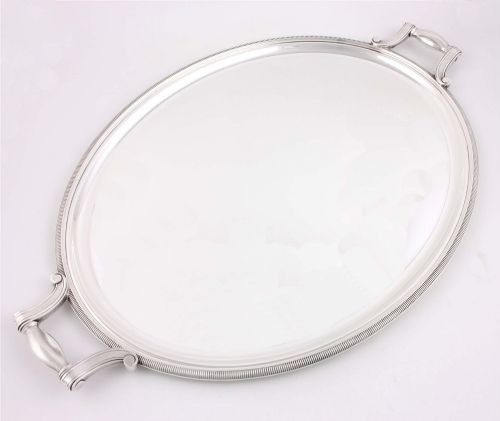
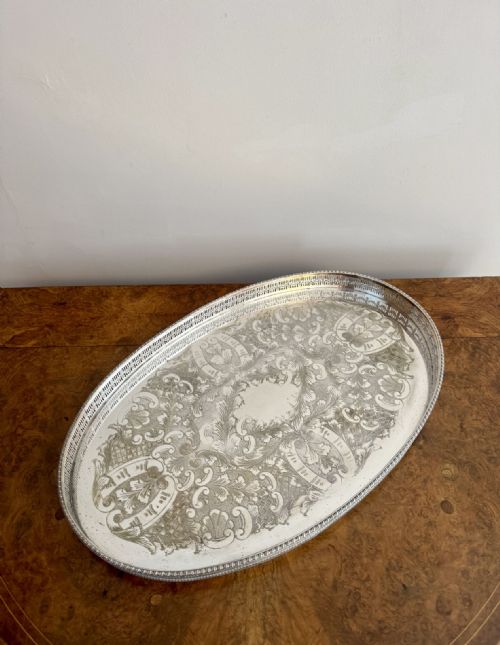
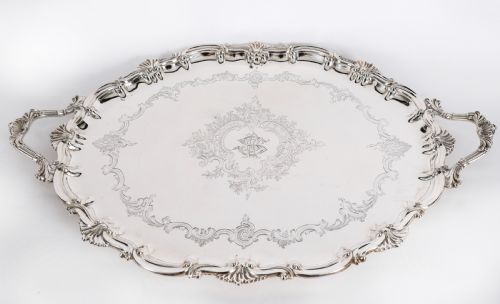
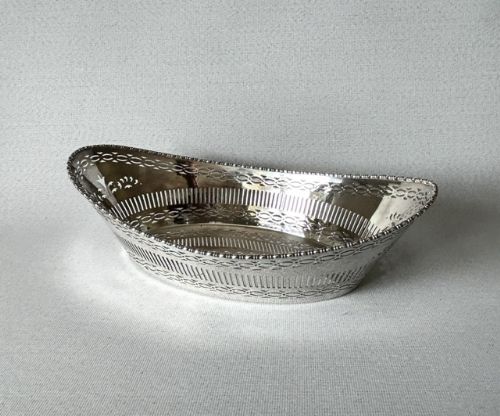
When searching for an oval silver plated tray, a buyer encounters serving pieces designed for tea, cocktails, and formal dining across the nineteenth and twentieth centuries. The selection centres heavily upon Edwardian and Victorian examples, alongside Art Deco iterations from the nineteen twenties and thirties.
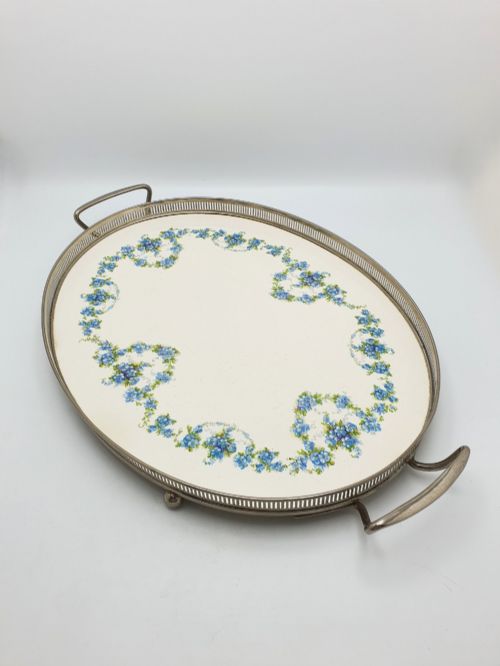
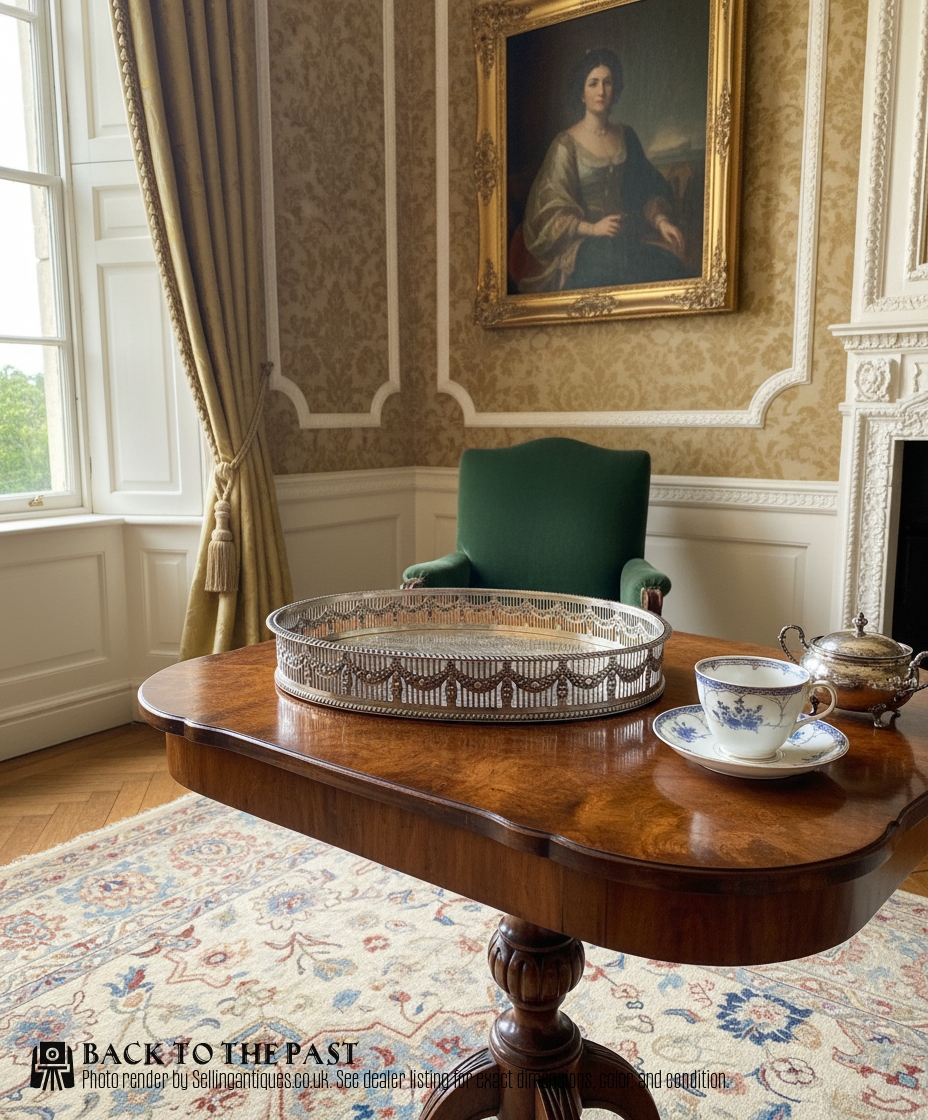
Most pieces take the form of substantial serving trays and salvers featuring handles, cast borders, or pierced galleries. Certain versions integrate ceramic centres or contrasting oak frames to complement the bright reflective metal.
Makers utilised these broad proportions to present glassware, decanters, or tea services for guests. The persistent popularity of the format demonstrates its enduring utility in contemporary settings.
Materials and technique
Makers built these pieces upon a foundation of base metal, typically incorporating nickel silver or standard white metal before applying a layer of silver plate. Electroplated nickel silver, commonly known as EPNS, became the dominant method for achieving a durable and lustrous finish.
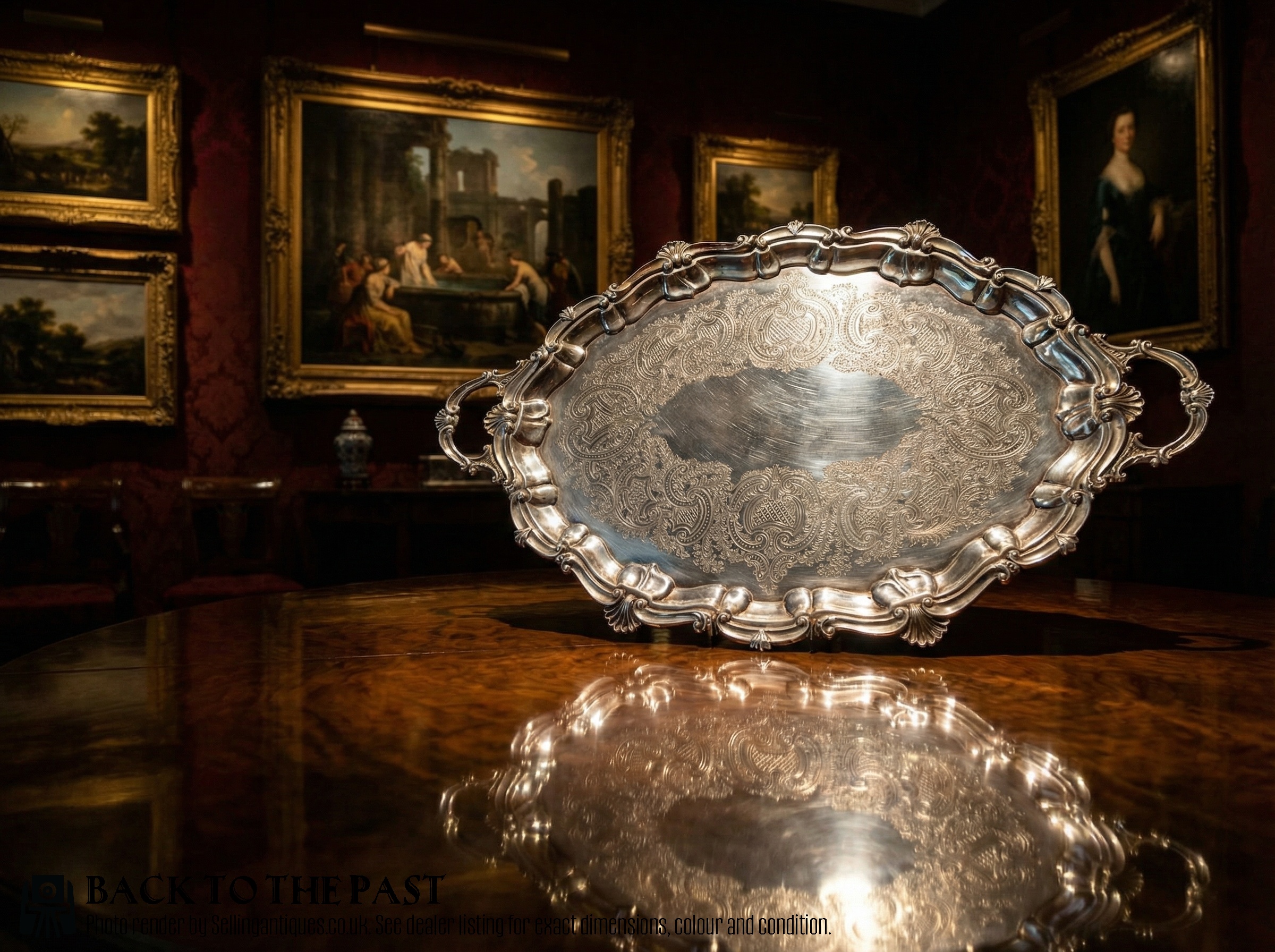
Surface ornamentation relied upon manual or machine techniques, including delicate floral engraving, intricate embossed scrolls, and engine turned patterns. Raised galleries were often pierced from sheet metal or cast separately and soldered securely to the tray perimeter.
Victorian butlers undoubtedly dropped fewer clinking gin glasses thanks to these heavily guarded galleries.
Distinctions in manufacture
The distinction between standard production and superior craftsmanship rests upon the weight of the base metal and the crispness of the chased or engraved detailing. Heavier gauge metal prevents flexing and provides a reassuring heft when carrying glassware.
Superior examples display crisp casting along the handles and pierced galleries, where edges remain clean and well defined. Maker signatures from established silversmiths further indicate a higher standard of workshop production.
Mappin & Webb·Christofle·Walker & Hall·Thomas Bradbury & Sons·James Dixon·Roberts & Belk
The Oval Silver Plated Tray Glossary
- Silver Plate
- A thin layer of pure silver bonded to a base metal core such as nickel silver. This technique offered an accessible alternative to solid sterling silver while retaining a similar visual appeal.
- EPNS
- Electroplated Nickel Silver, a durable alloy base coated with silver through an electrolytic process. It serves as the primary material foundation for the majority of late nineteenth and twentieth century domestic metalwork.
- Gallery
- A raised pierced or pierced and solid metal border fitted around the perimeter of a tray. This architectural feature prevents decanters and glasses from sliding off during service.
- Salver
- A flat serving tray traditionally used for presenting documents, calling cards, or drinks. In historical contexts, the term often applies to smaller footed serving vessels.
- Engine Turned
- A precision geometric surface decoration applied using a specialised mechanical lathe. This technique creates repeating patterns of fine lines across the metal field.
Oval Silver Plated Tray: Frequently Asked Questions
How are these trays cleaned safely?
Maintenance requires gentle washing with warm soapy water followed by immediate drying with a soft cloth. A specialist silver polish can be used sparingly when tarnish appears, avoiding harsh abrasives that might wear away the thin silver layer.
Regular soft cloth dusting preserves the reflective surface without harming delicate engraved details or applied mounts.
Can these trays be used for daily drinks service?
Solid construction and sturdy handles make these pieces well suited for carrying glassware, teapots, and cocktail sets. The supportive base handles moderate weight comfortably during hosting.
Placing coasters or felt pads beneath heavy crystal decanters helps protect the soft silver surface from excessive scratching over time.
How do I identify an Edwardian piece?
Edwardian items typically display lighter, more refined decorative motifs influenced by neoclassical and art nouveau tastes. Pierced galleries and delicate foliate engraving are frequent characteristics of this period.
Maker marks and registration numbers stamped into the base metal often help narrow down the exact decade of manufacture.
What is the difference between a tray and a salver?
Trays generally feature integrated handles or raised galleries designed specifically for carrying items across a room. Salvers are traditionally flat, often mounted on small feet, and intended for stationary presentation.
Both forms utilise the same electroplated metal construction methods across Victorian and twentieth century examples.