



Oval Pedestal Accent Table
An oval pedestal accent table brings curved lines and compact presence to a room, offering a functional surface rooted in nineteenth-century and early twentieth-century design.
Oval Pedestal Accent Table
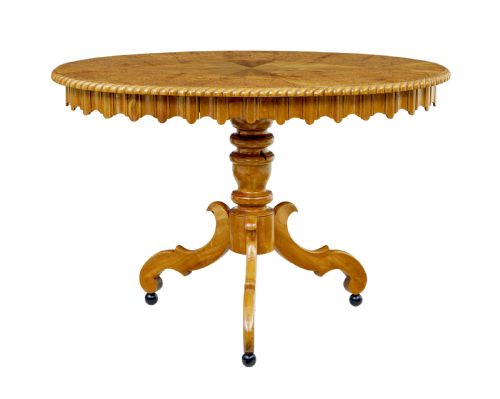
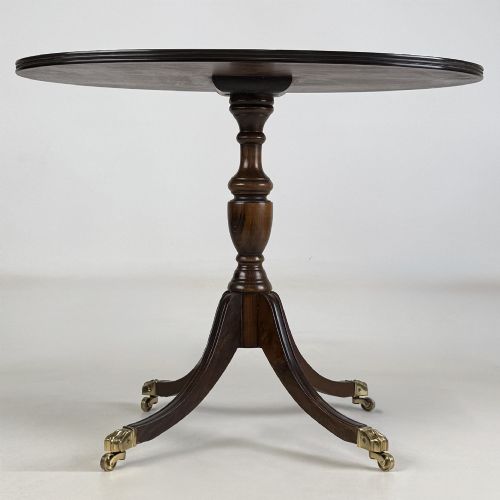
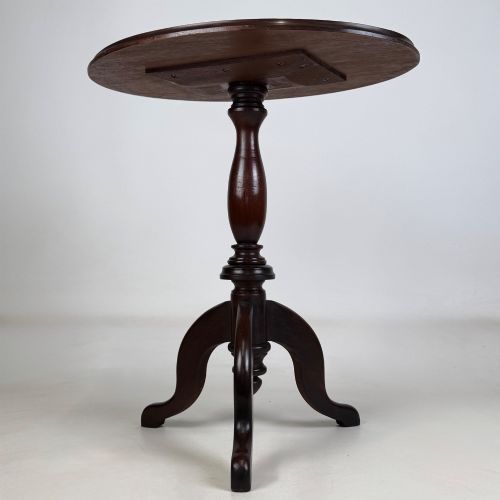
An oval pedestal accent table occupies space differently than a square or rectangular piece, introducing soft curves to a room while maintaining a compact footprint. Buyers searching for an oval pedestal accent table encounter occasional, side, lamp, and centre tables originating from the nineteenth century, the Victorian era, and the Edwardian period.
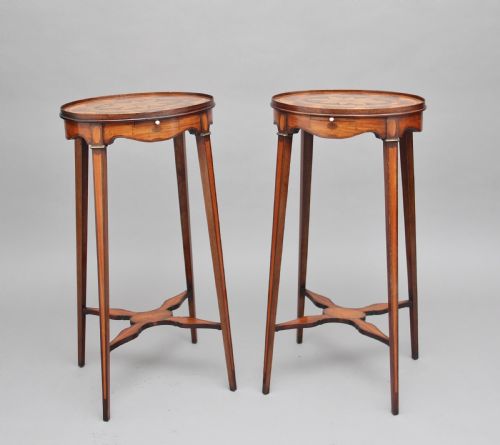
The form adapts to varied domestic uses, appearing as small lamp tables, wine tables, and larger centre pieces supported by a central column or pillar rather than four corner legs. Examples range from modest vernacular timbers to sophisticated revival styles, including Sheraton Revival satinwood and Italian Rococo painted surfaces.
Materials and Construction
Cabinet makers utilised dense hardwoods including walnut, burr walnut, mahogany, and ebony, often selecting figured veneers to create striking surface patterns across the tabletop. Burr birch, burr oak, and exotic specimen woods also appear, demonstrating the varied botanical choices available to period makers.
Inlay work forms a prominent decorative technique, incorporating boxwood, satinwood, and general wood inlay to trace geometric or floral motifs along the table borders. Central columns stand alongside carved ebony elements and painted finishes, uniting cabinet making with decorative surface artistry.
Japanese Meiji craftsmanship occasionally crosses paths with Victorian domestic taste, resulting in ebonised elm tables that bridge two entirely different worlds.
Distinctions in Quality and Execution
The distinction between standard examples and superior pieces rests in the selection of veneer and the crispness of the inlaid details. Figured burr walnut or meticulously matched satinwood displays deliberate planning by the maker, whereas simpler utilitarian tables rely on plain mahogany or standard domestic woods.
Structural integrity of the central pedestal and its junction with the tabletop and base determines long-term stability. Finely executed carving, original painted decoration, and balanced proportions elevate an individual table above everyday production.
The Oval Pedestal Accent Table Glossary
- Burr walnut
- A prized timber harvested from the wart or burl growths of the walnut tree, yielding swirling, highly decorative grain patterns highly sought after in Victorian table tops.
- Pedestal table
- A freestanding table supported by a single central pillar or column rising from a weighted base or tripod feet, removing the obstruction of four corner legs.
- Inlay
- A decorative technique where contrasting woods such as boxwood and satinwood are fitted into recessed cavities within the primary timber surface to form patterns.
- Occasional table
- A light, movable small table designed for intermittent use around a principal reception room or parlour rather than a fixed dining or writing purpose.
- Sheraton Revival
- A late nineteenth-century stylistic movement recreating the lighter, neoclassical furniture forms associated with the eighteenth-century designer Thomas Sheraton.
Oval Pedestal Accent Table: Frequently Asked Questions
Where should I place an oval accent table?
An oval accent table suits tight corners or the flank of a sofa, where its curved perimeter softens the rigid geometry of surrounding upholstery and walls.
The central pedestal design allows chairs or feet to clear the base easily, making it practical beside a reading chair or as a lamp stand.
How do I identify a Victorian walnut table?
Victorian walnut tables typically display deep brown tones with rich figuring, frequently augmented by boxwood or satinwood stringing inlaid along the table rim.
Examination of the timber underneath and the construction of the pedestal joint reveals the hand-joinery methods characteristic of the mid to late nineteenth century.
What is the difference between a side table and a centre table?
Side tables are generally scaled to stand against a wall or beside a piece of furniture, serving as a perch for lighting or decorative objects.
Centre tables are traditionally finished on all sides to stand independently in the middle of a room, often featuring larger proportions and more elaborate pedestals.
How do I care for antique veneer surfaces?
Antique veneer requires protection from direct sunlight and extreme humidity fluctuations, which can cause the underlying animal glue to dry and the wood to warp.
Occasional application of traditional beeswax feeds the timber and maintains a soft lustre without building up synthetic residues.